
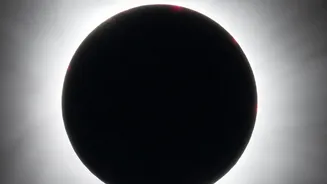
A Fleeting Glimpse of a Fiery Secret
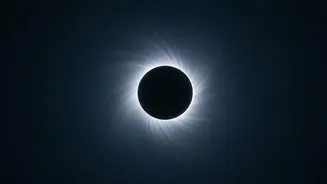
For solar physicists, a total eclipse is the ultimate natural laboratory. Under normal circumstances, the sun's surface, or photosphere, is so blindingly bright that it completely drowns out its own atmosphere. This faint, ethereal outer layer, known
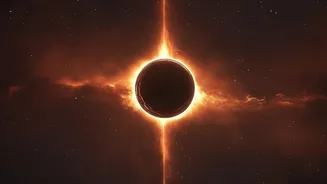
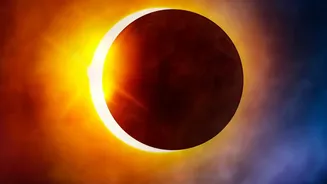
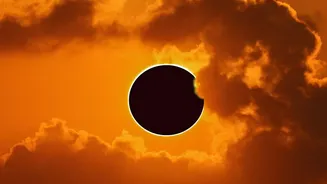
as the corona, is about a million times dimmer. Trying to see it is like trying to spot a firefly next to a searchlight. But when the Moon perfectly blocks the sun's disc, the corona is revealed in all its ghostly, wispy glory. This region is a place of perplexing physics: while the sun's surface is a blistering 5,500 degrees Celsius, the corona sizzles at over a million degrees. Understanding why is a central mystery of solar science. The 2026 eclipse, visible across Greenland, Iceland, and Spain, provided the first chance to see totality in Europe in over two decades, offering a precious few minutes to gather data that could help solve it.
New Tools for a New Eclipse
This year, scientists were armed with novel instruments designed for the unique pressures of an eclipse. An Italian team from the Institute for Photonics and Nanotechnologies deployed a brand-new device called the Circular Slit Spectrometer (CISS) at Spain's Javalambre Astrophysical Observatory. Unlike traditional spectrometers that have to scan the corona piece by piece—a process that can take hours—CISS uses a revolutionary circular slit to capture the light spectrum of the entire ring of the corona in a single snapshot. This is a game-changer because the corona's structure can change in minutes. Capturing all the data at once, from temperature to chemical composition, provides a complete and instantaneous picture of the corona's state, something that was previously impossible during the short window of totality.
An Orchestra of Observatories
Modern eclipse science is no longer about a single telescope in a single location. The 2026 event was a masterclass in coordination between ground-based observatories and space-based missions. The European Space Agency's (ESA) Solar Orbiter played a crucial role. In the weeks leading up to the eclipse, it was positioned to see the side of the sun that would rotate into Earth's view on August 12. Its instruments mapped the sun's magnetic field, allowing scientists on Earth to know exactly where to point their instruments to capture emerging areas of activity. These space-based observations effectively gave ground teams a preview, helping them create sophisticated models to predict what the corona would look like—a 'virtual totality' that could then be compared against the real thing.
Chasing the Shadow from the Sky
To get above potential cloud cover and extend the precious moments of darkness, NASA once again deployed its WB-57 high-altitude research aircraft. Flying at 50,000 feet along the eclipse path over the Atlantic, the jet raced to keep up with the Moon's shadow. While observers on the ground experienced totality for a maximum of about two minutes and 18 seconds, the crew aboard the WB-57 extended their view to nearly three minutes. The aircraft was equipped with a suite of cameras capturing high-resolution images of the corona in multiple wavelengths of light, gathering data on everything from the origin of the solar wind to the structure of solar prominences—massive loops of plasma suspended above the sun's surface.
What the Eclipse Revealed
While it will take months, if not years, to fully analyze the terabytes of data collected, the 2026 eclipse has already validated new ways of observing our star. The success of rapid-capture instruments like the CISS promises to revolutionize eclipse science, potentially leading to their inclusion on future space missions. The coordinated effort between Solar Orbiter and ground telescopes demonstrated a powerful new paradigm for solar research, where observations from multiple vantage points are combined to create a truly three-dimensional understanding of the sun's magnetic environment. Each eclipse is different because the sun is constantly changing. The 2026 event provided an invaluable dataset during a specific phase of the solar cycle, testing and refining the models that help us forecast space weather, which can impact everything from communication satellites to power grids on Earth.