






The Engine Room: Muscles Activated by Lunges
At its core, the lunge is a compound exercise, meaning it works multiple muscle groups and joints simultaneously. The primary movers are the large muscles of your lower body. This includes the quadriceps at the front of your thigh, the hamstrings at the back,
and the gluteal muscles in your buttocks. As you step forward and lower your body, these muscles work to control the descent and then power you back up. But it doesn't stop there. Your calves act as key stabilizers for your ankle, while your core muscles—including your abdominals and lower back—fire up to keep your torso upright and stable throughout the movement.
Why Lunges Test Your Balance
The reason lunges feel so challenging compared to, say, a squat, is their unilateral nature. You are essentially performing a squat on one leg at a time, which dramatically reduces your base of support. This instability forces your body to recruit smaller stabilizer muscles around your hips, knees, and ankles to keep you from toppling over. Your nervous system has to work overtime to coordinate this effort, learning to 'catch' you as you move. This process improves your overall coordination and proprioception—your body's awareness of its position in space. The inherent wobble you feel is your body building a stronger, more reactive foundation.
The Functional Fitness Powerhouse
The benefits of mastering the lunge extend far beyond building strong legs. This movement mimics many actions we perform in daily life, such as walking, climbing stairs, or kneeling to pick something up. By strengthening these movement patterns, lunges improve your 'functional fitness', making everyday tasks feel easier and reducing your risk of injury. Because lunges train each leg independently, they are also an excellent tool for identifying and correcting muscle imbalances between your right and left sides, leading to better overall symmetry and strength.
Perfecting Your Form: A Step-by-Step Guide
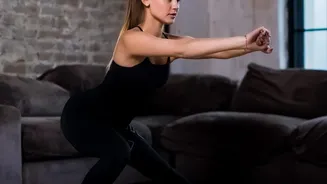
Proper form is crucial to maximize benefits and prevent injury. Start by standing with your feet hip-width apart. Step one foot forward, about the length of a walking stride. Keeping your torso upright, lower your hips until both knees are bent at approximately a 90-degree angle. Your front knee should be aligned over your ankle, not drifting past your toes, and your back knee should hover just above the floor. A common mistake is allowing the front knee to cave inward; focus on keeping it aligned with your foot. Push off your front foot to return to the starting position, engaging your glutes and quads.
Modifications and Progressions
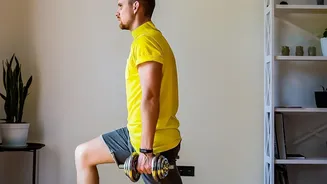
If you're new to lunges, don't be afraid to modify. You can hold onto a wall or a sturdy piece of furniture for support to help with balance. You can also reduce the range of motion, not going down as deep until you build more strength. Once you've mastered the basic lunge, you can explore variations. Reverse lunges, where you step backward instead of forward, are often easier on the knees and place more emphasis on the glutes and hamstrings. Walking lunges add a dynamic component, while side lunges target the inner and outer thighs. For an extra challenge, you can hold dumbbells or other weights to increase resistance.