

It’s a claim bold enough to stop anyone in their tracks: cancer could be a 'relic of the past' in under a decade. That audacious prediction comes from Dario Amodei, the CEO of leading AI company Anthropic. But is this a realistic scientific forecast or just
tech optimism?
The Billion-Dollar Prediction
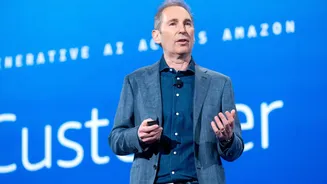
The head of one of the world's most advanced artificial intelligence labs has made a habit of predicting that AI could help cure most major diseases within a 5-to-10-year window. In statements and videos, Dario Amodei, a co-founder of Anthropic and a former OpenAI executive, has argued that the exponential progress of AI will usher in an 'age of miracles' for humanity. He believes that AI's ability to process and understand biology on a massive scale could compress a century of medical research into a fraction of the time. Amodei, who has a personal connection to the cause after surviving an early-stage cancer, frames this not as magic, but as a new engine for science itself. He is not alone; other tech leaders like Google DeepMind's Demis Hassabis have voiced similar optimism about AI's potential to revolutionize drug discovery.
How AI Becomes a Scientific Engine
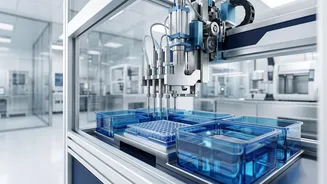
The core idea isn't that a chatbot will find a cure, but that AI can fundamentally change how research is done. Scientists are already using AI to accelerate progress in several key areas. AI models can analyze vast biological datasets, identifying patterns in genes, cells, and patient data that are invisible to humans. A prime example is drug discovery. Instead of screening millions of chemical compounds by hand, a process that can take years, AI can predict which molecules are most likely to effectively target a cancer cell. Google's AlphaFold AI, for instance, has already predicted the 3D structures of over 200 million proteins, a monumental leap that helps scientists understand disease mechanisms and design better drugs. This allows researchers to move from computer-based design directly to targeted lab testing, drastically shortening development timelines.
A Reality Check From the Medical World
While the technological promise is immense, many medical experts urge caution regarding the 10-year timeline. Oncologists and researchers point out that 'cancer' is not one disease but hundreds of complex and distinct illnesses. A breakthrough for one type may not apply to others. Dr. Sherene Loi, a medical oncologist, noted that unless AI can conduct its own physical experiments, a universal cure in a decade seems unlikely. Furthermore, even if AI identifies a promising drug candidate, the path to patient use is long and arduous. It involves rigorous clinical trials to ensure safety and effectiveness, followed by a stringent regulatory approval process. As one biotech executive noted, biology is far more complex and less predictable than pure mathematics; what works in a computer simulation doesn't always work in a human body.
Beyond the Hype: A New Era of Treatment
Even if a complete 'cure' for all cancers within a decade is overly ambitious, the impact of AI is undeniably transformative. The consensus among medical professionals is that AI is an essential tool for navigating the growing complexity of cancer care. AI can help doctors match patients to the right clinical trials, personalize treatments based on an individual's unique genetic makeup, and detect cancers earlier from medical scans with greater accuracy. It can sift through mountains of research to give a physician the most up_to_date information, acting as an expert assistant. The real revolution may not be a single 'cure', but a future where cancer becomes a more manageable and controllable condition for many, with treatments becoming far more precise, effective, and rapidly developed than ever before.