





Start With a Pre-Monsoon Check
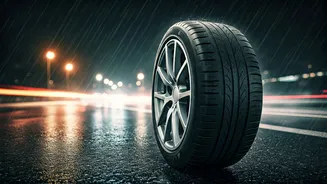
The safest monsoon journey begins before you even turn the key. Your car needs to be ready for the challenge. First, check your tyres. Adequate tread depth (at least 2-3mm) is non-negotiable. The grooves on your tyres are designed to channel water away,
and if they're worn out, you’re at high risk of skidding. Also, ensure they're inflated to the manufacturer’s recommended pressure. Second, inspect your wiper blades. If they leave streaks or make squeaking noises, replace them immediately. Clear vision is your first line of defence in a downpour. Finally, have your brakes and lights checked. Wet roads increase stopping distances, so your brakes must be in top condition. Ensure all lights — headlights, taillights, and indicators — are working perfectly to see and be seen.
Slow Down and Increase Following Distance
This might sound obvious, but it’s the most violated rule on Indian roads. During the monsoon, you’re not just dealing with rain; you’re dealing with reduced visibility, slick roads coated in oil and grime, and the sudden appearance of other vehicles or pedestrians. Reducing your speed by 10-20 km/h gives you crucial extra seconds to react. Equally important is increasing the distance between you and the vehicle in front. The standard ‘three-second rule’ should be extended to a ‘five-second rule’. To do this, watch the vehicle ahead pass a fixed object like a lamp post, and then count how many seconds it takes you to pass the same spot. If it's less than five, you’re too close. This buffer zone is your safety net against sudden braking.
Master Your Visibility, Inside and Out
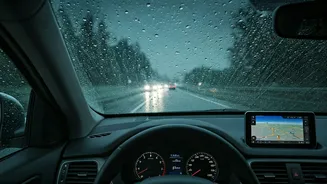
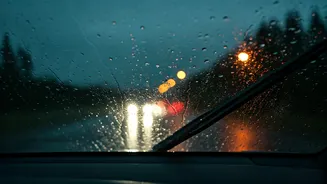
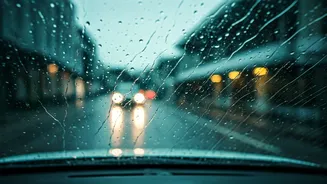
You can't avoid what you can't see. As soon as it starts raining, turn on your headlights (on low beam). This isn't just for you to see; it's so others can see you, especially in the grey gloom of an overcast day. Inside the car, fogging is a major issue. Don't just wipe the windscreen with your hand; it leaves a greasy smear that worsens night-time glare. Instead, use your car's air conditioning. The AC acts as a dehumidifier, clearing the glass quickly and effectively. Direct the airflow towards the windscreen using the defogger setting. For the rear, use the electric defogger if your car has one. A clean windshield, inside and out, is essential for clarity.
Beware the Hidden Dangers: Potholes and Puddles
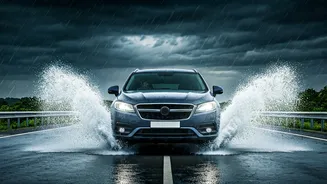
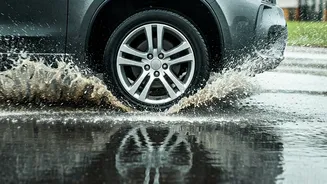
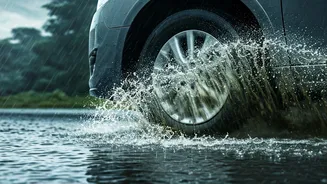
Monsoon rains turn familiar roads into treacherous territory. Puddles that look harmless can conceal deep, suspension-breaking potholes. If you see a puddle of unknown depth, it's always safer to go around it if possible. If you must drive through it, do so slowly and carefully. Watch how the vehicle in front of you fares. A sudden splash or jolt is a clear warning sign. Another hidden danger is the oil and diesel residue on the road surface, which mixes with rainwater to create an incredibly slippery film. Be extra cautious on the first rains of the season, as this is when roads are at their most treacherous before the grime is washed away.
Know How to Handle Aquaplaning
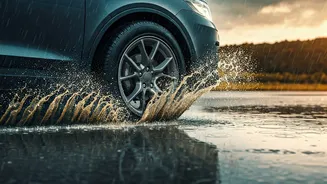
Aquaplaning (or hydroplaning) is one of the scariest monsoon driving experiences. It happens when your tyres can't disperse water fast enough, causing them to lose contact with the road and skim over the water's surface. You'll feel the steering suddenly go light and the car will not respond to your inputs. The natural instinct is to panic and slam on the brakes, but this is the worst thing to do. It can cause you to spin out of control. The correct response is to remain calm. Gently ease your foot off the accelerator. Do not brake or make any sudden steering movements. Keep the steering wheel straight and allow the car to slow down on its own until you feel the tyres regain their grip on the road.
Navigating Waterlogged Streets Safely
Driving through heavily waterlogged areas can cause catastrophic damage to your engine. As a rule, avoid it. If the water level seems to be above the bottom of your car doors, do not attempt to drive through. Find an alternate route. If you have no choice and the water is shallow, proceed with extreme caution. Keep the car in a low gear (first or second) and maintain a steady, slightly higher-than-usual engine RPM to prevent water from entering the exhaust pipe. Drive slowly but consistently; don't stop in the middle. If you create a 'bow wave' in front of your car, it helps push water away from the engine bay. Once you're through, gently tap your brakes a few times to dry them out and ensure they are working properly.