







The Biggest Change: Front-of-Pack Warnings
For years, crucial nutritional information has been hidden in small print on the back of food packets. The Food Safety and Standards Authority of India (FSSAI) is changing this by introducing mandatory Front-of-Pack Labelling (FoPL). The goal is to give
consumers a quick, easy-to-understand signal about the healthiness of a product. Instead of searching for details, you will soon see prominent warnings on the front of items that contain excessive levels of unhealthy ingredients, helping you make healthier choices in seconds.
Look for the Red Hexagon
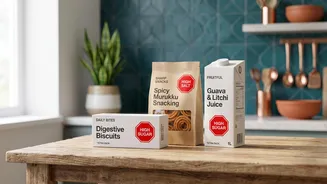
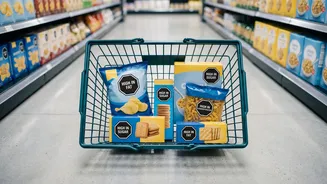
The most significant new feature will be a red hexagonal warning symbol. This label will be placed on the top left of the package and will clearly state if a product is “HIGH in SUGAR”, “HIGH in SALT”, or “HIGH in FAT”. If a product exceeds the recommended threshold for more than one of these nutrients, a single red hexagon will list all of them. This system is designed to be a clear, unmissable alert for shoppers, similar to warning labels used in countries like Canada and Chile. The idea is to cut through marketing claims and provide a simple, science-backed warning.
Understanding 'High Fat, Sugar, and Salt'
What qualifies as 'high'? The thresholds are based on the Dietary Guidelines for Indians, 2024, developed by the ICMR-National Institute of Nutrition. The focus is on 'added' sugars and fats, not those naturally occurring in ingredients like milk or fruit. This is a crucial distinction, as added sugars provide empty calories and are a major contributor to health issues. FSSAI has been working to define clear limits. For example, a recent draft for foods sold in schools classified a solid food as 'high in added sugar' if it contained more than 3 grams per 100 grams, and 'high in salt' if it had over 0.625 grams. While the final thresholds for all products are being finalized, the principle remains: the label will flag foods with excessive amounts of these specific nutrients.
Don't Forget the Back of the Pack
While the new front-of-pack warnings are a powerful tool, they are not a replacement for reading the full label. Experts advise consumers to 'flip the pack' and check the ingredients list. By law, ingredients must be listed in descending order by weight. If sugar, refined flour (maida), or palm oil are among the first three ingredients, you know what the product is primarily made of, regardless of any health claims on the front. Also, watch out for hidden sugars disguised under names like sucrose, glucose, fructose, or corn syrup.
Check 'Per 100g', Not Just 'Per Serving'
One of the most common ways consumers are misled is by unrealistic serving sizes. A nutrition panel might show low numbers for sugar or fat, but it could be for a tiny 30g serving when the packet contains 200g. Always compare products using the 'per 100g' or 'per 100ml' column, as this provides a standardized way to judge nutritional content. The new regulations aim to simplify this, but being mindful of the 'per 100g' values is the most reliable way to make an accurate comparison between two different products.
Putting It All Together on Your Next Shopping Trip
Once these labels are rolled out, your shopping routine can become much simpler. When comparing two brands of biscuits or breakfast cereals, start with a quick glance at the front. Does either have a red warning label? If so, you immediately have a crucial piece of information. From there, you can flip the pack to compare the 'per 100g' sugar and sodium content to make the most informed choice. This combination of front-of-pack warnings and back-of-pack details empowers you to see past the marketing and truly understand what you are eating. The FSSAI is expected to finalize the regulations and provide a transition period for companies, so consumers will start seeing these changes on shelves soon.