



The Moon's Buried Treasure
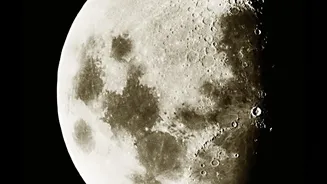
For decades, scientists theorised about water on the Moon. India’s Chandrayaan-1 mission provided groundbreaking evidence, and recent data from the Chandrayaan-2 orbiter further suggests significant deposits of subsurface ice exist in the permanently
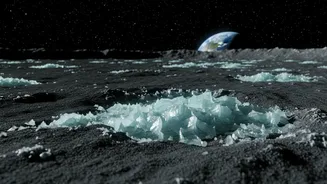
shadowed regions (PSRs) near the lunar poles. These areas, which haven't seen sunlight in billions of years, are incredibly cold, preserving water ice mixed with lunar soil, or regolith. This ice is more than a scientific curiosity; it's a game-changer for space exploration. Through a process called In-Situ Resource Utilization (ISRU), this water can be extracted and split into hydrogen and oxygen. This provides not just drinking water and breathable air for astronauts, but also the ingredients for rocket propellant, potentially turning the Moon into a refuelling station for missions deeper into our solar system.
The Challenge of Eternal Darkness
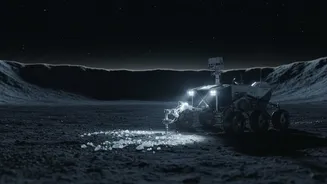
Accessing this resource presents an immense engineering challenge. The PSRs are some of the coldest places in the solar system, with temperatures plummeting to -250 degrees Celsius. The perpetual darkness means solar-powered rovers cannot operate for long, and the exact quantity and state of the ice remain unknown. To move from detection to utilisation, we need robotic explorers capable of navigating this harsh environment, surviving the cold, drilling beneath the surface, and analysing the material on the spot. Recent findings from ISRO's Chandrayaan-2 orbiter have used radar to map these areas, giving scientists a much clearer idea of where to send future landers to find this buried ice.
A New Generation of Lunar Tools
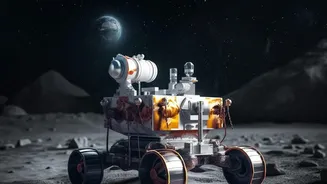
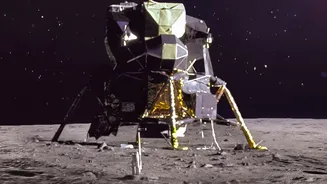
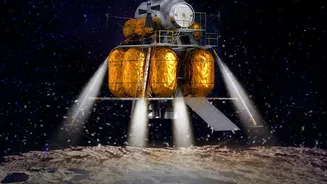
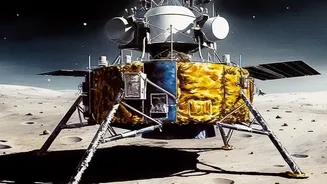
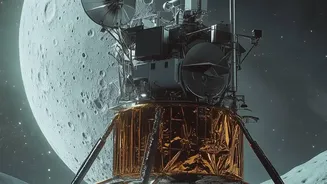
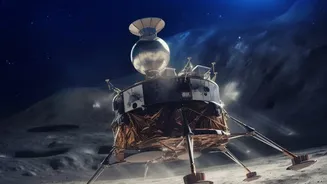
To meet this challenge, ISRO is playing a key role in developing a new suite of surface technologies for a future mission. This is part of the Lunar Polar Exploration (LUPEX) mission, a landmark collaboration between ISRO and the Japan Aerospace Exploration Agency (JAXA). For this joint mission, planned for no earlier than 2028, ISRO is responsible for developing the powerful lander that will deliver the hardware to the lunar south pole. Furthermore, ISRO is providing a key scientific instrument for the rover: a ground-penetrating radar. This instrument will be the mission's eyes, peering up to three meters beneath the surface to create a detailed map of the hidden ice deposits. This prospecting tool is a critical first step towards any harvesting effort.
How the Mission Will Work
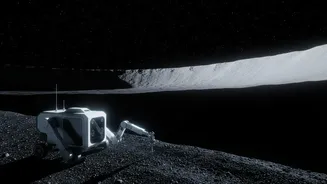
The LUPEX mission strategy is a systematic approach to prospecting. Once the ISRO-built lander touches down, it will deploy the JAXA-developed rover. Using data from ISRO's radar and a NASA-provided neutron spectrometer, the rover will navigate to promising locations. The rover is equipped with a drill capable of extracting regolith from up to 1.5 meters below the surface. This sample will then be delivered to onboard instruments that will heat it and analyse the released gases to confirm the presence of water and measure its quantity and quality. While not large-scale harvesting, this detailed analysis is the essential groundwork required to understand the resource's viability before designing future extraction and processing plants on the Moon.
Paving the Way for a Lunar Future
These new payloads and missions represent a strategic shift from pure exploration to resource assessment. By developing the capability to prospect for lunar ice, ISRO is positioning India as a leader in the next phase of space exploration: sustainability. The knowledge gained from the LUPEX mission will be invaluable for the global effort to establish a long-term human presence on the Moon, including NASA's Artemis program. It solidifies India's role as a critical partner in developing the technologies that will allow humanity to live and work on another celestial body. This is not just about finding water; it's about building the foundation for a multi-planetary future.