








First, Read the Signs of Distress
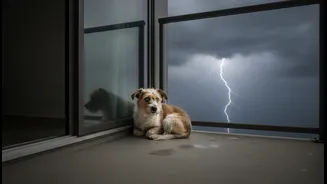
Before you can help, you need to recognise the problem. Storm anxiety in dogs and cats can range from mild to severe. Early, subtle signs might include panting when it's not hot, excessive yawning, lip licking, or becoming unusually clingy. As the fear
escalates, you may see more obvious signs like trembling, shaking, pacing, and whining or howling. In cases of severe phobia, pets may become destructive, lose bladder or bowel control, or even try to escape the house to find safety. Recognising these behaviours as symptoms of anxiety, not misbehaviour, is the first step toward providing compassionate support.
The Unseen Triggers: Pressure and Static
Does your pet start acting anxious long before you hear the first rumble of thunder? They might be sensitive to changes you can't perceive. Animals are highly attuned to shifts in barometric pressure that precede a storm. This change in atmospheric pressure can be unsettling. Additionally, the buildup of static electricity in the air can cause an uncomfortable tingling sensation or even deliver small, painful shocks to their fur and nose. This may explain why some dogs seek refuge in bathrooms or basements; the porcelain of a bathtub and concrete floors are grounded, offering relief from the static charge.
The Sounds and Sights of the Storm
The most obvious triggers are, of course, the loud, unpredictable cracks of thunder and the startling flashes of lightning. A dog's hearing is far more sensitive than ours, allowing them to hear low-frequency rumbles from a great distance, putting them on edge before the storm is even overhead. The sudden, bright flashes of lightning can also be extremely distressing, as animals process visual information differently than humans. To counter these triggers, close curtains and blinds to block out the flashes. You can also muffle the sound of thunder by playing calming music, turning on a television for background noise, or using a white noise machine.
Create a 'Safe Haven' Before It's Needed
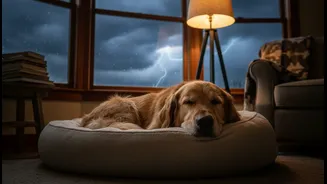
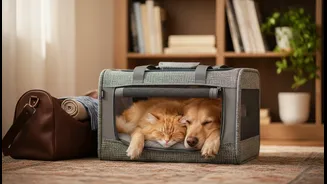
Every anxious pet deserves a designated safe space where they can retreat. This shouldn't be a place of punishment but a comfortable den they can access at any time. An interior closet, a bathroom, or a crate covered with a blanket can work well, as these spots muffle noise and block light. Make this area inviting with their favourite soft bedding, a few familiar toys, and perhaps an item of your clothing that carries your reassuring scent. The key is to establish this space when your pet is calm, not in the middle of a storm, so they associate it with security and relaxation. Never force them into the space; allow them to go there willingly.
Your Calm Is Their Cue
Pets are incredibly perceptive and often take emotional cues from their owners. If you are tense, anxious, or overly fussy during a storm, you can inadvertently signal to your pet that there is something to be afraid of. While it's natural to want to comfort a scared animal, excessive coddling can sometimes reinforce their fear. Instead, project a calm and confident demeanor. Speak in a normal, soothing voice and go about your routine as much as possible. Offering a distraction like a favourite game or a puzzle feeder filled with treats can help create a more positive association with storm-related sounds and sensations.
Tools and Professional Support
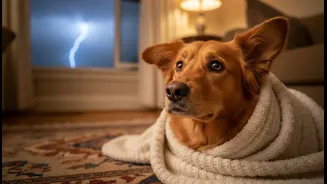
For some pets, behavioural strategies alone aren't enough. Several tools can help, such as compression wraps or shirts that apply gentle, constant pressure, which has a swaddling, calming effect. Pheromone diffusers or collars can also help reduce stress by mimicking the calming hormones produced by mother animals. For pets with severe phobias, it is crucial to speak with a professional. Your veterinarian can rule out any other medical issues and may recommend anti-anxiety medications that are safe and effective for short-term use during storms. They can also refer you to a certified animal behaviourist for advanced techniques like desensitization and counter-conditioning.