



The Perfect Pair
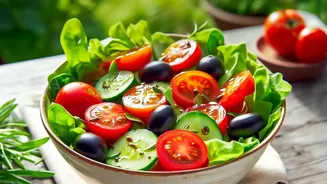
When you picture a Mediterranean salad, from a Greek 'Horiatiki' to an Israeli chopped salad, the vibrant red of tomatoes and the cool green of cucumbers immediately come to mind. This pairing is foundational, offering a perfect balance of texture and flavor.
The cucumber provides a hydrating, crisp crunch that contrasts beautifully with the juicy, slightly acidic sweetness of a ripe tomato. Together, they create a refreshing base that is both simple and deeply satisfying, forming the heart of countless summer dishes across the region. Their juices mingle with olive oil and herbs to create a natural dressing that is often sopped up with crusty bread.
A Surprising History
Despite their status as Mediterranean icons, neither cucumbers nor tomatoes are native to the region. Cucumbers originated in India over 3,000 years ago and were spread to Europe by the Romans, valued for both their culinary and medicinal properties. Tomatoes, on the other hand, are a New World fruit from South America, brought to Europe by Spanish explorers in the 1500s. For centuries, Europeans were suspicious of tomatoes, often growing them only as ornamental plants due to their relation to the nightshade family. It wasn't until the 18th and 19th centuries that they became a widespread culinary staple in countries like Italy and Greece, eventually becoming inseparable from the idea of Mediterranean cuisine.
A Nutritional Powerhouse
Beyond their taste, the cucumber-tomato duo offers a wealth of health benefits. Cucumbers are over 95% water, making them incredibly hydrating, which is especially beneficial in a warm climate. They are also a source of vitamin K, potassium, and magnesium. Tomatoes are packed with antioxidants, most notably lycopene, which is linked to a reduced risk of heart disease and certain cancers. They are also a great source of vitamin C, potassium, and fiber. Together, they provide a low-calorie, nutrient-dense foundation for any meal, supporting everything from hydration and heart health to digestion.
Beyond the Greek Salad
While the classic Greek 'Horiatiki'—a rustic mix of tomatoes, cucumbers, onion, feta, and olives—is world-famous, this pairing shines in many other regional salads. In Iran, 'Salad-e Shirazi' features finely diced cucumber, tomato, and onion, often with mint and a dressing of lime juice or verjuice. A very similar dish, known as Israeli salad, is a national staple, using parsley instead of mint and lemon juice for dressing. The Turkish 'Çoban Salatasi' (Shepherd's Salad) is another variation on this theme, proving the versatility and widespread appeal of these simple, fresh ingredients.
How to Choose the Best
To get the most out of your salad, selecting the right ingredients is key. For cucumbers, look for firm, seedless varieties like English or Persian cucumbers. They have thinner skin, a satisfying crunch, and are less watery than other types. When it comes to tomatoes, the best ones are ripe, in-season, and full of flavor. For a classic Mediterranean salad, firm varieties like Roma or plum tomatoes hold their shape well when chopped. For a sweeter, juicy bite, cherry or heirloom tomatoes are excellent choices. The rule is simple: the better the raw ingredients, the more delicious the final dish will be.