





The Rise of the 'Exercise Snack'
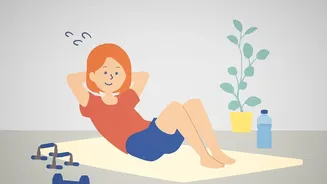
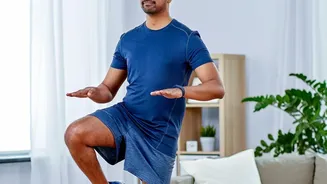
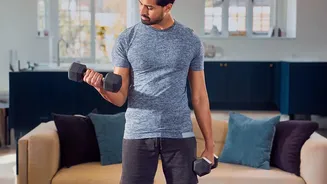
The idea of exercising in short bursts, often called 'exercise snacking', has gained significant traction. Research shows that these mini-workouts, sprinkled throughout the day, can offer real health benefits, including improved cardiovascular health,
better blood sugar control, and enhanced mood. Breaking up long periods of sitting with even a few minutes of movement helps counteract the negative effects of a sedentary lifestyle. For many, finding 30-60 minutes for a traditional workout feels impossible, but almost anyone can find five minutes. This makes consistency, a critical factor in any fitness journey, far more achievable. Studies suggest that multiple short sessions can sometimes be more beneficial than one long workout followed by hours of inactivity. So, yes, five-minute routines are more than just a trend; they are a scientifically-backed way to build a foundation of health.
Decoding the Wall Push-Up
The wall push-up is a cornerstone of many beginner and five-minute routines, and for good reason. It primarily targets the chest (pectorals), shoulders (deltoids), and arms (triceps), the same muscles worked in a standard push-up. Its main advantage is accessibility. By performing the movement against a wall, you reduce the amount of body weight you have to lift, making it an excellent starting point for those new to exercise or with limited upper body strength. This modification is also gentler on the wrist and shoulder joints compared to floor push-ups. Performing wall push-ups allows you to focus on mastering the proper form—keeping your body in a straight line from head to heels and engaging your core—without the immediate strain of a full push-up.
A Realistic Look at Results
While wall push-ups are beneficial, it's crucial to have the right perspective. They are a low-intensity exercise. They are fantastic for building a baseline of strength, improving form, and creating the mind-muscle connection needed for more advanced moves. However, they are unlikely to build significant muscle mass or lead to major strength gains on their own, especially once they start to feel easy. The principle of 'progressive overload' is key to getting stronger, which means you must continually challenge your muscles. If you can perform many wall push-ups without feeling challenged, your body has adapted, and it's time to move on to a more difficult variation to continue making progress. Think of wall push-ups not as the destination, but as the first, very important, step on a longer fitness journey.
Beyond the Wall: A Balanced Routine
A truly effective five-minute workout should be balanced. While wall push-ups are great for the upper body, you also want to include movements that work your lower body and core. This ensures you're training your whole body and getting more cardiovascular benefit. A simple, balanced five-minute circuit could look like this: - Minute 1: Marching or jogging in place (to warm up and raise your heart rate). - Minute 2: Wall push-ups (for upper body strength). - Minute 3: Bodyweight squats (to work your legs and glutes). - Minute 4: Plank (to engage your core). - Minute 5: Jumping jacks (for a final cardio burst). This structure ensures you hit multiple muscle groups and provides a more comprehensive workout than five minutes of a single exercise.
How to Progress from Wall Push-Ups
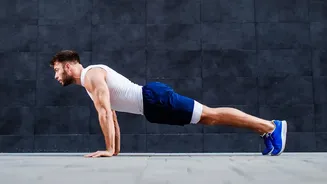
Once you feel confident and strong with wall push-ups, the next step is to increase the challenge. This is where progressive overload comes into play. Instead of staying at the wall, you can move to incline push-ups by placing your hands on a sturdy desk, a bench, or a low step. The lower the incline, the more of your body weight you'll be lifting, making the exercise harder. From a low incline, you can then progress to push-ups on your knees, and finally to full, standard push-ups on the floor. Other ways to progress include slowing down the movement, especially the lowering phase (called an eccentric movement), or increasing the number of repetitions. This gradual progression is the safest and most effective way to build the strength required for one of fitness's most classic and rewarding exercises.