







The Post-Meeting Black Hole
We've all been there. You leave a productive meeting feeling energised, only to find that by the next morning, the specific details have become fuzzy. Who agreed to handle the Q3 budget draft? What was the exact deadline for the client follow-up? Relying
on memory is a recipe for dropped balls and missed opportunities. The traditional solution—manually typing up minutes—is a time-consuming administrative burden that no one wants. For teams that record meetings, the task of sifting through a 60-minute audio file to find a 30-second decision point is inefficient and draining. This gap between discussion and action is where momentum dies.
Start with a Clean Recording
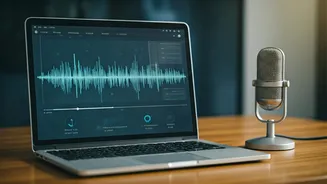
The principle of 'garbage in, garbage out' is especially true here. Before you can think about action plans, you need a clear audio source. An AI tool can't decipher what it can't hear. Ensure your recording setup is solid. If you're in a physical room, place a dedicated microphone in the centre of the table. If you're on a video call, encourage everyone to use a headset with a microphone. This small step dramatically reduces background noise and cross-talk, making transcription far more accurate. Also, start the meeting by having each speaker introduce themselves. This helps AI tools (and humans) correctly identify who is speaking, which is crucial for assigning tasks later.
Embrace the AI Meeting Assistant
This is where the magic happens. A new generation of AI-powered tools is designed specifically to solve this problem. Services like Otter.ai, Fireflies.ai, and others integrate directly with your calendar and video conferencing apps (like Zoom, Google Meet, and Microsoft Teams). During the meeting, they act as a virtual scribe, generating a real-time transcript. But their real power is unlocked after the call. Within minutes, they process the entire recording and provide a searchable transcript, speaker labels, and, most importantly, an automated summary that attempts to identify key topics and action items. This transforms an unstructured conversation into a structured, analysable document.
Refine the AI's First Draft
AI provides a fantastic starting point, but it's not infallible. It might misunderstand industry jargon, misinterpret sarcasm, or fail to grasp the nuance of a conversation. Your role now shifts from a transcriber to an editor. Don't just accept the automated summary. Spend 10-15 minutes reviewing the AI-generated highlights. Read through the key moments it flagged. Does the summary accurately reflect the main decisions? Did it correctly capture who is responsible for a task? Use the searchable transcript to quickly jump to key parts of the conversation and verify the details. This human oversight is what turns a decent summary into a reliable source of truth.
Extract and Structure Your Action Plan
With a refined summary in hand, the final step is to create the action plan itself. Your goal is to pull out concrete, actionable commitments from the conversation. Create a simple table or a list with clear headings. The most effective action plans contain three essential components for every item:
1. **The Task:** What is the specific action that needs to be completed? Use a clear, verb-oriented description (e.g., "Draft the Q4 marketing proposal").
2. **The Owner:** Who is the single individual responsible for ensuring this task gets done? Avoid assigning tasks to entire teams to ensure clear accountability.
3. **The Deadline:** When is the task due? Be specific. "Next week" is vague; "Friday, 25 October, by 5 PM" is clear.
Share and Track for Accountability
An action plan is useless if it sits in your private notes. Immediately after you've created it, share it with all meeting attendees. Post it in your team's shared channel (like Slack or Microsoft Teams), email it, or add it to a project management tool like Asana, Trello, or Jira. This creates a shared record and builds a culture of accountability. By making the action items public, everyone is clear on their responsibilities and their colleagues' commitments. This simple act of distribution closes the loop and ensures that the valuable time spent in the meeting translates directly into tangible progress.