






The Probe That Peered Beneath the Dust
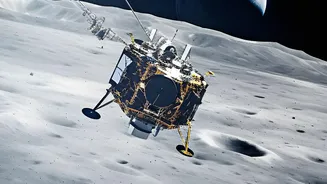
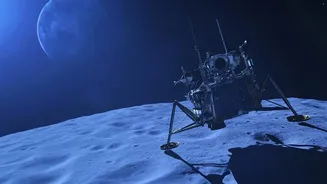
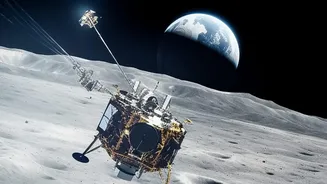
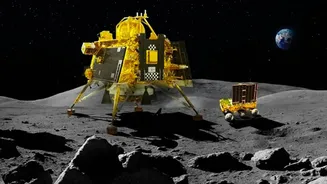
The groundbreaking discovery comes from an instrument aboard the Vikram lander called the Chandra’s Surface Thermophysical Experiment, or ChaSTE. After Vikram's successful landing at the Shiv Shakti Point near the lunar south pole on August 23, 2023,
ChaSTE deployed a probe equipped with 10 temperature sensors. This probe successfully penetrated 10 centimetres into the Moon's surface, or regolith, providing the first-ever direct measurements of the thermal profile of the topsoil at a lunar polar region. An analysis published on November 17, 2026, led by scientists at the Physical Research Laboratory in Ahmedabad, has now detailed these unprecedented findings, revealing a structure more complex than ever imagined.
Layer One: The Fluffy Insulator
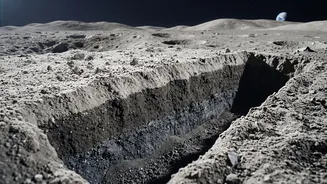
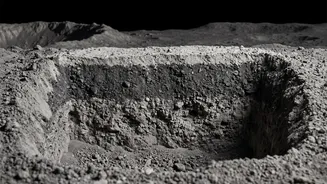
The first layer, extending from the surface down to about 3 centimetres, is surprisingly porous and light. Researchers estimate it has a porosity of about 80% and a low bulk density of around 600 kilograms per cubic metre, which is just over half the density of water. This top layer acts as a highly effective thermal blanket. Data shows a staggering temperature difference of about 73 Kelvin (a drop of 73 degrees Celsius) across the top 10 centimetres at local noon on the Moon, with this top layer preventing the Sun's intense heat from penetrating deeper. This finding confirms the lunar regolith is an extremely poor conductor of heat.
Layer Two and Three: A Story of Compaction
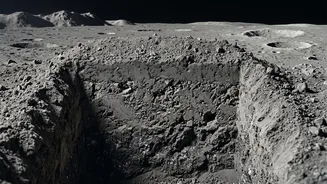
Beneath the fluffy topsoil, things change significantly. The second layer, found between 3 and 6 centimetres deep, shows a higher thermal conductivity. Below that, from 6 to 10 centimetres, lies a third, even denser layer with intermediate conductivity. The density of the soil increases dramatically with depth, reaching about 1,500 kilograms per cubic metre at the 10-centimetre mark. Its cohesion, or how 'sticky' the material is, also increases substantially, making it much more compact than the loose dust on top. Scientists had not expected to find such fine-scale layering within just a few centimetres. The discovery paints a picture of the lunar surface as a 'layered cake' rather than a uniform pile of dust.
A Tale Told by a 'Hop'
These findings build upon earlier analysis from a unique manoeuvre performed by the Vikram lander. On September 3, 2023, using its residual propellant, the lander fired its engines and 'hopped' about 50 centimetres to a new location. This engine blast blew away the top 2 to 3 centimetres of loose soil, effectively stripping off the first layer. When ChaSTE re-penetrated the ground at this new spot, it gave scientists a direct look at the underlying, more compact layers. An initial analysis from this 'hop' site revealed a two-layer structure. The new, more detailed analysis from the original, undisturbed landing site has now revealed the complete three-layer profile, including the crucial topmost 'fluff' layer.
Why These Layers Matter
Understanding this layered structure is critical for future lunar missions, both robotic and crewed. The stability and thermal properties of the regolith are vital for designing foundations for habitats, planning excavation activities, and for the in-situ resource utilisation that will be necessary for a long-term human presence on the Moon. For instance, the highly insulating nature of the topsoil could be beneficial for protecting subsurface structures from extreme temperature swings. Furthermore, the varying density and composition offer clues into the geological history of the lunar south pole, suggesting that successive impacts from nearby craters may have deposited material with different properties over aeons, creating this complex layering.