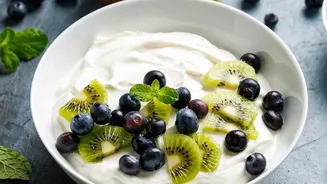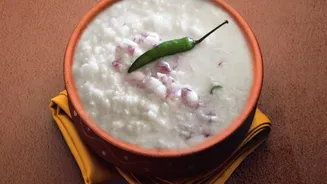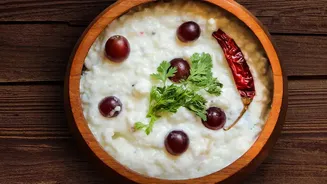



The Great Winter Curd Debate
In many Indian households, curd (or dahi) is a beloved staple during the sweltering summer months. However, as temperatures drop, it's often banished from the dining table. The long-held belief is that curd has a 'cooling' effect on the body and can contribute
to colds, coughs, and mucus build-up, making it unsuitable for winter. Ayurvedic tradition, in particular, advises caution. It suggests that curd can increase 'Kapha' dosha, which is associated with cold, heaviness, and mucus. This is especially thought to be true when consuming it at night or if you are already prone to respiratory issues like asthma or sinus problems.
A Nutritional Powerhouse for All Seasons
From a modern nutritional standpoint, the idea that curd causes colds is largely considered a myth. Colds and flu are caused by viruses, not by food. Curd is packed with essential nutrients that are beneficial year-round, including during winter. It's an excellent source of high-quality protein, calcium for bone health, and vitamins like B12. Most importantly, curd is a probiotic food, meaning it contains live bacteria that are incredibly beneficial for gut health. A healthy gut is the foundation of a strong immune system, which is your primary defence against seasonal illnesses. Studies have even shown that consuming probiotic-rich foods may help reduce the risk and duration of respiratory tract infections.
The Ayurvedic View: It's Complicated
While some modern interpretations of Ayurveda prohibit curd in winter, others offer a more nuanced view. Some Ayurvedic experts point out that curd is technically 'ushna' or warm in nature after it undergoes digestion. The main concern in Ayurveda is its tendency to increase Kapha dosha, which can lead to congestion if consumed improperly. For this reason, Ayurveda strictly advises against eating curd at night, when the digestive fire ('agni') is weaker and Kapha is naturally higher. It also suggests that individuals with existing respiratory conditions, allergies, or asthma should be particularly cautious or avoid it altogether during winter.
Smart Ways to Enjoy Curd in Winter
The consensus among many nutritionists and even some modern Ayurvedic practitioners is that you don't need to completely give up curd in winter. The key is to consume it mindfully. The primary issue is often the temperature of the curd, not the curd itself. Eating dahi straight from the refrigerator can be a shock to the system and may contribute to throat irritation. Instead, always allow it to come to room temperature before eating. It's also best to consume it during the daytime, preferably with lunch, when your digestion is at its peak. To counteract its mucus-forming properties, you can add warming spices like black pepper, roasted cumin powder, or a little ginger. Another great option is to have it in the form of buttermilk (chaas), which is considered lighter and easier to digest.
Ultimately, whether or not you should eat curd in winter depends on your individual body and health. Modern science confirms that curd is a nutrient-dense food that can boost immunity, which is vital during the cold season. However, the traditional Ayurvedic caution about it increasing mucus holds true for some people, especially those with pre-existing respiratory issues. If you find that eating curd gives you a stuffy nose or a scratchy throat, it's wise to limit it or avoid it. But if you can digest it without any problems, there is no scientific reason to exclude this healthy food from your winter diet. The best approach is to eat it at room temperature, during the day, and in moderation.