







The Global Ripple Effect of El Niño
At its core, El Niño is a naturally occurring climate pattern, part of the El Niño-Southern Oscillation (ENSO) cycle. It involves the unusual warming of the sea surface temperatures in the central and eastern equatorial Pacific Ocean. This warming doesn't
just stay in the Pacific. It releases a tremendous amount of heat into the atmosphere, altering air pressure and disrupting the normal global circulation of winds. Think of it as a massive atmospheric disturbance. Normally, strong trade winds blow from east to west, pushing warm surface water towards Asia and helping pull moisture-laden winds towards the Indian subcontinent to fuel the monsoon. During an El Niño, these trade winds weaken, causing the warm water to slosh back eastward, which can disrupt this vital moisture supply to India.
The Monsoon Connection and Its Economic Weight
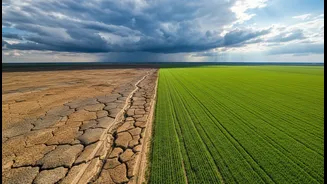
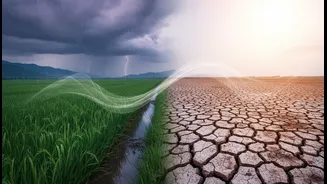
The Southwest Monsoon is the lifeblood of India, accounting for over 70% of the country's annual rainfall. This rainfall is critical for agriculture, which sustains nearly half of India's workforce. A strong El Niño is historically associated with weaker monsoon rains and potential droughts in India. The connection is straightforward: the atmospheric changes triggered in the Pacific can lead to suppressed convection over the Indian Ocean, weakening the monsoon winds and reducing rainfall. The economic fallout from a poor monsoon is immense. It directly impacts agricultural output, particularly rain-fed Kharif crops like rice, cotton, and pulses. This can lead to lower farm incomes, which in turn dampens rural demand for goods like tractors and motorcycles. The most immediate and widely felt impact is on food prices, as lower supply often leads to a spike in inflation.
India's Proactive Planning and Forecasting
Given the high stakes, India has invested heavily in monitoring and preparing for El Niño's impact. The India Meteorological Department (IMD) is the nodal agency, issuing forecasts in two stages, in April and June, which help the government and farmers plan ahead. In recent years, forecasting has become more sophisticated, incorporating dynamic models and even artificial intelligence to provide more granular, block-level predictions. Armed with these forecasts, the government activates comprehensive contingency plans. These include identifying vulnerable districts, promoting the cultivation of less water-intensive crops, ensuring the availability of seeds, and preparing for efficient water management. Central and state governments coordinate to monitor reservoir levels, plan for potential drinking water shortages, and manage food stocks to control inflation.
More Than Just an On-Off Switch
While the correlation between El Niño and a weak monsoon is strong, it's not a guaranteed outcome. Not every El Niño year results in a severe drought. Other climate phenomena can play a crucial role, sometimes acting as a counterbalance. The most significant of these is the Indian Ocean Dipole (IOD), a sort of 'Indian El Niño'. A 'positive' IOD, where the western Indian Ocean becomes warmer than the east, can enhance monsoon rainfall by pushing more moisture towards India, sometimes offsetting El Niño's negative influence. Conversely, a 'negative' IOD can worsen drought conditions when it occurs alongside an El Niño. This complex interplay is why scientists at the IMD closely monitor both the Pacific and Indian Oceans, making monsoon forecasting a challenging but vital task.
The 2026 Outlook and Ongoing Vigilance
As of July 2026, climate models indicate that a strong El Niño event is developing and expected to intensify through the Northern Hemisphere autumn and winter. Early monsoon data for India showed a significant rainfall deficit in June, with forecasts for July also pointing towards below-normal rain. This has put government agencies on high alert. The Union government has been reviewing drought preparedness, directing departments to prepare for impacts on agriculture and water availability. States like Andhra Pradesh have already activated comprehensive disaster plans, identifying vulnerable mandals and encouraging alternative cropping patterns. This proactive stance underscores a critical reality: El Niño is not a sporadic crisis but a recurring climate risk that is permanently embedded in India's agricultural and economic planning cycles.