


Why Rain Can Be a Problem
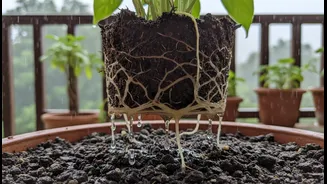
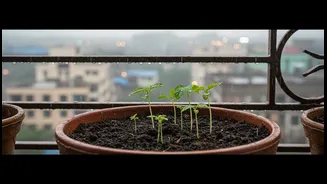
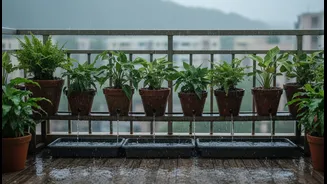
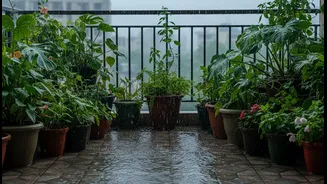
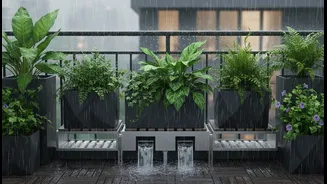
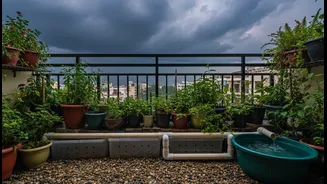
While rain is essential for plant life, too much of a good thing can be disastrous for container gardens. Unlike plants in the ground, balcony pots have a limited volume of soil. When they become saturated with rainwater, the soil becomes waterlogged,
pushing out the oxygen that roots need to breathe. This creates an environment perfect for root rot, a fungal disease that can quickly kill a plant. Signs include wilting leaves even when the soil is wet, yellowing foliage, and a mushy stem base. Excess water can also wash away essential nutrients from the soil, leaving your plants hungry and weak.
The Undeniable Need for Drainage Holes
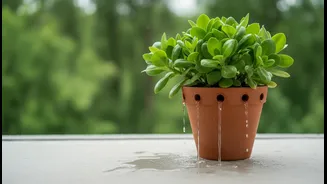
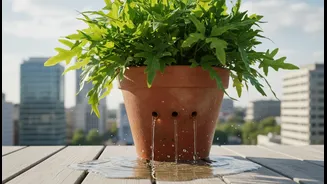
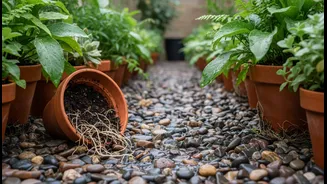
This might seem obvious, but it's the most critical rule of container gardening: your pots must have drainage holes. Without an escape route, water pools at the bottom of the planter, guaranteeing that roots will sit in stagnant water and eventually rot. Many decorative pots are sold without holes, intended to be used as cachepots that hold a smaller, functional pot inside. If you fall in love with a pot that has no holes, you'll need to either drill them yourself or use it only as a decorative outer layer. For most pots, a single hole can become clogged over time, so multiple holes are always better for ensuring consistent drainage.
Elevate Your Pots for Better Airflow
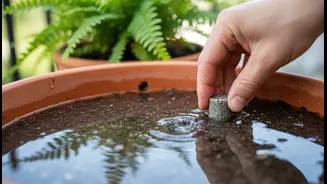
Even with drainage holes, a pot sitting flat on a balcony floor or a saucer can have problems. Water can get trapped underneath, preventing it from draining away completely. This is where pot feet or risers come in. By lifting your container just a centimetre or two off the ground, these simple accessories create a crucial air gap. This space allows water to escape freely and promotes air circulation around the base of the pot, helping the soil dry out more evenly. It also prevents unsightly water stains from forming on your deck or patio. You don't need to buy special products; leftover tiles, stones, or even plastic bottle caps can work just as well.
Choose the Right Soil Mix
The soil you use is just as important as the pot itself. Bagged garden soil or topsoil is too dense for containers and will quickly become compacted, holding onto far too much water. Instead, you need a high-quality potting mix specifically designed for containers. These mixes are lighter and fluffier, typically containing ingredients like peat moss, pine bark, perlite, or vermiculite. These components help the soil retain enough moisture for the plant while also providing the air pockets and structure needed for excellent drainage. To further improve drainage for plants that are particularly sensitive to wet conditions, you can mix in extra perlite or coarse sand into your potting mix.
Manage Your Saucers
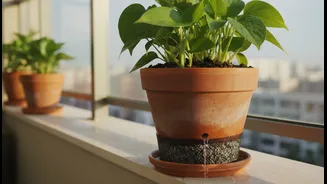
Saucers are great for catching drips and protecting your floors, but they can be a death trap for plants if not managed correctly. After a heavy rain or a deep watering, the saucer will likely fill with excess water. If the pot is left sitting in this water, it defeats the purpose of having drainage holes in the first place, as the soil will reabsorb the moisture through the bottom. The solution is simple: make a habit of emptying any water from the saucers about 30 minutes after it rains or after you water your plants. This small step ensures that your plant's roots get the drainage they need to stay healthy and rot-free.