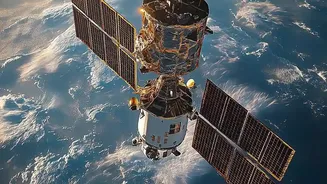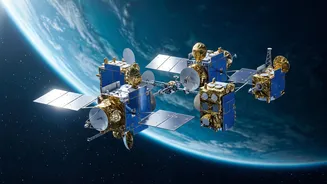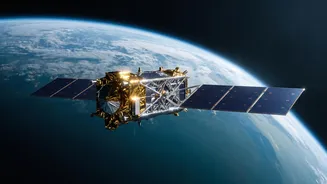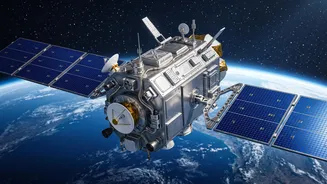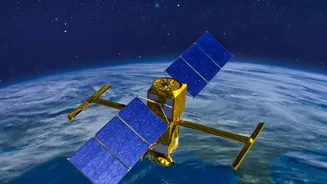



From your morning commute using GPS to video calls powered by global networks, satellites are the invisible backbone of modern life. A new computer modelling study, however, warns that this critical infrastructure may be more fragile than we realize.
Our Crowded Skies Face New Threats
A recent study published on the preprint server arXiv has sent a stark warning through the space and technology sectors. Using sophisticated computer simulations, researchers modelled a frightening, though hypothetical, scenario: a single high-altitude nuclear detonation. The results suggest such an event could create a lingering trap of radiation in Earth's magnetic field. This artificial radiation belt could disable a catastrophic percentage of satellites in low-Earth orbit (LEO). According to the model, one detonation could disable roughly 25% of LEO satellites in a day, 78% in three days, and a staggering 98% within a week. This study highlights a severe vulnerability that goes beyond direct physical attacks, focusing instead on the cumulative, widespread damage from radiation exposure.
More Than Just Space Junk
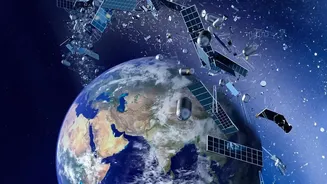
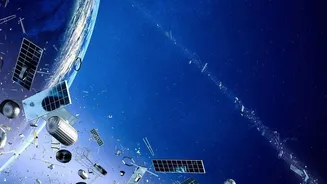
While the nuclear scenario is an extreme case, it points to a broader issue of orbital resilience. For years, the primary concern has been space debris and the 'Kessler Syndrome'—a theoretical cascade where collisions create more debris, leading to more collisions until an orbit becomes unusable. With the rise of 'mega-constellations' from companies like SpaceX and OneWeb, the number of satellites has skyrocketed, increasing the statistical risk of crashes. However, resilience isn't just about avoiding debris. It's about withstanding a range of threats, including cyberattacks on ground stations, solar flares that can fry electronics, and the deliberate targeting of satellites. The new modelling underscores that even satellites not directly hit could be disabled, threatening entire networks.
What 'Resilience' Means for Satellites
In this context, resilience is the ability of a satellite network to absorb a shock and continue providing service. This can be achieved in several ways. One approach is building more robust satellites with better shielding against radiation and small debris impacts. Another is through the architecture of the constellations themselves. Large, interconnected networks are inherently more resilient because the loss of a few satellites can be compensated for by others. However, this also creates a systemic risk: a single point of failure, whether a cyberattack or a widespread environmental event, could have cascading effects across a network that controls so much of our global economy and communications. This makes understanding and mitigating these risks a crucial business and security priority.
A Push for a More Sustainable Orbit
The study serves as a critical wake-up call. Ensuring the long-term sustainability of space operations requires a multi-pronged approach. Experts are calling for stronger international cooperation and regulatory frameworks to manage the orbital environment as a shared global resource. This includes developing standards for satellite end-of-life, where spacecraft are required to de-orbit themselves to avoid becoming hazardous junk. On the technology front, companies and agencies are exploring 'active debris removal'—essentially, robotic garbage trucks for space—and better space traffic management systems. Designing satellites to be serviced or refueled in orbit could also extend their operational lives, reducing the need for constant replacements and further crowding our cosmic highways.