






Why Bother Composting in a City?
Composting is nature's way of recycling. By turning your kitchen waste into fertilizer, you're not just feeding your plants for free; you're also making a significant environmental impact. Organic waste rotting in landfills releases methane, a potent
greenhouse gas. A family of four can divert a massive amount of waste from already overflowing landfills simply by composting. It’s a powerful step towards sustainable living that connects you to the food cycle, enriches the soil in your pots and balcony garden, and reduces your household's carbon footprint. Plus, the satisfaction of creating your own nutrient-rich soil booster is immense.
Choosing Your Composting Bin
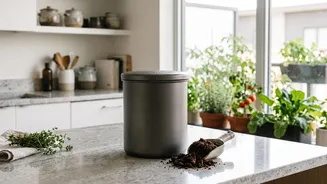
You don't need a large garden to compost. For urban homes and apartments in India, several convenient options are available. You can use a simple plastic bucket with holes drilled for aeration, a traditional terracotta stack composter (often called a 'Khamba'), or a ready-made kit. Stackable bins are great for saving space on a balcony. For those without any outdoor space, anaerobic methods like Bokashi bins are ideal as they are sealed and don't require aeration during the initial fermentation process. The best choice depends on your family size, the amount of waste you generate, and the space you have available.
The Secret Recipe: 'Greens' and 'Browns'
A healthy compost pile needs a balanced diet. The key is to layer nitrogen-rich 'greens' with carbon-rich 'browns'. This balance feeds the microorganisms that do all the hard work, preventing your pile from becoming smelly or slimy. A good rule of thumb is to use roughly two parts brown material for every one part green material. 'Greens' are your wet, fresh kitchen scraps: vegetable and fruit peels, coffee grounds, tea leaves, and crushed eggshells. 'Browns' are dry materials: dried leaves, sawdust, shredded newspaper, torn-up cardboard, and cocopeat. Always have a bag of 'browns' handy to layer on top of your fresh kitchen waste.
What to Keep Out of Your Bin
While most organic matter can be composted, some items are best left out of a home compost bin to avoid attracting pests and creating foul odours. In an Indian context, it's particularly important to avoid cooked foods with oil and masalas, as these can disrupt the decomposition process. Other items to exclude are meat, fish, and dairy products, which decompose poorly and smell bad. Also, keep out glossy paper, pet waste from cats and dogs, and large, woody items like coconut shells that take too long to break down. Sticking to raw fruit and vegetable waste is the safest bet for beginners.
Your Step-by-Step Composting Guide
Ready to start? It's as simple as making lasagna. Start with a base layer of dry 'browns' (like dried leaves or cocopeat) at the bottom of your bin. Then, add your day's kitchen scraps ('greens'). Cover this fresh layer completely with another layer of 'browns'. This top layer is crucial for keeping smells and fruit flies at bay. Continue layering daily. Every few days, use a rake or stick to gently turn the pile, introducing air which is essential for the aerobic decomposition process. The pile should be kept as moist as a wrung-out sponge; sprinkle a little water if it seems too dry, or add more 'browns' if it gets too wet.
Patience and Payoff: Harvesting Your Compost
Composting takes time. In India's warmer climate, the process is relatively fast. Once your bin is full, you'll need to let it rest or 'cure' for about 30 to 45 days. During this time, the microorganisms will finish their work. You’ll know the compost is ready when it is dark, crumbly, and has a pleasant, earthy smell. There should be no recognisable food scraps left. Once harvested, you can sieve it for a finer texture and mix this homemade 'black gold' into the soil of your potted plants or balcony garden to give them a powerful, all-natural nutrient boost.