



The Squat: A Foundation of Strength
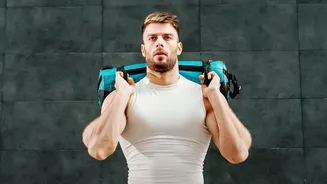
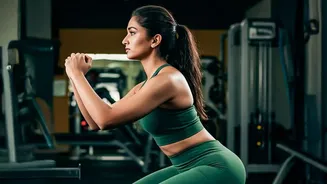
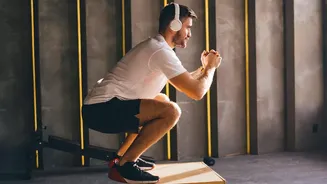
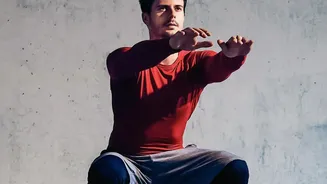
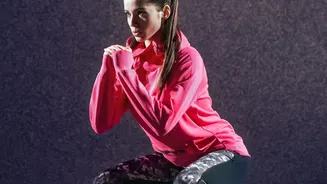
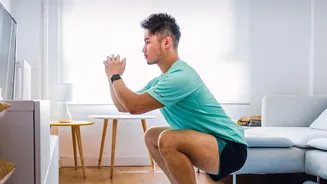
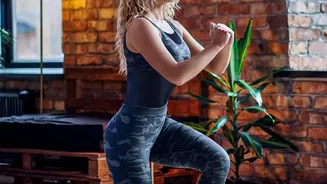
The squat is often called the 'king' of lower-body exercises, and for good reason. It's a bilateral movement, meaning both legs work together simultaneously. With your feet planted firmly on the ground, typically shoulder-width apart, you have a wide,
stable base of support. This stability is a huge advantage for building raw strength and muscle mass because it allows you to safely lift heavier weights. Squats primarily target the major muscles of the lower body: the quadriceps (front of the thighs), hamstrings (back of the thighs), and the glutes. Because both legs are sharing the load, it's an efficient way to build overall power and strength symmetrically. Think of it as the foundational exercise for lower-body development.
The Lunge: A Unilateral Challenge
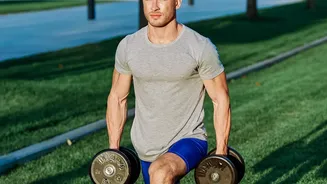
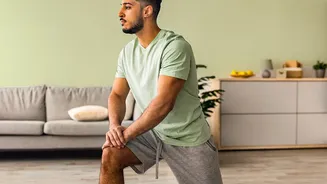
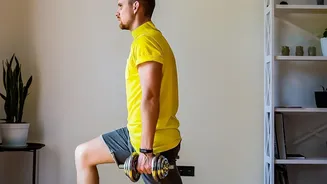
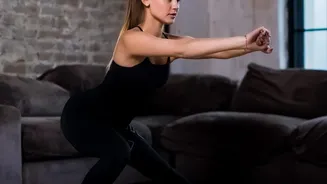
A lunge, by contrast, is a unilateral exercise, meaning it works one leg at a time. Whether you step forward, backward, or to the side, you create a split stance that dramatically narrows your base of support. The lead leg takes on the majority of the load, forcing it to work independently to control the movement and push your body back to the starting position. This single-leg focus is what sets the lunge apart. It immediately exposes any strength differences between your left and right sides that a bilateral exercise like the squat might hide. While lunges also work the quads, hamstrings, and glutes, the way they engage these muscles is fundamentally different.
Why Lunges Demand Superior Balance
The core reason lunges are so challenging for balance lies in their instability. When you perform a squat, your center of gravity moves up and down over a stable, two-footed base. During a lunge, your center of gravity travels not just down and up, but also forward or backward. Your body must constantly fight the urge to wobble or tip over. This instability forces a whole host of smaller stabiliser muscles in your hips, core, and ankles to fire up and work overtime. Your core, in particular, must engage intensely to keep your torso upright and prevent it from rotating. This process enhances your proprioception—your body's awareness of its position in space—and improves the communication between your brain and muscles, which is crucial for coordination.
Functional Strength and Real-World Benefits
While squats are fantastic for building maximum strength, lunges excel at developing functional strength. Functional movements mimic activities you perform in everyday life. Think about walking, running, or climbing stairs—all of these are essentially a series of single-leg movements. By training one leg at a time, lunges directly improve your ability to perform these daily tasks more efficiently and with better balance. This single-leg stability is also critical for athletic performance and injury prevention, as it helps correct muscle imbalances that can lead to problems over time. For example, strengthening the stabilising muscles around the hips and knees through lunges is a key part of preventing common sports injuries.
Which Exercise Is Right for You?
So, should you choose squats or lunges? The best answer is: you need both. They are not competitors but partners in building a well-rounded, strong, and resilient lower body. If your goal is to build maximum muscle mass and raw power, the squat's stability allows for heavier lifting and should be a cornerstone of your routine. However, if you want to improve balance, coordination, correct strength asymmetries, and build functional strength that translates directly to daily life and sports, lunges are indispensable. A smart approach is to incorporate squats for overall strength and then use various lunge styles—like forward, reverse, and lateral lunges—to challenge your body from different angles and build that crucial single-leg stability.