







What is Actually Being Launched?
On November 12, 2026, OpenAI announced that eligible businesses in India can now process and run certain AI workloads entirely within the country. This means that for supported models, like the initially available GPT-6 Luna, both the API request and the complex
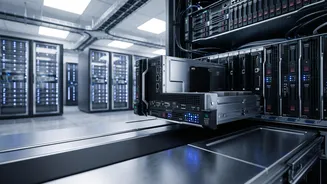
computation needed to generate a response happen on domestic infrastructure. Previously, data residency options often focused only on storing data in India, but this launch extends localisation to the entire processing lifecycle. This new capability is accessible through the Responses and Chat Completions APIs and requires organisations to create a specific API project selecting India for both storage and processing. It's a significant technical shift from sending data to servers abroad and a direct appeal to businesses that have been hesitant to adopt AI for core operations.
The Data Sovereignty Driver
The timing and nature of this launch are heavily influenced by India's regulatory landscape, specifically the Digital Personal Data Protection Act (DPDPA), 2023. While the DPDPA doesn't enforce a blanket rule for all data to be stored locally, it grants the government power to restrict data transfers and gives precedence to stricter sectoral laws. For industries like financial services, insurance, and healthcare, which handle sensitive personal data, the requirement to keep data within India's borders is a major compliance hurdle. By offering local processing, OpenAI removes a significant barrier to adoption for these regulated sectors. This move acknowledges that for many Indian enterprises, data sovereignty is non-negotiable, and full-scale AI deployment depends on the ability to guarantee that sensitive information never leaves the country.
Beyond Compliance: The Performance Payoff
While compliance is the headline reason, local processing brings another crucial benefit: lower latency. Latency is the delay between a query being sent and a response being received. When data has to travel to servers in Europe or North America, even small delays can add up, making real-time applications feel sluggish. For use cases like interactive chatbots, rapid data analysis, or time-sensitive financial modelling, high latency can render an AI tool impractical. By processing data within India, the physical distance information has to travel is drastically reduced, leading to faster, more responsive AI applications. This improves the user experience and makes a wider range of AI-powered services viable for Indian businesses and their customers.
A Broader India Strategy
This API launch is not happening in a vacuum. It's a key part of the 'OpenAI for India' initiative announced earlier this year, which focuses on infrastructure, enterprise adoption, and local partnerships. A cornerstone of this strategy is a major partnership with the Tata Group to develop domestic AI data centre capacity. OpenAI has also been making its models available for in-country inference through cloud platforms like Amazon Web Services (AWS) Bedrock. By now offering a direct, local API, OpenAI is creating a multi-pronged approach that gives Indian developers and businesses more choices. This move signals a deep, long-term commitment to the Indian market, which has already become one of ChatGPT's largest user bases.
The New Competitive Arena
With this launch, OpenAI is positioning itself to compete more directly with established cloud giants like AWS, Microsoft Azure, and Google Cloud, all of which have invested heavily in building data centres across India. These players have long used their local infrastructure as a key selling point, particularly to large enterprises with strict data residency needs. By establishing its own local processing capabilities, OpenAI is leveling the playing field and moving from being just a model provider to a comprehensive enterprise platform. This intensifies the competition for India's growing cloud and AI market, giving Indian companies more options and potentially driving further innovation and investment from all major players.