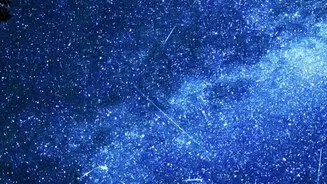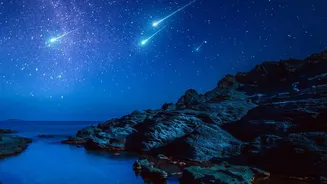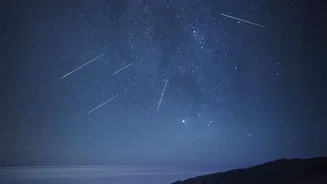




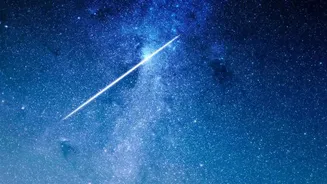
The Peak Viewing Window
The Orionid meteor shower is active for a long stretch, from early October to early November. However, the best time to watch will be during its peak, on the night of October 21 and into the early morning of October 22, 2026. During this period, the Earth
passes through the densest part of the debris trail left by Halley's Comet, resulting in the highest frequency of meteors. While the peak offers the best chance to see a flurry of activity, you can still spot Orionids on the nights leading up to and following this date. The shower is known for having a broad maximum, so if clouds spoil the peak night, trying again on a nearby night is a good strategy.
A Gift from Halley's Comet
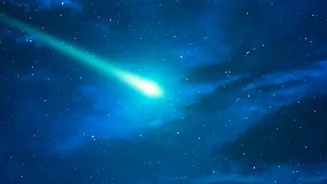
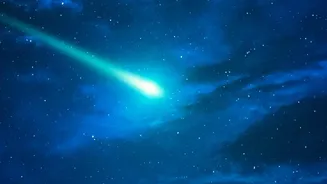
Every shooting star you see during the Orionid shower is a tiny piece of the most famous comet in history: 1P/Halley. This celebrated comet takes about 76 years to orbit the Sun, and it last visited our inner solar system in 1986, with its next return scheduled for 2061. As it travels, it leaves a trail of ice and dusty debris in its wake. Earth crosses this path twice a year. The encounter in May gives us the Eta Aquariid meteor shower, and the one in October produces the Orionids. The particles are often no bigger than a grain of sand, but they enter our atmosphere at incredible speeds of around 66 kilometres per second, burning up brightly and creating the fast, luminous streaks we call meteors.
Best Viewing Times in India
For observers in India, the most crucial factor for the 2026 shower is the Moon. On the peak night of October 21-22, a bright waxing gibbous moon will be in the sky, its light washing out the fainter meteors for much of the night. However, there is a prime viewing window. The Moon will set in the early morning hours, roughly between 2:30 AM and 4:00 AM IST, depending on your specific location. This period, from moonset until the first light of dawn (around 5:15 AM to 5:30 AM), will offer the darkest skies and therefore the best opportunity to see the meteors. The hours after midnight are generally ideal, as the shower's radiant point will be higher in the sky.
Where to Look in the Sky
The shower is named 'Orionid' because its radiant—the point from which the meteors appear to originate—is in the constellation of Orion the Hunter. To find it, look for Orion rising in the eastern sky after 10 PM. You can easily spot its famous three-star belt and the bright, reddish star Betelgeuse at its shoulder. The radiant is located just to the north of Betelgeuse. However, you should not stare directly at the radiant. Meteors will appear all across the sky, and they will look longer and more spectacular at a distance of 45 to 90 degrees away from their origin point. Lying on your back and looking straight up, taking in as much of the sky as possible, is the most effective way to view the show.
Your Ultimate Viewing Checklist
To make the most of the Orionid meteor shower, a little preparation goes a long way. First, escape the city. Find a location away from bright city and street lights, as light pollution significantly reduces the number of visible meteors. Second, give your eyes time to adjust to the darkness—this can take about 20 to 30 minutes, so avoid looking at your phone screen. Third, get comfortable. October nights can be cool, so bring a blanket, a sleeping bag, or a reclining chair. Finally, be patient. Meteor showers are not a constant downpour; they come in spurts and lulls. You don't need a telescope or binoculars, as their narrow fields of view are not suited for catching the wide-ranging streaks of meteors.
Managing Your Expectations
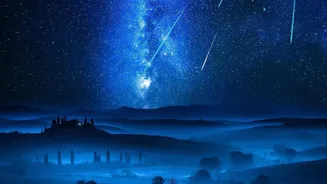
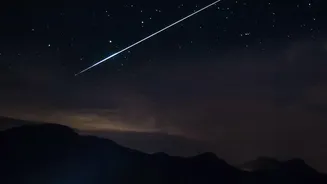
Under ideal, dark-sky conditions with no moon, the Orionids can produce about 10 to 20 meteors per hour at their peak. In some exceptional years, this rate has been much higher. For 2026, due to the bright Moon, the actual number of visible meteors will likely be lower, especially before the Moon sets. However, the Orionids are known for their speed and brightness, and they often leave persistent, glowing trails that can linger for a few seconds. You might even spot a 'fireball,' which is an exceptionally bright and prolonged explosion of light. So while you may not see a constant stream, the meteors you do catch are likely to be quite spectacular.