




How Do Vacuum Bags Actually Work?
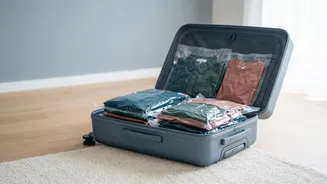
The principle behind vacuum bags is incredibly simple: they remove air. Most of the space in a pile of folded laundry isn't the fabric itself, but the air trapped between the fibres and layers. Vacuum bags, typically made of durable PA+PE plastic, allow
you to place soft items like clothing inside, seal the bag with a double-zip closure, and then remove the air. For travel, this is done in two main ways: some bags require you to roll them tightly to force the air out through a one-way valve, while others use a small, often USB-rechargeable, travel pump to suck the air out for maximum compression. The result is that your bulky sweater or stack of t-shirts becomes a dense, flat, and compact block, often taking up 50% to 80% less volume.
The Critical Distinction: Volume vs. Weight
This is where the magic meets physics, and it’s the most important thing to understand about packing with these bags. Vacuum bags reduce volume, not weight. That pile of sweaters still has the exact same mass after you’ve sucked the air out of it; it just takes up significantly less space. The headline claim of packing more into a 7kg bag is therefore a bit of a paradox. While the bags allow you to physically fit more clothing into your carry-on, they do nothing to help you meet the airline's weight restriction. In fact, they can make it dangerously easy to create an overweight bag. Because you can now fit ten t-shirts where five used to go, you might be tempted to pack more, inadvertently pushing your bag over the 7kg limit common on many Indian domestic and international budget carriers.
The 7 Outfits in 7kg Challenge: Is It Possible?
So, can you do it? Let's break it down. A typical empty carry-on backpack or soft-shell trolley weighs between 1kg and 2kg. This leaves you with only 5-6kg for your actual belongings. An "outfit" can vary wildly in weight. A summer outfit of a cotton t-shirt (150g) and shorts (250g) is far lighter than a winter one with jeans (500-700g) and a hoodie (700g). To pack seven outfits under 5-6kg, you'd need to be extremely strategic, choosing lightweight fabrics and versatile pieces. Seven light summer outfits might weigh around 3-4kg total, making it achievable. However, seven varied outfits including jeans and a sweater would likely push you over the limit. The vacuum bag helps ensure these items fit spatially, but the scales will have the final say. The real benefit here is not packing more clothes, but packing your chosen clothes, especially a bulky jacket or sweater, without your bag bursting at the seams.
The Downsides Nobody Talks About
Before you compress your entire wardrobe, there are a few drawbacks to consider. The number one complaint is wrinkles. Tightly compressing fabric forces deep creases into your clothes that can be difficult to remove without an iron. For this reason, you should never vacuum pack structured items like blazers or delicate fabrics like silk or leather. Another issue is repacking for the journey home. If you used a vacuum cleaner at home, you won't have one in your hotel room, which is why travel-specific roll-up or hand-pump bags are essential. Finally, durability can be a concern; a cheap bag that loses its seal or gets punctured mid-trip can leave you with an unmanageable pile of clothes that no longer fits in your suitcase.
A Smarter Way to Use Vacuum Bags
Instead of trying to fit your entire life into them, use vacuum bags strategically. They are at their absolute best when used for your bulkiest, most air-filled items. Think puffer jackets, fleece sweaters, and wool hoodies. Compressing just one or two of these items can free up a huge amount of space for the rest of your clothes, which can be folded or rolled normally. This hybrid approach gives you the best of both worlds: space-saving for bulky items without subjecting your entire wardrobe to intense wrinkling. Pack everyday items like t-shirts and trousers made from wrinkle-resistant synthetic blends. Always weigh your packed bag before you leave for the airport to avoid any costly surprises at the check-in counter.