


Earth's Twin, Lost to a Runaway Climate
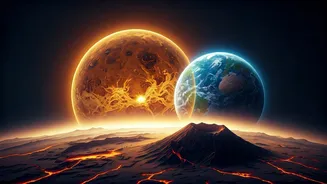
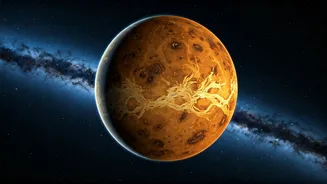
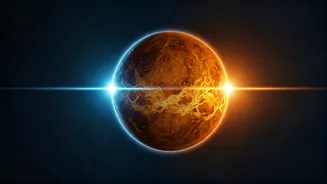
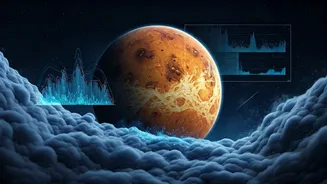
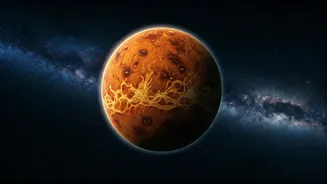
Venus is often called Earth’s twin due to its similar size and density. But that’s where the similarities end. Its atmosphere is over 90 times denser than Earth's and composed almost entirely of carbon dioxide, creating a toxic, high-pressure environment.
Surface temperatures average a staggering 462 degrees Celsius. Scientists believe Venus wasn't always this way. Climate models suggest it may have once had oceans and habitable surface temperatures, perhaps for billions of years. However, a catastrophic climate event, likely triggered by massive volcanic eruptions that pumped enormous amounts of CO2 into the air, led to a “runaway greenhouse effect.” The oceans boiled away, water vapour trapped more heat, and the planet transformed into the inhospitable world it is today. This makes Venus a perfect natural laboratory for studying climate change in its most extreme form.
The Great Indian Monsoon Puzzle
Back on Earth, India faces its own complex climate challenge: predicting the monsoon. This seasonal phenomenon is the lifeblood of the subcontinent, delivering 70-80% of the annual rainfall and underpinning the food and economic security of over a billion people. Yet, forecasting its behaviour with perfect accuracy remains difficult. Climate models, both global and Indian, sometimes struggle. Studies have shown that many models tend to have a 'dry bias', underpredicting rainfall over the Indian subcontinent while overestimating it over the equatorial Indian Ocean. These inaccuracies are due to the monsoon's complex dynamics, influenced by everything from sea surface temperatures to atmospheric aerosols and the subcontinent's complex geography. As climate change makes the monsoon more erratic and intense, the need for more robust and reliable predictive models has never been more urgent.
Enter Shukrayaan: India's Voyage to Venus
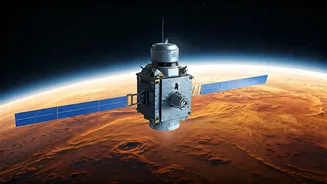
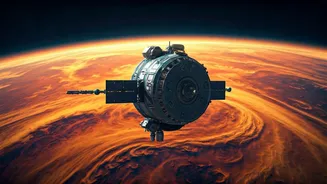
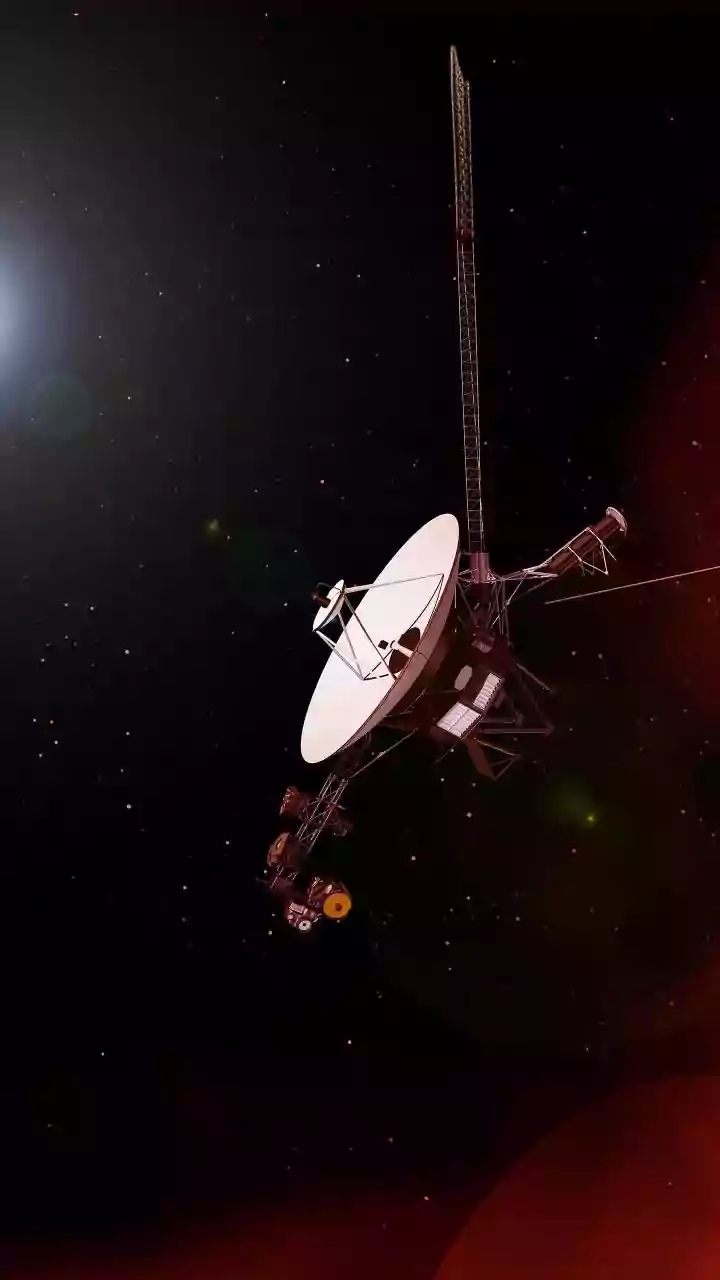
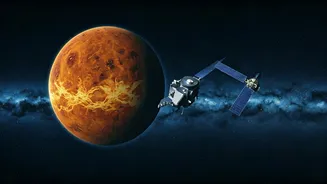
This is where the Indian Space Research Organisation’s (ISRO) proposed Venus orbiter mission, Shukrayaan-1, comes in. As India’s first mission to our nearest planetary neighbour, Shukrayaan aims to conduct a comprehensive investigation of the Venusian atmosphere and surface. The orbiter is planned to carry a suite of scientific instruments, including radars capable of peering through the planet's thick, sulphuric acid clouds to map its surface and study its volcanic activity. Other key objectives include analysing the composition and dynamics of the dense atmosphere and investigating how it interacts with the solar wind. The mission represents a significant step for India’s planetary science programme, moving beyond the Moon and Mars to explore deeper questions about planetary evolution.
From Venusian Clouds to Better Forecasts
The link between Shukrayaan's data and India's monsoon models is rooted in fundamental physics. The same principles that govern the extreme greenhouse effect on Venus are at play in Earth's climate system, albeit on a different scale. By studying the atmospheric dynamics of a world where the greenhouse effect has run completely unchecked, scientists can test and refine the core equations used in our own climate models. Understanding the behaviour of Venus's thick cloud cover and its interaction with radiation can provide invaluable data for modelling cloud formation and behaviour on Earth—a key variable in monsoon prediction. In essence, Venus provides a 'worst-case scenario' dataset. If a model can accurately simulate the atmosphere of Venus, it gives scientists greater confidence in its ability to predict future climate scenarios here on Earth.
A New Frontier for Climate Resilience
The insights gained from Shukrayaan will extend far beyond just improving monsoon forecasts. It will contribute to a global effort to understand planetary habitability. By comparing the divergent paths of Earth and Venus, we can learn more about the factors that make a planet capable of sustaining life and the tipping points that can lead to climate catastrophe. For India, this mission is about more than just scientific curiosity. It is a strategic investment in national resilience. The knowledge gained will help create more accurate climate projections, better manage water resources, secure agriculture, and build a more robust framework for adapting to a changing climate. It's a prime example of how looking to the stars can help us better protect our home.