


The Building Blocks of Muscle
First, let's talk about what protein actually is. Proteins are made of smaller units called amino acids, often called the 'building blocks of life'. Our bodies need 20 different amino acids to function, build muscle, and repair tissue. Of these, nine
are considered 'essential amino acids' (EAAs) because our bodies can't produce them. We must get them from the food we eat. A food that contains all nine of these essential amino acids in sufficient amounts is called a 'complete protein'. While animal-based foods like meat, eggs, and dairy are famous for being complete proteins, most plant-based foods are 'incomplete,' meaning they are low in one or more of these essential amino acids.
The Power of Protein Combining
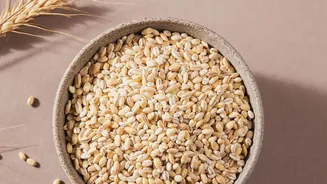
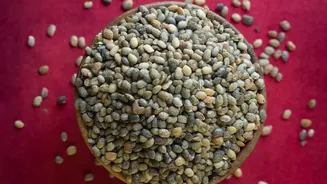
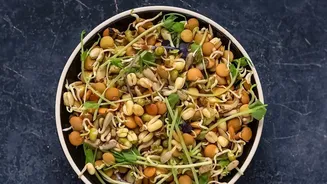
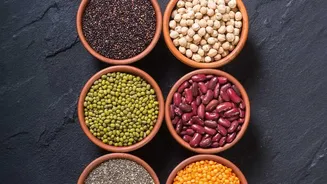
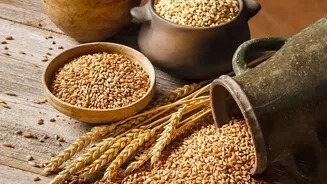
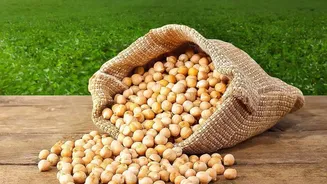
This is where the concept of 'protein combining' or 'complementation' comes in. It’s a dietary strategy where two or more incomplete protein sources are eaten to create a complete protein profile. The idea is simple: one food's amino acid weakness is covered by another food's strength. Grains and pulses are the perfect example of this natural partnership. Whole grains like wheat, rice, and oats are typically low in the essential amino acid lysine. On the other hand, pulses—which include lentils (dal), chickpeas (chana), and beans (rajma)—are rich in lysine but tend to be low in the sulfur-containing amino acids methionine and cysteine, which grains have in good supply.
A Perfect Match on Your Plate
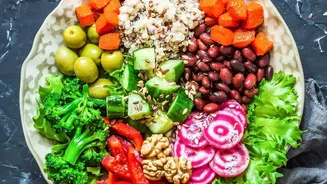
When you combine a whole grain with a pulse, you are effectively creating a meal that provides all nine essential amino acids. This combination gives your body the full spectrum of building blocks it needs for critical functions, especially for those who lift weights. For decades, it was believed that you had to eat these complementary proteins in the very same meal for them to count. However, modern nutritional science has shown this isn't necessary. Your body is smart enough to create a pool of amino acids from the various foods you eat throughout the day. So, as long as your daily diet includes a variety of grains, pulses, nuts, and seeds, you'll be covered.
Why This Matters for Lifters
For anyone engaged in strength training, getting a full profile of essential amino acids is non-negotiable. Muscle protein synthesis (MPS)—the process of repairing and rebuilding muscle fibres after a workout—can only happen efficiently when all nine EAAs are present. If even one is missing, the process can be limited, slowing down your recovery and hindering muscle growth. By ensuring your diet is rich in complementary proteins from sources like grains and pulses, you are providing your body with the necessary raw materials to maximize the benefits of your training sessions. This means better recovery, more effective muscle repair, and ultimately, greater strength and size gains over time, without relying solely on animal products or expensive supplements.
Classic Indian Combos That Work
The good news for anyone following an Indian diet is that this principle is already deeply embedded in our traditional cuisine. Many of our most common and beloved meals are perfect examples of protein complementation. Think about dal with brown rice, rajma-chawal, chana with whole wheat roti or puri, and the comforting bowl of khichdi made from rice and lentils. These meals weren't just designed to be delicious; they are nutritional powerhouses that have provided balanced, plant-based protein for generations. Even a simple peanut butter sandwich on whole wheat bread is a classic example of combining a legume (peanuts) with a grain to create a complete protein.