
A New Map for an Old World
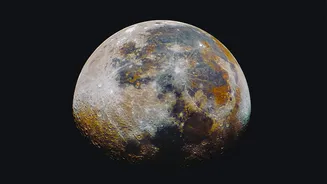
For decades, scientists have theorized about the presence of water on the Moon. Missions have provided tantalizing hints and confirmations, including crucial data from India's Chandrayaan-1 probe which helped detect water molecules. However, knowing water exists
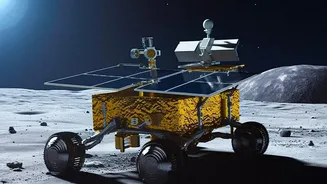
and knowing precisely where to find it are two different challenges. Recent discoveries have transformed the quest. Advanced probes, building on the legacy of orbiters like Chandrayaan-2 and NASA's Lunar Reconnaissance Orbiter, have generated the first comprehensive maps of subsurface water ice, particularly in the permanently shadowed craters of the Moon's south pole. These craters, where sunlight never reaches, are so cold that they have trapped ice for potentially billions of years. The new maps move beyond educated guesses, providing a detailed guide to the location and potential concentration of these frozen reserves, much like a treasure map for the most valuable resource in space. This is a critical step, laying the groundwork for future robotic and human missions to land with confidence.
More Than Just a Drop in the Ocean
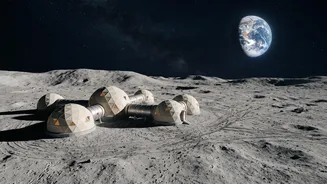
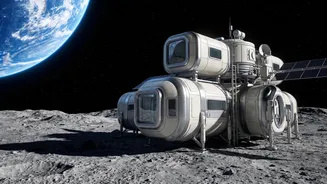
The significance of this mapping effort cannot be overstated. Establishing a sustainable human presence on the Moon, as planned by NASA's Artemis program and other international efforts, is prohibitively expensive if every resource has to be launched from Earth. The concept of In-Situ Resource Utilization (ISRU), or 'living off the land', is central to making long-term lunar habitation feasible. Water is the cornerstone of this strategy. Beyond the obvious need for drinking water and breathable air for astronauts, water is a uniquely versatile resource. By mapping these deposits, space agencies can now pinpoint the most promising locations for future moon bases, not just for scientific exploration but for commercial exploitation. Both the US and China are already targeting the lunar south pole for their base-building ambitions precisely because of this resource potential. This new level of detail allows for strategic planning of infrastructure, ensuring that habitats are placed near these vital reservoirs.
The Ultimate Off-Planet Gas Station
The most transformative application for lunar water is its potential to be converted into rocket fuel. The process, while complex in a lunar environment, is based on a simple principle: electrolysis. By passing an electric current through water (H2O), it can be split into its constituent elements: hydrogen and oxygen. When chilled to cryogenic temperatures, these two elements become a potent rocket propellant. Creating this fuel on the Moon would fundamentally change the economics of space exploration. A spacecraft launching from the Moon needs far less energy to escape its gravity compared to launching from Earth. This means a rocket could launch from Earth with just enough fuel to reach the Moon, refuel at a lunar outpost, and then travel onward to Mars or other deep space destinations. This 'lunar gas station' would slash mission costs and complexity, making humanity a truly multi-planetary species. NASA and other agencies are actively developing technologies to mine the ice, melt it, and perform this electrolysis on the lunar surface.
India's Lunar Ambitions Take Flight
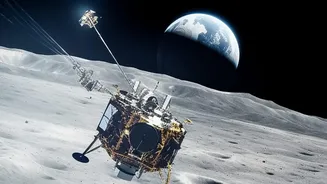
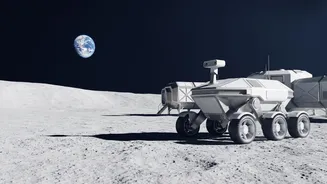
India has been a key player in the story of lunar water, from Chandrayaan-1's early discoveries to Chandrayaan-2's advanced radar mapping that has provided strong evidence of subsurface ice. The historic landing of Chandrayaan-3 near the south pole has already proven India's capability to operate in this challenging and strategic region. These new ice maps, informed by data from ISRO's missions, bolster the country's position as a leading force in lunar exploration. With plans for future missions like Chandrayaan-4, a sample return mission, India is not just contributing to the global understanding of lunar resources but is also paving the way for its own long-term ambitions, which include a potential Indian lunar outpost. Furthermore, ISRO is collaborating with Japan's JAXA on the LUPEX mission, which will specifically aim to investigate the quantity and quality of water ice on the ground. These efforts ensure India will be at the heart of the emerging lunar economy.