




A Tale of Two South Poles
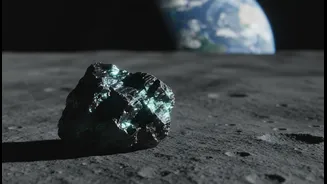
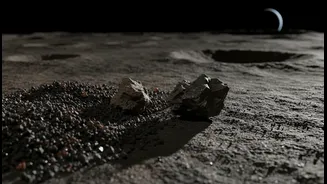
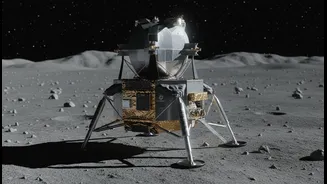
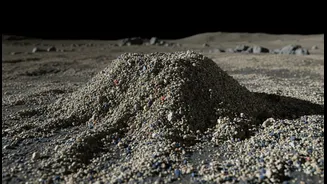
The connection isn't about ice or temperature, but about a rock. A recent study has shown that the soil at Shiv Shakti Point, where the Pragyan rover landed, is chemically almost identical to a lunar meteorite found in Antarctica over four decades ago.
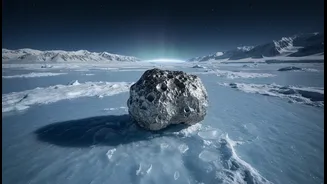
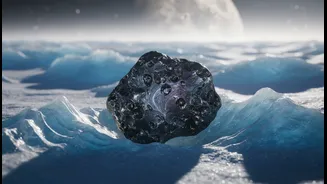
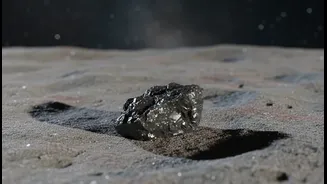
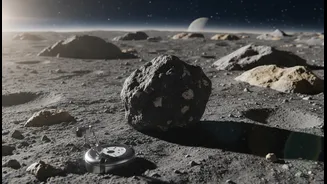
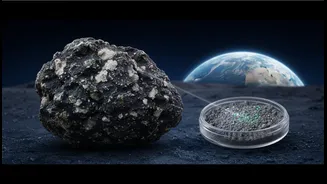
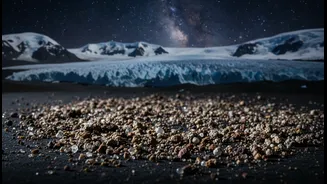
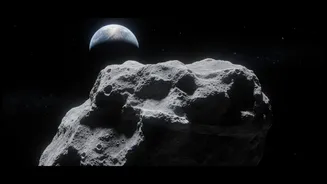
This meteorite, named ALHA 81005, was discovered in Antarctica’s Allan Hills region in 1981 and was the very first rock from Earth confirmed to have originated from the Moon. Essentially, a piece of the Moon was blasted off its surface by an asteroid impact, travelled through space, and eventually landed on our planet's southernmost continent, waiting to be discovered.
The Decisive Chemical Fingerprint
Scientists from the Physical Research Laboratory (PRL) in Ahmedabad compared the data sent back by the Pragyan rover’s Alpha Particle X-ray Spectrometer (APXS) with the composition of 66 known lunar meteorites found on Earth. The results were remarkable. The soil at Shiv Shakti Point and the meteorite ALHA 81005 shared a unique and rare chemical signature. Both samples have a lower abundance of aluminium but are richer in iron and magnesium compared to typical lunar highland areas. This specific composition creates a direct link between the in-situ measurements made by Chandrayaan-3 and a physical sample of the Moon that scientists have had on Earth for decades.
Why This Connection Matters
This discovery is significant for several reasons. First, it validates the accuracy of both the rover's instruments and the decades of research done on lunar meteorites. It allows scientists to cross-reference data from a remote-controlled rover with a physical rock in a lab, boosting confidence in our understanding of the Moon's makeup. Second, the unique composition suggests the landing site is in a special transition zone. This area contains a mix of ancient lunar crust and materials that may have been thrown up from the Moon's deeper layers, possibly from the creation of the massive South Pole-Aitken Basin, one of the solar system's largest impact craters.
Peeking into the Moon's Ancient Past
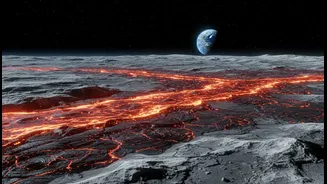
The soil composition supports the 'Lunar Magma Ocean' hypothesis, a theory suggesting the early Moon was covered in molten rock. As this ocean cooled, different minerals formed at various depths, creating a layered crust. The findings from Chandrayaan-3 indicate that the south polar region, where it landed, preserves evidence of these multiple stages of the Moon's formation and geological evolution. By studying this area, scientists are essentially looking back in time, piecing together how the Moon was formed and how it has changed over billions of years. The discovery reinforces the immense scientific value of exploring the lunar south pole, a region believed to hold clues to the early solar system.
A Giant Leap for Indian Science
While the finding doesn't mean the meteorite came from the exact spot where the rover landed, it confirms that both represent a similar type of magnesium-rich lunar crust. This pioneering study is one of the first to directly connect Chandrayaan-3's on-site measurements with the extensive library of lunar meteorites found on Earth. For India, the continued scientific output from the mission solidifies its position as a major player in space exploration. It proves that the mission's success was not just in the landing, but in its ability to generate world-class science that helps solve decades-old lunar mysteries. ISRO is already planning future missions, including an ambitious plan to bring lunar samples back to Earth within the next decade.