








The Power of Seeing What You Have
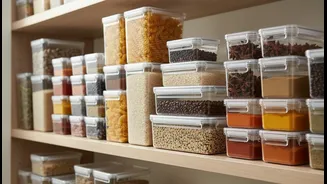
The single biggest advantage of clear containers is visibility. When you can see your dals, spices, and snacks at a glance, you instantly know what you have. This simple change has a powerful ripple effect. It reduces the mental load of guessing what’s
in each jar, speeds up meal prep, and helps you avoid buying duplicate items. More importantly, it helps cut down on food waste because forgotten leftovers or ingredients are no longer hidden at the back of a shelf in an opaque box. By taking food items out of their bulky original packaging and decanting them into uniform, transparent containers, you create a system that is not only visually calming but also highly efficient.
Maximise Every Inch with Stacking
In many Indian kitchens, space is a premium. The key to maximising it is to think vertically. Stackable containers are designed to do just this, turning unused vertical space into valuable storage real estate. Unlike a random assortment of mismatched jars, modular containers with uniform footprints fit together neatly, eliminating wasted gaps. Look for containers with well-designed lids that have a lip or groove, allowing them to lock together securely and prevent toppling. This creates stable columns of organised goods in your pantry, cabinets, or fridge, allowing you to store much more in the same footprint. A system of square or rectangular containers is particularly effective, as they use shelf space more efficiently than round jars.
Choosing Your Material: Glass vs. Plastic
The two most popular choices for clear containers are glass and plastic, each with its own set of benefits. Glass containers are non-porous, meaning they won't absorb food odours or stains, making them perfect for storing anything from pickles to tomato-based curries. They are also highly durable, endlessly recyclable, and can often go from the fridge to the microwave or oven (without the lid). However, they are heavier and more prone to breaking, which can be a concern in households with children. High-quality, BPA-free plastic containers are a lightweight, portable, and cost-effective alternative. They are less likely to break if dropped, making them great for packing tiffins or storing snacks. Their main drawbacks are that they can stain or retain odours over time and have a shorter lifespan than glass. When choosing plastic, always ensure it is labelled as food-grade and BPA-free.
A System for the Indian Pantry
An organised pantry starts with zoning. Group items by how you use them: daily staples, spices, snacks, and bulk supplies. For everyday dals, rice, atta, and sooji, large, airtight containers are essential to maintain freshness and keep pests away. Square, stackable containers work best for maximising shelf space. Spices, the heart of Indian cooking, benefit immensely from being stored in small, uniform clear jars. This allows you to spot the difference between haldi and garam masala in an instant. For snacks like namkeen, biscuits, and dry fruits, airtight seals are crucial to keep them crunchy. Using clear bins or baskets can also help group smaller packets or create a designated 'snack zone' that is easy for everyone to access.
Taming the Refrigerator and Freezer
The same principles apply to the fridge and freezer. Use clear, stackable containers to store leftovers, chopped vegetables, and prepped meal components. This not only keeps your fridge tidy but also ensures nothing gets lost and forgotten at the back. When you can see your leftovers, you are far more likely to eat them, saving money and reducing waste. Look for freezer-safe options to store everything from ginger-garlic paste to frozen peas. Glass containers with tight-fitting lids are an excellent choice for freezers as they don't leach chemicals and can handle cold temperatures without breaking. Grouping similar items on specific shelves—dairy on one, leftovers on another—further streamlines your fridge organisation.