
The Challenge of the City Sky
The biggest obstacle for any city-based astronomer is light pollution. This phenomenon, caused by the excessive and misdirected artificial lights from buildings, streetlights, and advertisements, creates a bright haze or 'skyglow' that blankets urban
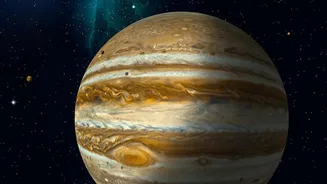
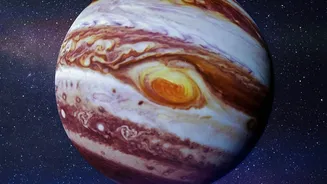
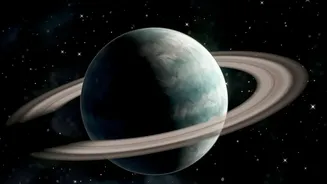
areas. This glow dramatically reduces the visibility of celestial objects. Faint stars and distant galaxies are the first to disappear, completely lost in the luminous fog. However, not all is lost for the urban stargazer. The planets in our solar system—like Venus, Jupiter, Mars, and Saturn—are often bright enough to punch through the light pollution. They appear as unusually bright 'stars' to the naked eye. The main challenge is distinguishing them from the few actual stars that remain visible, or even from high-altitude aeroplanes. This is where a little bit of modern technology transforms a frustrating experience into a moment of discovery.
Your Pocket Planetarium
Enter mobile sky viewers, more commonly known as stargazing apps. These applications turn your smartphone into a powerful and intuitive guide to the cosmos. They work by harnessing the array of sensors already built into your phone: the GPS determines your exact location on Earth, while the compass and accelerometer track the precise direction you're pointing the device. By combining this data, the app creates a real-time map of the sky exactly as it appears above you. The magic happens with a feature called Augmented Reality (AR). When you enable AR mode, the app uses your phone's camera to show you the scene in front of you, but overlays it with a map of stars, constellations, and planets. Simply point your phone at a bright object in the sky, and the app will instantly identify it for you.
Choosing Your Digital Telescope
A number of excellent stargazing apps are available, many offering free versions that are more than capable of helping you find planets. SkyView Lite is a popular choice for beginners, available on both Android and iOS, praised for its simple point-and-identify interface. It allows you to spot planets, constellations, and even satellites like the International Space Station (ISS). Another top contender is Star Walk 2, which also uses your phone's GPS and sensors to map the sky in real time. It features a 'Visible Tonight' section that tells you exactly what celestial events you can see from your location. Stellarium Mobile is also highly regarded, offering a vast catalogue of stars and deep-sky objects and a realistic depiction of the night sky. Most of these apps feature a red-light 'Night Mode' which helps preserve your night vision while you're observing.
From Screen to Sky: A Practical Guide
Using these apps is incredibly straightforward. First, find the best possible viewing spot you can—a rooftop, a balcony, or a local park with minimal direct lighting is ideal. Once there, give your eyes a few minutes to adjust to the darkness. Open your chosen app and grant it permission to use your location. Point your phone towards the sky. As you move the phone, the map on the screen will move with you, mirroring the sky above. Spot a bright point of light? Center it on your screen. The app will immediately bring up a label identifying it as Jupiter, Saturn, or another celestial body. One pro tip for spotting planets without an app is that they tend not to twinkle as intensely as stars. Stars are so distant they are effectively single points of light, easily disturbed by Earth's atmosphere, causing them to twinkle. Planets are much closer and appear as tiny discs, making their light more stable.
Tips for Better Urban Stargazing
To improve your chances, timing is everything. Try to observe when the target planet is high in the sky, away from the thickest atmospheric haze and light pollution near the horizon. Many apps have a time-travel feature that lets you scrub forward or backward to see where objects will be at any given time, helping you plan your session. Also, check the app for special celestial events. A conjunction, where two or more planets appear very close to each other in the sky, can be a spectacular sight, even from a brightly lit city. While WiFi is not always required for the core function of identifying stars, you may need a connection initially to download the app and its star catalogues.