






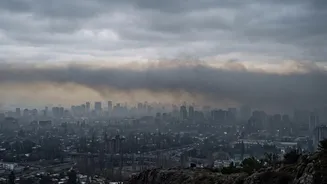

As winter approaches, Delhi’s air quality inevitably worsens. While stubble burning and vehicle emissions are well-known culprits, the weather itself plays a crucial role, turning the city's atmosphere into a trap for harmful pollutants.
Why Still Air Is Bad Air
Think of wind
as the city’s natural ventilation system. Throughout the year, winds help disperse the daily emissions from traffic, industry, and construction. Pollutants are carried away, mixing into the larger atmosphere and preventing them from concentrating in the air we breathe. However, as winter sets in across northern India, wind speeds characteristically drop. This calmness prevents the horizontal dispersal of pollutants. Instead of being blown away, the toxic mix of particulate matter (PM2.5 and PM10), nitrogen oxides, and other harmful gases stays put, lingering over the National Capital Region and leading to a rapid spike in pollution readings.
The Atmosphere’s Invisible Winter Lid
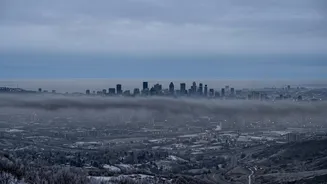
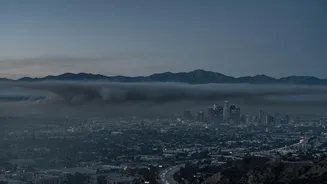
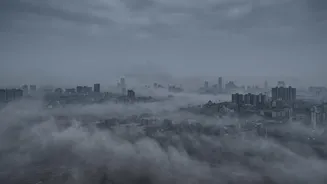
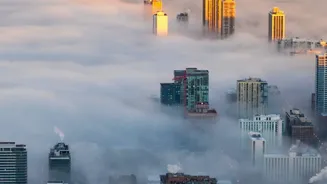
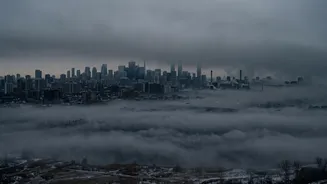
The most significant factor in Delhi’s winter pollution is a phenomenon called 'temperature inversion'. Normally, the air near the ground is warmer than the air above it. This warm air rises, carrying pollutants with it and allowing them to disperse at higher altitudes. During winter nights, however, the ground cools down rapidly, chilling the air closest to the surface. This results in a layer of cool, dense air being stuck below a layer of warmer air—an inversion of the normal pattern. This warmer upper layer acts like a lid, physically preventing the surface air and all the pollutants within it from rising. The mixing height, or the altitude to which pollutants can disperse, can shrink from about a kilometre in summer to just a few hundred metres in winter, concentrating contaminants in a much smaller volume of air.
The Complication of Cooler, Drier Air
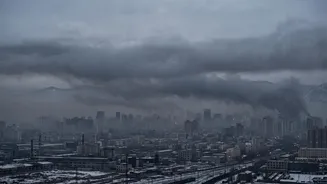
The headline's mention of 'decreasing humidity' points to the overall shift in atmospheric conditions. While very high humidity can create smog by causing pollutants to swell with water vapor, the key winter issue is the cold, dense air that comes with the changing season. This cooler air is heavier and naturally stays closer to the ground. When a temperature inversion takes hold, this dense, pollutant-filled air has nowhere to go. Low wind speeds mean it cannot move sideways, and the inversion layer above means it cannot move vertically. The lack of rain in the early winter also means there's no natural 'wet scavenging' to wash pollutants out of the atmosphere. This combination of factors creates a stable, stagnant air mass that effectively turns Delhi into a gas chamber, trapping every emission.
When Weather and Pollution Collide
It is crucial to understand that these meteorological conditions do not create pollution; they trap it with extreme efficiency. The pollution itself comes from a host of man-made sources. These include smoke from post-harvest stubble burning in neighbouring states like Punjab and Haryana, which is carried towards Delhi by northwesterly winds. Added to this are the relentless local emissions from a high density of vehicles, widespread construction activities, industrial output, and the burning of waste for warmth. During other times of the year, the atmosphere is better able to handle this load. But in winter, the combination of low winds and temperature inversions means that the same amount of pollution has a vastly more dangerous and concentrated impact on public health, leading to the 'severe' air quality days that have become an unfortunate hallmark of Delhi's winter.