






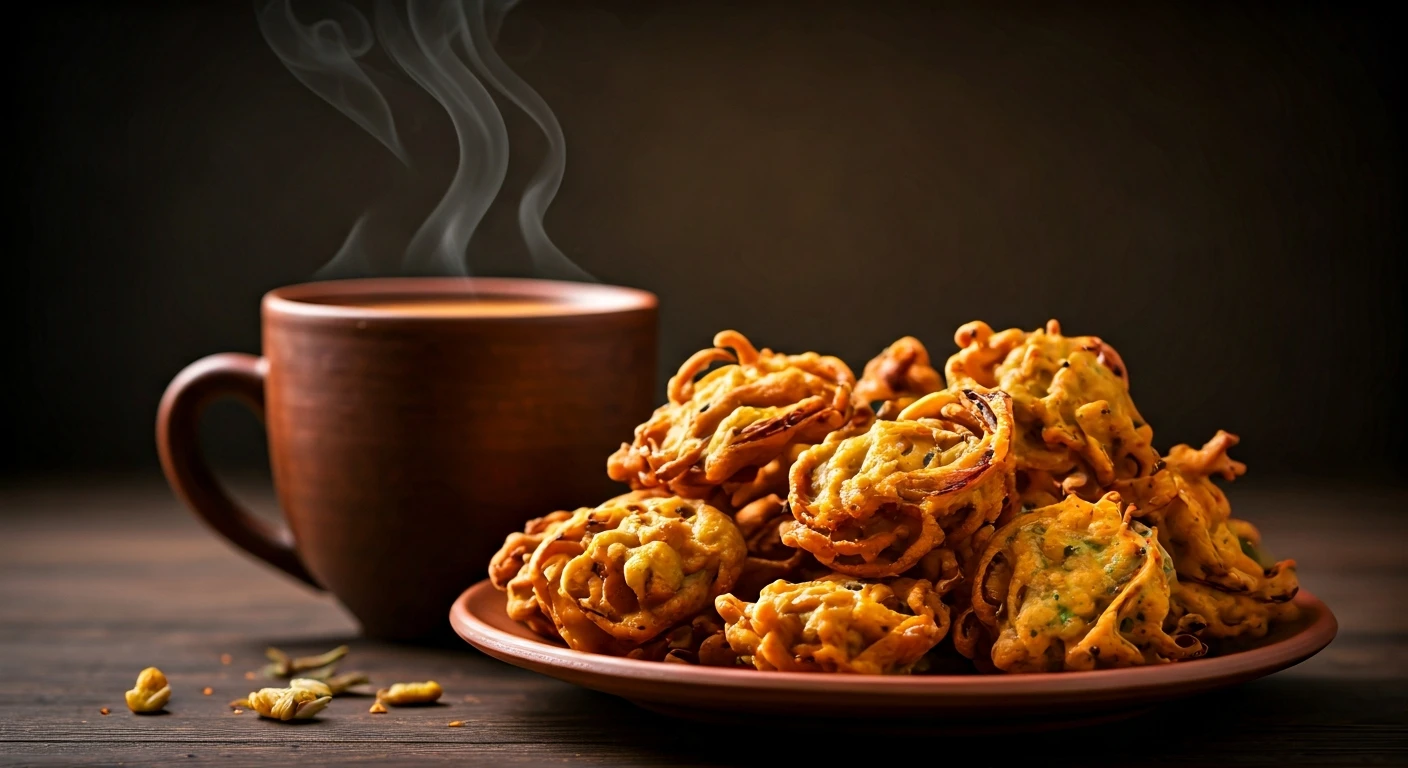


The Rain, The Chai, The Craving
There's a universal magic to the Indian monsoon. It’s more than just a weather pattern; it's a cultural season. As the heat of summer finally breaks, a collective sigh of relief washes over the country. Windows are thrown open to welcome the cool, petrichor-scented
breeze. And with the change in weather comes a change in appetite. The desire for cold salads and light meals evaporates, replaced by a deep-seated yearning for 'garma-garam' comfort food. Leading this culinary charge is the iconic duo of chai and pakoras. This isn't just about food; it's a ritual. It’s about gathering with family, watching the rain lash against the windowpanes, and sharing a platter of something delicious. It’s a moment of pure, unadulterated comfort, a tradition passed down through generations.
Meet the Undisputed Champion: Kanda Bhaji
While the pakora family is large and varied—from paneer to palak—one variety stands head and shoulders above the rest when the clouds gather: Kanda Bhaji. Known as pyaz ke pakode in the north or vengaya bajji in the south, these crispy onion fritters are the undisputed kings of monsoon snacking. What makes them so special? It's the beautiful simplicity. Thinly sliced onions, coated in a lightly spiced chickpea flour (besan) batter, and deep-fried to golden-brown perfection. The magic lies in the texture. A truly great Kanda Bhaji is not a soft, doughy ball. It is a light, airy, and shatteringly crisp cluster where the sweetness of the caramelized onion shines through the savoury, spiced coating. It’s a textural masterpiece that is salty, savoury, and utterly addictive.
The Secrets to Street-Style Crispy Bhajis
Many have tried and failed to replicate the incredible crispiness of the bhajis sold by street vendors. The secret isn't a complex ingredient but a simple technique. The most common mistake is adding too much water to the batter, resulting in soggy, oily fritters. The trick is to let the onions do the work. After slicing the onions, mix them with salt and spices first. Let this mixture rest for 10-15 minutes. The salt will draw out the natural moisture from the onions, creating a wet base. Only then should you add the besan and a touch of rice flour (for extra crispiness). Mix it all together without adding any extra water, or perhaps just a single teaspoon if absolutely necessary. The batter should just barely coat the onions, not drown them. This ensures each strand of onion fries up individually, creating that signature crunchy texture.
Your Perfect Monsoon Recipe
Ready to make the perfect batch? Here’s a simple, no-fail recipe. Ingredients: - 2 large onions, thinly sliced - 1 cup besan (chickpea flour) - 2 tablespoons rice flour - 1 teaspoon red chilli powder (or to taste) - ½ teaspoon turmeric powder - 1 teaspoon ajwain (carom seeds) - A pinch of asafoetida (hing) - Salt to taste - A handful of fresh coriander, chopped - Oil for deep frying Method: 1. In a large bowl, combine the thinly sliced onions with salt, red chilli powder, turmeric, ajwain, and hing. Mix well and set aside for 15 minutes. The onions will release their water. 2. Add the chopped coriander, besan, and rice flour to the onion mixture. Use your hands to mix everything together, squeezing slightly. The moisture from the onions should be enough to form a thick, sticky batter that coats the slices. Do not add water. 3. Heat oil in a kadai or deep pan over medium-high heat. To check if the oil is ready, drop a tiny piece of batter in; it should sizzle and rise to the surface quickly. 4. Carefully drop small, irregular portions of the batter into the hot oil. Don't overcrowd the pan. Fry for 3-4 minutes, turning occasionally, until the bhajis are golden brown and crispy. 5. Remove with a slotted spoon and drain on a wire rack or paper towels.
Serving the Dream
Kanda Bhajis are best served immediately, while they are still piping hot and at their crispiest. The classic accompaniment is a steaming cup of masala chai, its spicy sweetness cutting through the richness of the fried snack. For dipping, a simple green chutney made from coriander and mint provides a fresh, zesty contrast. Some also enjoy it with a sweet and sour tamarind chutney or even a plain tomato ketchup. No matter how you serve them, the experience is the same: pure, unadulterated monsoon bliss.