


Protein and Its Building Blocks
Before we dive into the magic of food pairing, let's start with the basics. Proteins are essential macronutrients that play a crucial role in nearly every biological process. They build and repair tissues, make enzymes and hormones, and are a fundamental
building block of bones, muscles, cartilage, skin, and blood. Proteins themselves are made of smaller units called amino acids. Our bodies need 20 different amino acids to function, but nine of them are called 'essential amino acids' (EAAs). The term 'essential' means our bodies cannot produce them on their own, so we must get them from the food we eat.
The 'Complete' vs 'Incomplete' Protein Puzzle
This is where the concept of 'complete' and 'incomplete' proteins comes in. A 'complete' protein source contains all nine essential amino acids in roughly equal and sufficient amounts. Animal-based foods like meat, eggs, and dairy are generally considered complete proteins. On the other hand, most plant-based foods are 'incomplete' proteins. This doesn't mean they are bad; it simply means they are low in one or more of the essential amino acids. This specific amino acid that is in short supply is called the 'limiting amino acid' because its absence limits the body's ability to use the other amino acids to build protein.
Cereal Grains: Strong but Missing Lysine
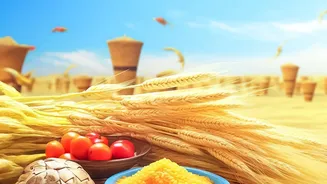
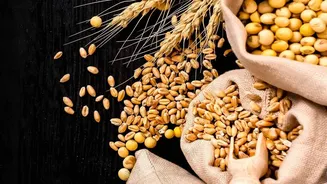
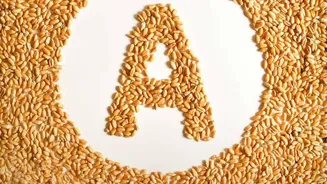
Cereal grains form the foundation of diets across India and the world. This category includes staples like rice, wheat, corn, oats, and barley. Grains are excellent sources of energy, fibre, and various nutrients. From a protein perspective, they contain a good range of amino acids. However, they have a weak spot: they are consistently low in the essential amino acid lysine. So, if you were to rely solely on grains for your protein, your body would not get enough lysine to effectively build and repair tissues, even if you consumed plenty of the other eight essential amino acids.
Legumes: The Perfect Partner, Missing Methionine
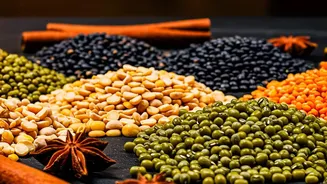
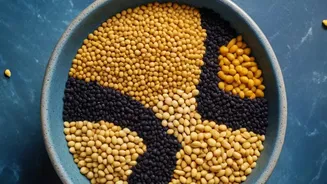
Now, let's look at legumes. This diverse food group includes all kinds of dals (lentils), beans (like rajma and chana), and peas. Legumes are nutritional superstars, packed with protein, fibre, and minerals. Interestingly, their amino acid profile is the near-perfect opposite of cereal grains. Legumes are rich in the lysine that grains are missing. However, they have their own limiting amino acid; they tend to be low in the sulphur-containing essential amino acids, primarily methionine and cysteine.
The Synergy of Dal-Chawal: Mutual Complementation
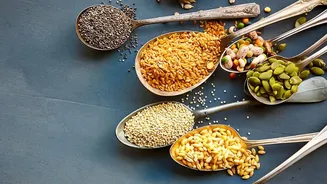
This is where the genius of traditional food wisdom shines. When you combine a cereal grain with a legume—like in a classic plate of dal and rice—you are performing an act of nutritional synergy called 'protein complementation'. The rice provides the methionine that the dal is low in, and the dal provides the lysine that the rice is low in. Together, they cover each other's deficiencies and create a meal with a complete amino acid profile, providing your body with all nine essential building blocks in one go. This is why combinations like dal-roti, rajma-chawal, hummus and pita bread, or even a simple peanut butter sandwich on whole-wheat bread are so effective.
Do They Need To Be Eaten in the Same Meal?
For many years, the popular belief was that you had to eat complementary proteins in the exact same meal for the benefits to count. However, modern nutritional science has shown this to be a myth. Our bodies are quite resourceful and maintain a 'pool' of free amino acids that it can draw from throughout the day. This means that as long as you eat a varied diet that includes both grains and legumes over the course of a day, your body can pull the necessary amino acids to create complete proteins as needed. So, you don't need to stress if you have a bowl of dal for lunch and a few rotis for dinner; your body knows how to put the pieces together.