








The Real Feel of Burnout
We often talk about burnout as a state of mind: emotional exhaustion, cynicism, and a reduced sense of accomplishment. But for millions of professionals in India, burnout has a deeply physical dimension. It’s the persistent lower back pain that makes
sitting uncomfortable, the stiff neck from staring at screens, and the tension headaches that derail your focus. This physical discomfort isn't just a side effect; it's a co-conspirator in your burnout. When your body is in a constant state of low-grade pain, it drains your energy, sours your mood, and makes it nearly impossible to mentally recharge, creating a vicious cycle where physical stress fuels mental exhaustion, and vice versa.
Your Spine on a Desk Job
Our bodies were not designed for the 9-to-5 (or often, 9-to-9) desk-bound life. Prolonged sitting, especially with the suboptimal posture many of us adopt, places enormous pressure on the lumbar spine. The discs that cushion your vertebrae can become compressed, leading to bulging or herniation. This compression can irritate nearby nerves, causing not just localised back pain but also radiating pain, numbness, or weakness in the legs (sciatica). Over time, this chronic compression starves the spinal discs of the vital nutrients and oxygen they need to stay healthy, accelerating degeneration. Your ergonomic chair and occasional stretches help, but they often fight a losing battle against the cumulative hours of gravitational pressure.
Enter Spinal Decompression
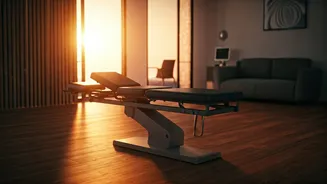
This is where non-surgical spinal decompression therapy comes in. It’s a modern, non-invasive treatment designed to counteract the compressive forces of daily life. During a session, you lie on a computer-controlled table. A harness is fitted around your pelvis and another around your trunk. The technology then gently and precisely stretches the spine, creating a negative pressure within the targeted spinal discs. Think of it like creating a vacuum. This vacuum effect is crucial—it helps to draw bulging or herniated disc material back into place, taking pressure off pinched nerves. It also facilitates the movement of water, oxygen, and nutrient-rich fluids into the discs so they can heal and rehydrate.
What a Session Feels Like
Far from being painful, many patients find the process quite relaxing. The treatment involves cycles of gentle stretching and relaxation. The pull is slow and controlled, allowing your body and muscles to relax into the stretch rather than guarding against it. A typical session lasts around 20 to 30 minutes. While some individuals report feeling relief after just one or two sessions, spinal decompression is typically administered as a series of treatments over several weeks to produce lasting results. It’s a therapeutic process aimed at healing the underlying issue, not just masking the symptoms with a temporary fix.
Why Sunset Slots Are a Game-Changer
For the busy professional, scheduling self-care can be another source of stress. That’s the genius of “sunset” or evening appointments. Booking a session at the end of your workday allows you to transition directly from a state of work-induced compression to therapeutic decompression. You don't have to use precious work hours or sacrifice your weekend. Instead, you can make it a restorative ritual that marks the end of your day. It gives your body a chance to heal and reset without the immediate stress of returning to a desk or a long commute. It’s the ultimate way to “leave work at the office” by physically releasing the tension it has imprinted on your body, setting you up for a more restful evening and a more pain-free tomorrow.