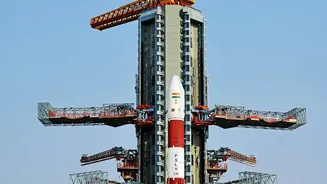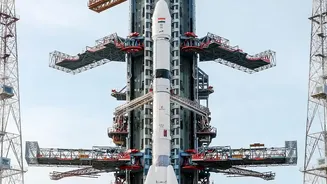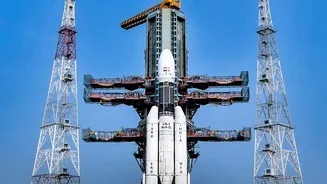





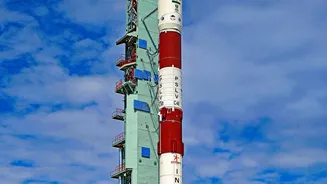

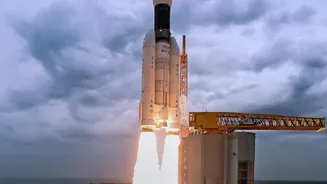
A Shift in Orbit: From Government-Led to Private-Powered
For decades, India's space ambitions were synonymous with the Indian Space Research Organisation (ISRO). From launching its first rocket to landmark missions to the Moon and Mars, ISRO established India as a major space-faring nation. However, the global
space economy, projected to reach nearly $1.8 trillion by 2035, is increasingly powered by private companies. Recognizing this shift, the Indian government initiated historic reforms in June 2020, opening the doors for private companies to participate in all aspects of the space industry, from building rockets and satellites to providing space-based services. The goal is to transition ISRO's role from being the primary operator to focusing on advanced research and development, while private enterprise drives commercial growth and execution.
Unlocking a Universe of Capital
A key pillar of the reform is attracting investment. India's space economy, valued at around $8 billion, aims to capture a larger share of the global market, with projections targeting $44 billion by 2033. To achieve this, the government has liberalized its Foreign Direct Investment (FDI) policy. The new rules permit up to 100% foreign investment via the automatic route for manufacturing components and up to 74% for satellite manufacturing and operations. This policy is a clear signal to global investors, promising easier entry and a predictable regulatory environment. The results are already visible, with private investment surging from around $100 million in 2021-22 to over $600 million by March 2026, creating a thriving startup ecosystem of over 400 companies.
A Gateway for Advanced Technology
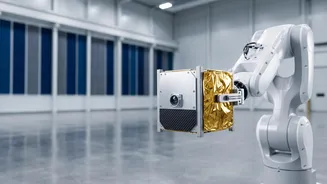
The reforms are not just about capital; they are also about acquiring and developing cutting-edge technology. For a long time, Indian companies were primarily component suppliers to ISRO. By encouraging global partnerships and FDI, the new policies facilitate crucial technology transfers. The Indian National Space Promotion and Authorisation Centre (IN-SPACe), a new single-window agency, plays a vital role here. It acts as an interface between ISRO and private entities, allowing private companies to use ISRO's world-class facilities and expertise. This handholding helps startups and established players alike to develop sophisticated technologies, from reusable launch vehicles to advanced satellite constellations, accelerating innovation and making the Indian space industry more competitive on a global scale.
Fueling New Employment Opportunities
The expansion of the space sector is expected to be a significant engine for job creation. Estimates suggest the ecosystem could create over 200,000 new jobs in the coming years across various functions. This demand extends far beyond rocket scientists. It includes a wide array of high-skilled roles in manufacturing, engineering, software development, data analytics, robotics, and avionics. The growth of private companies like Skyroot Aerospace, which launched India's first privately developed rocket, Vikram-S, and Agnikul Cosmos, which built a private launchpad, highlights the emergence of a new industrial base. This boom is expected to create opportunities not just in major tech hubs but also within a broader supply chain of MSMEs, potentially helping to curb brain drain by offering compelling careers within India.