


Elevate Your Pots for Better Drainage
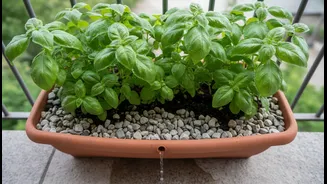
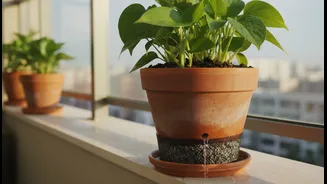
One of the most effective ways to prevent waterlogging is to lift your pots off the ground. When a pot sits directly on a flat surface, its drainage holes can easily get blocked, preventing excess water from escaping. By creating even a small gap underneath,
you ensure water can flow out freely. You don't need to buy expensive equipment; simple items like bricks, flat stones, leftover tiles, or even sturdy plastic bottle caps placed under the pot work perfectly. This simple act of elevation is often the first and most crucial line of defence against soggy soil.
Move Pots to a Sheltered Spot
A tactical retreat can save your most vulnerable plants. If you have the space, moving smaller or more sensitive plants under an eave, awning, or covered patio during a heavy downpour is a straightforward solution. Even placing pots against the side of the house can shield them from the full force of the rain. This is especially important for plants that prefer drier conditions, like succulents and cacti, which can quickly rot in excessively wet soil. A temporary move during the worst of the weather can make all the difference.
Tilt and Drain Heavy Containers
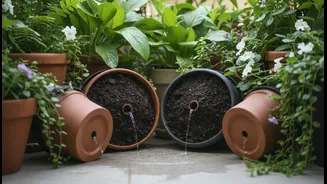
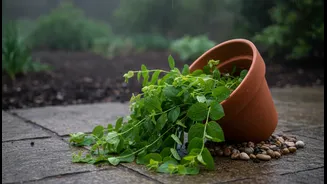
What about those large, heavy pots that are too difficult to move? For these, a simple tilt can work wonders. After a heavy shower, gently prop one side of the container up with a brick or a small block of wood. This angle helps the excess water that has accumulated at the bottom to run out of the drainage holes more quickly. Let it drain for a few hours before returning the pot to its level position to avoid disturbing the root system too much. This method is a great quick fix for large, immovable planters that hold a lot of water.
Utilise Natural Slopes and Surfaces
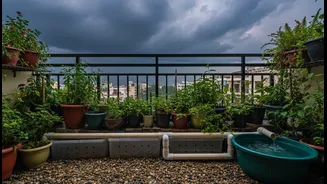
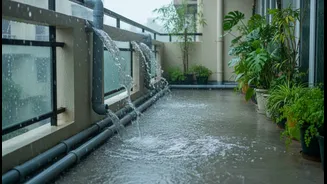
Take a look at your balcony or terrace. Are there any areas that have a natural, gentle slope? Placing your pots in these areas can help guide water away naturally. If your outdoor space is perfectly flat, you can create your own slight slope by using thin tiles or wooden shims under one side of a group of pots. Even a very slight incline is enough to encourage runoff and prevent water from pooling around the base of your containers. Be mindful not to create too steep an angle, which could cause the pots to become unstable.
Always Empty Saucers and Trays
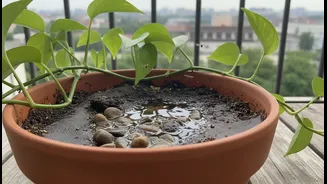
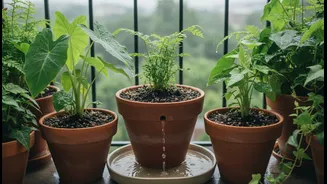
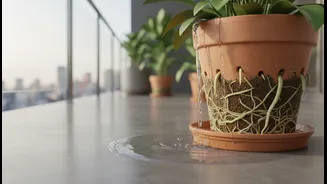
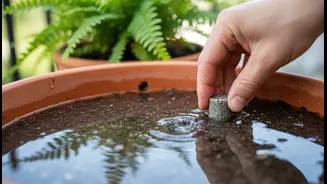
Many gardeners use saucers or trays under their pots to catch excess water and prevent messes, but during the monsoon, these can become a plant's worst enemy. A pot sitting in a saucer full of water is just as bad as a pot with blocked drainage holes. The roots will remain submerged, leading to root rot. After every rainfall, make it a habit to check all your saucers and empty any standing water immediately. This also has the added benefit of preventing mosquitoes from breeding in the stagnant water.
Group Plants Strategically
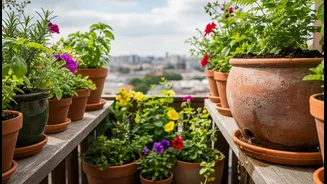
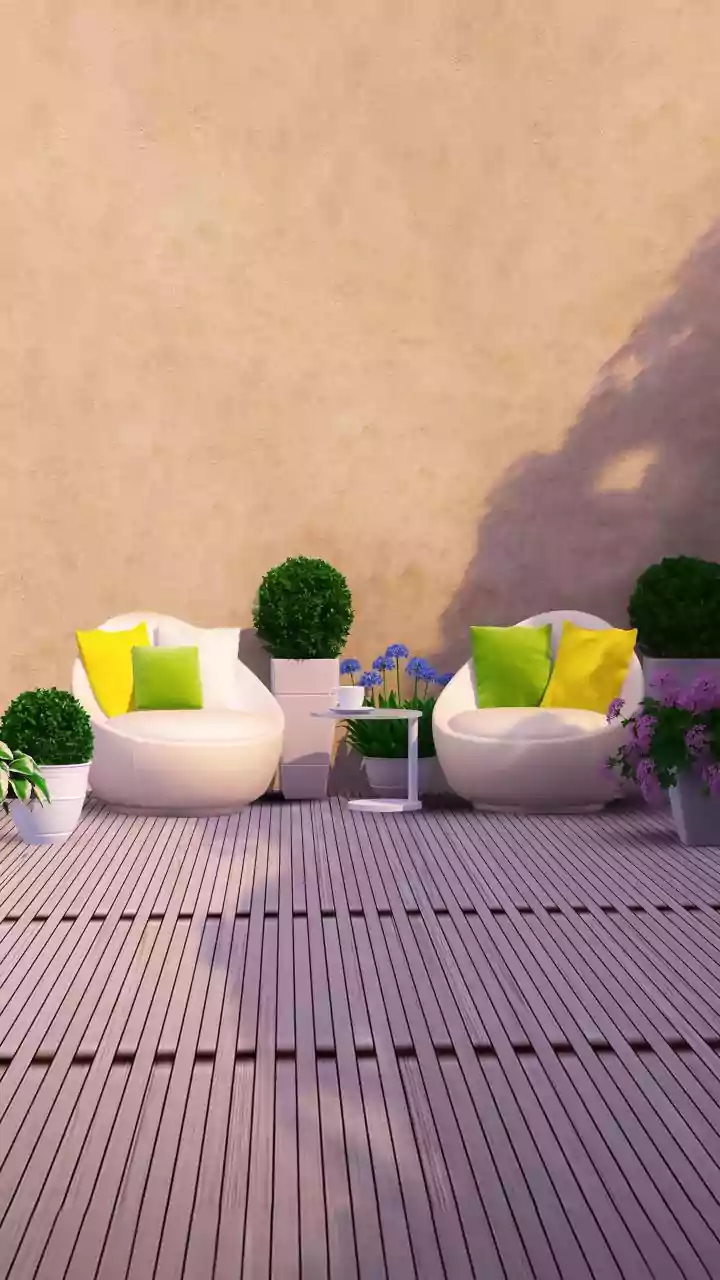
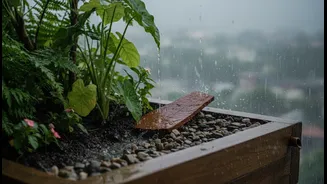
You can use your larger, more robust plants to your advantage. By grouping pots together, you can create a micro-environment. Place smaller, more delicate plants behind or between larger, leafier ones. The foliage of the bigger plants can help deflect some of the heavy rainfall, offering a degree of natural protection. This arrangement can prevent soil erosion from the force of the rain hitting the surface of the soil directly in smaller pots. This not only protects your plants but also creates a lush, layered look in your garden.