




Saturn Takes Centre Stage
October kicks off with a planetary highlight that is hard to miss. On October 4, Saturn reaches opposition, an event where Earth passes directly between the Sun and the ringed planet. This alignment makes it the best time of the year to view Saturn, as it will
be at its closest to Earth, appearing bigger and brighter than at any other time. For observers in India, Saturn will rise in the eastern sky around sunset and remain visible throughout the night, setting around sunrise on October 5. While the planet will be visible to the naked eye as a bright, steady point of light, a small telescope will reveal its magnificent rings, and perhaps even a few of its largest moons. The days surrounding October 4 are also excellent for viewing, so you have a generous window to enjoy this celestial treat.
The Draconid Meteor Shower
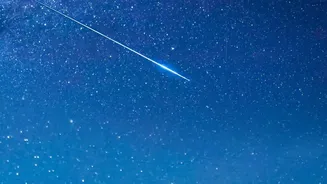
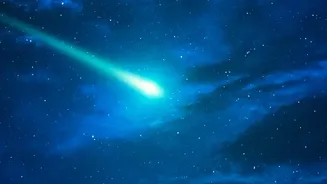
Mark your calendars for the night of October 8-9, which brings the peak of the Draconid meteor shower. While the Draconids are considered a minor shower, typically producing only about 5 to 10 meteors per hour, 2026 offers exceptional viewing conditions. The shower's peak coincides with a nearly new moon, meaning the sky will be dark and free of moonlight, making it easier to spot even the fainter shooting stars. Unlike many meteor showers that are best seen after midnight, the Draconids are best viewed in the early evening, just after full darkness falls. The meteors are debris left behind by comet 21P/Giacobini-Zinner and appear to radiate from the constellation Draco the Dragon. While a major outburst isn't predicted, the Draconids are famously unpredictable, so it's always worth taking a look.
The Fiery Orionids
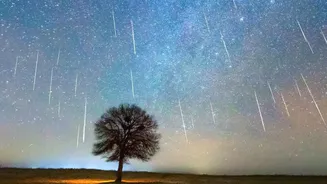
Later in the month, a more prolific shower arrives: the Orionids, which peak on the night of October 21-22. The Orionids are known for producing bright, fast meteors, and you can expect to see up to 20 or 25 per hour under dark skies. This shower is extra special because its meteors are tiny pieces of the famous Halley's Comet burning up in our atmosphere. This year, a bright waxing gibbous moon will be present during the shower's peak, which could wash out some of the fainter meteors in the evening. However, there is a perfect window for viewing. The moon is expected to set around 3 a.m. local time, leaving the sky dark for the pre-dawn hours, which is the best time to watch. Find a spot away from city lights, let your eyes adjust for about 20 minutes, and look towards the constellation Orion.
The Hunter's Full Moon
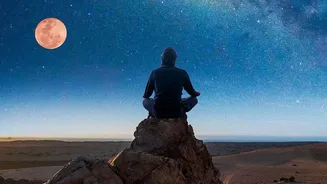
October’s full moon, traditionally known as the Hunter's Moon, will reach its peak illumination in the early hours of Monday, October 26. This name harks back to a time when the bright moonlight of this post-harvest moon helped hunters spot game in the cleared fields. While the technical peak is after midnight, the most breathtaking view is arguably during moonrise. For the best experience, look to the eastern horizon around sunset on the evenings of October 25 and 26. As it climbs above the horizon, the Moon often takes on a beautiful orange or golden hue, an effect caused by our atmosphere. This provides a stunning photo opportunity and a serene way to end an evening.
More Celestial Meetups
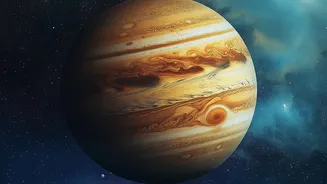
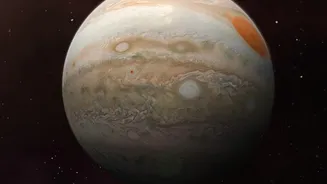
Beyond the main events, keep an eye out for some lovely planetary pairings. In the pre-dawn hours of October 5, a crescent moon will appear close to the reddish planet Mars. The following morning, on October 6, the moon will have moved to sit near the bright giant Jupiter, offering a beautiful sight for early risers. Later in the month, on the night of October 27-28, the nearly full moon will pass close by the famous Pleiades star cluster, also known as the Seven Sisters. These close approaches, or conjunctions, are easy to spot and make for wonderful observing moments without any special equipment.