
1. Mint (Pudina): The Resilient Refresher
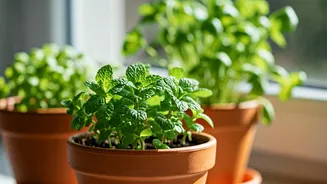
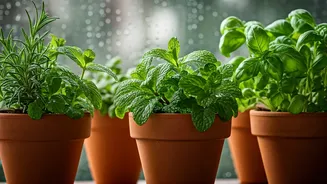
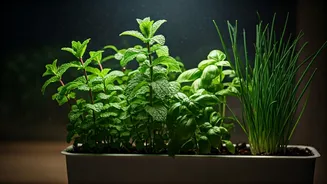
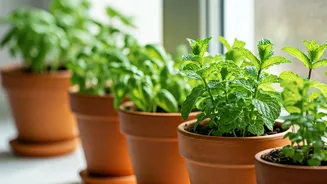
Mint is perhaps the most forgiving and enthusiastic herb for an indoor garden, making it perfect for beginners. Known for its refreshing aroma and flavour, it's a staple for everything from morning tea to spicy chutneys and cool summer drinks. Mint is famously
resilient and adapts well to indirect light, thriving even on a kitchen counter that doesn't get direct sun. It prefers soil that is consistently moist but not waterlogged. The key to a happy mint plant is regular trimming; snipping the tops encourages it to grow bushier and prevents it from becoming thin and leggy. One crucial tip: always plant mint in its own pot. Its roots are notoriously aggressive and will quickly spread to take over any shared space, choking out other plants. By giving it a dedicated container, you ensure a steady, manageable supply of fresh pudina all year round.
2. Parsley: The Nutrient-Packed Garnish
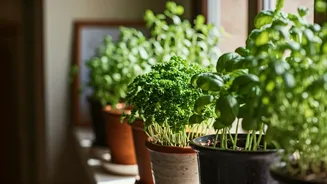
Often relegated to a simple garnish, fresh parsley offers a bright, clean flavour and is packed with vitamins. It's an excellent candidate for low-light gardening, particularly the curly-leaf variety, which is more compact and tolerant of shade than its flat-leaf Italian cousin. While it won't flourish in a dark corner, a spot that receives a few hours of gentle morning light or bright, indirect light throughout the day is perfect. Parsley appreciates consistent moisture, so don't let the soil dry out completely between waterings. Use a pot with good drainage to prevent root rot. To harvest, snip the outer stems close to the base. This encourages the plant to produce new growth from the centre, ensuring you have a continuous supply for sprinkling over dals, mixing into salads, or brightening up sandwiches. With a little care, this biennial herb will provide fresh flavour for many months.
3. Chives: The Subtle Onion Kick
If you love the mild, delicate flavour of onions but find them too strong, chives are your answer. These slender, grass-like herbs are incredibly low-maintenance and adapt beautifully to indoor life. They deliver a subtle oniony punch that’s perfect for seasoning eggs, sprinkling over soups, or mixing into dips and spreads. Chives are not demanding when it comes to light and can grow happily in a spot with indirect sunlight. They are more tolerant of occasional neglect than many other herbs, making them ideal for busy households. For the best flavour, keep their soil slightly moist and ensure the pot has good drainage. Harvesting is simple: using a pair of scissors, snip the leaves about two inches above the soil. This encourages vigorous regrowth, and a single pot of chives can provide fresh flavour for years with minimal fuss, adding a touch of green and a burst of flavour to your meals whenever you need it.
4. Cilantro (Dhania): The Essential Flavour
No Indian kitchen is complete without the unmistakable aroma of dhania. While often considered tricky to grow, cilantro can adapt surprisingly well to an indoor, low-light environment, especially if you manage its conditions carefully. Unlike sun-loving herbs, cilantro actually prefers cooler temperatures and can bolt (flower prematurely) in intense heat. This makes a less sunny, cooler spot in your home an advantage. It thrives in indirect light and needs consistently moist soil. Good air circulation is also key, so don't overcrowd the pot. The plant grows quickly, so you can start harvesting the outer leaves once they are a few inches tall. To ensure a continuous supply, it’s a good idea to sow a few new seeds every couple of weeks. Having fresh dhania on hand to garnish curries, dals, and raitas is a simple luxury that even a low-light kitchen can afford.