






The Visual and Textural Divide
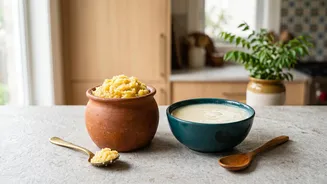
The most obvious difference is colour. Cow ghee has a characteristic golden-yellow hue, while buffalo ghee is a creamy white. This is a matter of biochemistry. Cows pass on the beta-carotene pigment from their grassy diet directly into their milk fat.
This beta-carotene is a precursor to Vitamin A. Buffaloes, on the other hand, have a more efficient system that converts beta-carotene into colourless Vitamin A before it reaches the milk, resulting in white fat. This also affects texture; cow ghee tends to be lighter and more granular, whereas the higher fat concentration in buffalo milk gives its ghee a denser, more solid consistency.
A Look at the Fat Profile
The primary distinction lies in the fat content. Buffalo milk is naturally richer in fat, containing around 7-8% compared to the 3.5-4.5% in cow's milk. Consequently, buffalo ghee has a higher overall fat concentration. While both are predominantly saturated fat, the specific makeup differs. Cow ghee generally contains a higher amount of polyunsaturated fatty acids (PUFA), which are considered good fats. Some sources state buffalo ghee has less cholesterol, while others suggest the opposite, but the difference per serving is generally minimal. However, due to its higher total fat, buffalo ghee is more calorie-dense.
Nutritional and Health Implications
From a nutritional standpoint, each ghee has its strengths. Cow ghee is lauded for its Vitamin A content, derived from the beta-carotene that gives it its colour. It also contains fat-soluble vitamins like D, E, and K. Traditionally, in Ayurveda, cow ghee is considered 'sattvic'—pure and balancing—and is often recommended for its digestive benefits. It is thought to be lighter on the stomach and easier to digest, making it a preferred choice for children and the elderly. Conversely, buffalo ghee contains more calcium, phosphorus, and magnesium. Its higher fat and calorie count make it a source of instant energy, often recommended for those looking to gain weight or engaged in heavy physical activity.
Which Ghee for Which Dish?
In the kitchen, their unique characteristics lend them to different applications. Cow ghee has a milder, nuttier flavour that complements everyday dishes without overpowering them. It's ideal for drizzling over dal, rice, and rotis, or for general sautéing and tadkas. Buffalo ghee possesses a richer, stronger flavour and a creamier texture. This makes it the preferred choice for making rich traditional sweets like ladoos and halwa, or for preparing flaky parathas. Both have high smoke points, far superior to most refined oils, making them excellent for cooking. Buffalo ghee's smoke point is slightly higher, making it marginally better for deep-frying applications.