






NASA's Quest for Clean Air
In 1989, NASA, in partnership with the Associated Landscape Contractors of America, published the Clean Air Study. The goal was to find ways to purify the air in sealed environments like space stations. Researchers placed a variety of common houseplants
in sealed chambers and introduced several volatile organic compounds (VOCs)—specifically benzene, formaldehyde, and trichloroethylene. These are common indoor pollutants that can be released from things like paint, furniture, cleaning products, and building materials. The results were remarkable: the study suggested that certain plants could absorb these harmful chemicals from the air. The Peace Lily and Snake Plant were among the standout performers on this list.
Spotlight on the Star Performers
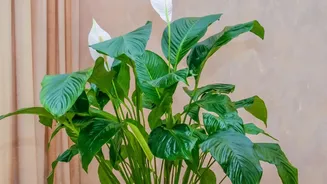
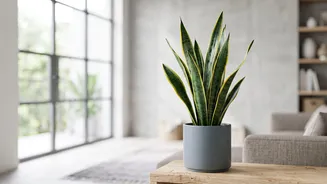
The Peace Lily (Spathiphyllum) was found to be particularly effective, showing an ability to remove all of the VOCs tested in the study, including ammonia. It is known for its beautiful white spathes and glossy leaves, but its air-purifying capacity made it a star. The Snake Plant (Sansevieria trifasciata), also known as Mother-in-Law's Tongue, was another top contender. It was noted for its effectiveness against pollutants like formaldehyde and benzene. A unique quality of the Snake Plant is that it performs photosynthesis differently, releasing oxygen at night, which has made it a popular choice for bedrooms. Both plants are relatively easy to care for, making them accessible choices for many households.
From Lab to Living Room: A Reality Check
While the NASA study's findings are exciting, it's crucial to understand the context. The experiments were conducted in small, sealed laboratory chambers—an environment very different from a typical home or office with natural air circulation. Subsequent analysis and reviews have pointed out that in a real-world setting with regular air exchange from windows, doors, and ventilation systems, the air-purifying effect of a few plants is significantly diluted. In fact, some researchers calculated that you would need a huge number of plants—anywhere from 10 to 1,000 per square metre—to match the air-cleaning rate of a building's standard ventilation. So, while plants do absorb pollutants, they can't be seen as a replacement for good ventilation or modern air purifiers, especially for those with respiratory issues.
More Than Just Air Purifiers
Even if they aren't single-handedly scrubbing your air clean, houseplants like the Snake Plant and Peace Lily offer a wealth of other proven benefits. Multiple studies have shown that interacting with indoor plants can reduce stress, lower blood pressure, and improve your overall mood. The presence of greenery has been linked to increased productivity and concentration, making them great companions for a home office. Plants also release water vapor through a process called transpiration, which can help increase humidity in dry indoor environments, potentially easing issues like dry skin and throats. Ultimately, the aesthetic and psychological benefits of creating a green, vibrant space are undeniable and valuable in their own right.