




Start With Just Your Eyes
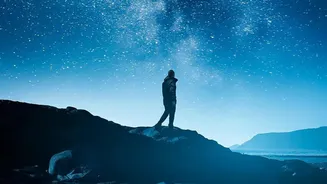
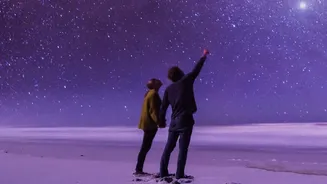
Your first and most essential tool for stargazing is free. Before investing in any gear, simply go outside on a clear night and look up. Find a comfortable spot, perhaps with a blanket or chair, and give your eyes about 20 to 30 minutes to fully adjust
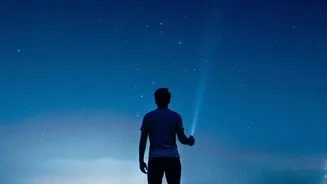
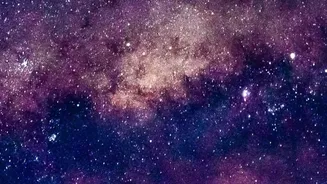
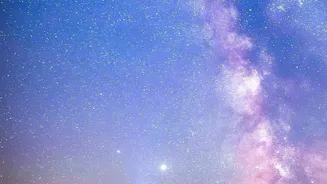
to the darkness. This process, known as dark adaptation, dramatically increases your ability to see fainter stars. Avoid looking at bright screens, and if you need a light, use a red-filtered flashlight, which is less disruptive to your night vision. You will be surprised by how much is visible, from the craters on the Moon to the shimmering band of the Milky Way on a truly dark night. An important first lesson is learning to distinguish stars from planets; stars twinkle because their distant light is disrupted by our atmosphere, while planets generally shine with a steady light.
Learn the Celestial Landmarks
Just like learning your way around a new city, navigating the night sky requires identifying major landmarks. These are the constellations. Start with the most prominent and easily recognisable patterns. In the Northern Hemisphere, the Big Dipper (part of the Ursa Major constellation) is an excellent starting point. Its seven bright stars form a distinct ladle shape that is visible year-round. The two stars at the end of the Dipper's bowl, Merak and Dubhe, form a straight line that points directly to Polaris, the North Star. Once you can find Polaris, you have found celestial north, a fixed point around which the sky appears to rotate. From there, you can branch out to other seasonal constellations like Orion the Hunter in the winter, with its famous three-star belt, or the Summer Triangle, formed by the bright stars Vega, Deneb, and Altair.
Use a Star Chart or App
You don't have to memorise everything at once. A simple planisphere (a rotating star chart) or a printed sky map can help you identify what you're seeing on any given night. However, modern technology has made this step easier than ever. There are numerous stargazing apps available for both iOS and Android, such as SkyView, Star Walk 2, and Stellarium. Many of these apps use your phone's GPS and compass to create an augmented reality view of the sky; you simply point your phone upwards, and the app identifies the stars, constellations, planets, and even satellites in that direction. These apps are game-changers for beginners, providing real-time information and helping you connect the dots in the sky without any prior knowledge.
Graduate to Binoculars
Before you make the leap to a telescope, consider an intermediate step: a good pair of binoculars. Often overlooked by beginners, binoculars are an excellent tool for astronomy. They are more affordable, portable, and easier to use than a telescope. Their wide field of view makes it easier to scan the sky and find objects, providing a more intuitive experience where the sky still looks like the sky, just richer. A standard pair of 7x50 or 10x50 binoculars (where 7x or 10x is the magnification) will reveal stunning details on the Moon's surface, the four largest moons of Jupiter, and bring faint deep-sky objects like the Andromeda Galaxy or the Pleiades star cluster into brilliant focus. Using binoculars first helps you master the skill of finding celestial objects, a crucial step before tackling the narrower, more powerful view of a telescope.
Understand Your Viewing Conditions
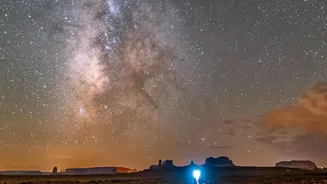
The quality of your stargazing experience depends heavily on your environment. The biggest obstacle for most people is light pollution—the excessive artificial light from cities and suburbs that creates a bright haze, or 'skyglow', washing out all but the brightest stars. To see the sky in its full glory, you need to find a dark-sky location, away from city lights. Campgrounds or rural areas are often ideal. Even a short drive away from a city can make a significant difference. The phase of the Moon is also a factor; a full moon acts as a natural source of light pollution, making it harder to see faint objects. The best nights for stargazing are clear, moonless ones.