


Tree Pose, or Vrksasana, is a cornerstone of balance and focus in yoga. But have you ever considered how simply changing your arm position can transform the entire posture? Explore these variations to deepen your practice and find new stability.
The Foundation: Hands at Heart Centre
The most
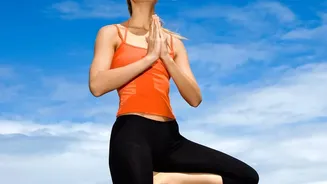
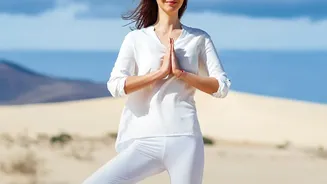
common and grounding variation is bringing the palms together in Anjali Mudra, or prayer position, at the centre of the chest. This is often the first arm position taught in Tree Pose because it offers a profound sense of stability and centeredness. By pressing the palms together, you create a subtle engagement in the chest and arms that helps you find your midline. This position keeps the centre of gravity low and stable, making it easier to maintain balance as you root down through your standing leg. It encourages a calm mind and focused gaze, or 'drishti', allowing you to tune into the small muscular adjustments needed to stay upright. It is an excellent starting point and a wonderful place to return to whenever you feel unsteady. For those with high blood pressure, keeping hands at the heart instead of overhead is often recommended.
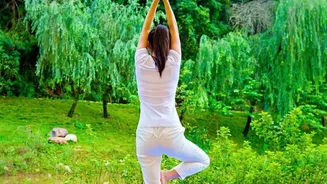
The Upward Reach: Arms Overhead
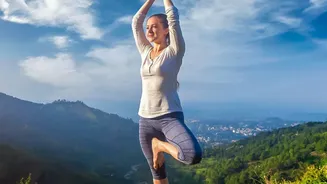
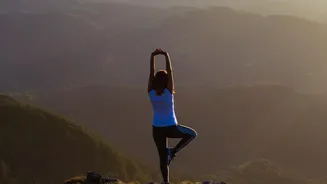
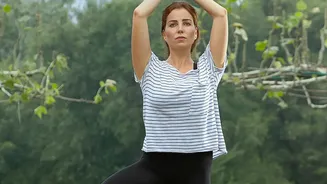
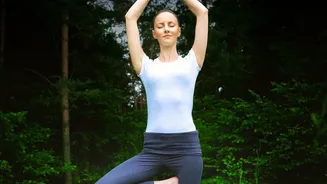
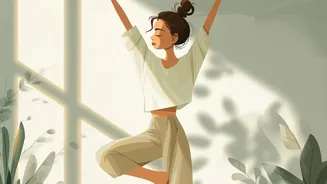
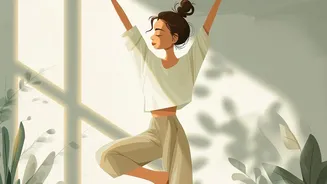
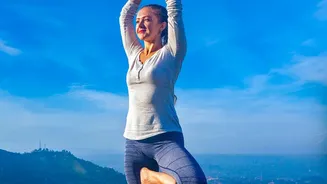
To add a challenge and a feeling of expansion, extend your arms overhead, reaching for the sky like the branches of a tree. This variation, sometimes called Urdhva Hastasana arms, elevates your centre of gravity, demanding more work from your core and standing leg to maintain stability. You can keep the palms parallel and shoulder-width apart or press them together. This upward stretch lengthens the spine, opens the shoulders, and can feel incredibly empowering and energizing. It develops postural awareness and encourages a feeling of growth and possibility. Remember to keep your shoulders relaxed and drawn down your back, away from your ears, to avoid creating tension in the neck while you reach.
The Stabilizer: Hands on Hips
Placing your hands firmly on your hips is a practical and informative variation. This position allows you to physically feel the alignment of your pelvis. It's an excellent diagnostic tool to ensure your hips remain level and squared to the front, preventing the hip of the lifted leg from hiking up or dropping down. By providing this tactile feedback, you can make micro-adjustments to keep the torso stable and the core engaged. This variation provides a sense of command and control over the pose without the added balance challenge of raising the arms overhead, making it a great option when you are focusing purely on lower body stability.
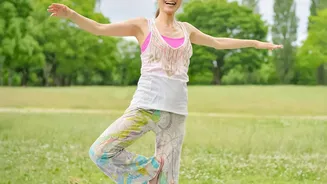
The Expansive Tree: Arms Out to the Sides
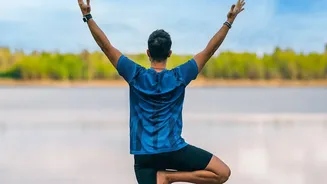
Spreading your arms out to the sides in a 'T' position mimics the sprawling branches of a mature tree. This variation can help with balance, much like a tightrope walker uses a pole. It broadens the chest and collarbones, creating a wonderful sense of openness. You can keep the arms straight and active or soften the elbows to create a more organic, branch-like shape. For an added challenge to your stability and focus, try slowly turning your head to gaze over one shoulder, and then the other, while keeping your arms outstretched. This simple movement tests your proprioception and core control in a dynamic way.
The Shoulder Opener: Reverse Prayer Hands
For a deeper stretch in the shoulders and chest, you can practice Tree Pose with Paschima Namaskarasana, or Reverse Prayer Hands. In this variation, you bring your hands behind your back, pressing the palms or fingertips together with the fingers pointing upward toward the head. This action requires significant shoulder flexibility and encourages an open, proud chest, which can counteract the effects of slouching. It draws the shoulder blades together and down the back, improving posture. Because the arms are bound, it removes their ability to assist in balancing, placing all the stability work on your core and standing leg. It’s an advanced variation that beautifully combines balance, focus, and a deep heart-opening stretch.
The Dynamic Challenge: Swaying Branches
Once you feel stable, you can introduce gentle movement to challenge your balance further. Begin with arms overhead and then slowly sway them from side to side, like tree branches in a gentle breeze. This 'Windy Tree' variation constantly shifts your centre of gravity, forcing the small stabilizing muscles in your standing foot, ankle, and leg to work harder. You can also flow into a side bend, lowering one arm while reaching the other up and over. This dynamic practice teaches that balance is not about rigid stillness, but about the ability to adapt and fluidly return to your centre.