



Meet the Tandoori Momo
At first glance, it’s a brilliant, almost obvious, innovation. Take the beloved momo, a simple steamed or fried dumpling with roots in Tibetan and Nepali cuisine, and give it the classic North Indian treatment. The process is a masterclass in fusion.
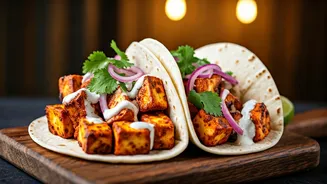
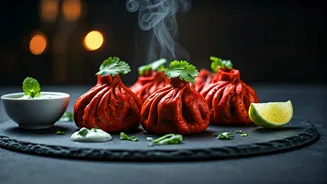
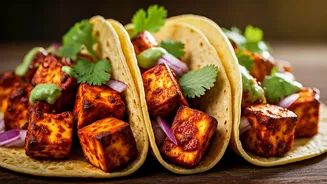
Plump, pre-steamed dumplings—filled with anything from spiced minced chicken to finely chopped vegetables or paneer—are bathed in a thick, yoghurt-based marinade. This isn't just any marinade; it’s the iconic tandoori mix of ginger, garlic, garam masala, and fiery red chilli that gives tandoori chicken and paneer tikka their signature flavour and crimson hue. Skewered and roasted in the intense heat of a tandoor, the momos emerge charred, smoky, and sizzling. The result is a snack that hits all the right notes: a crispy, flavour-packed exterior gives way to a soft, juicy filling. Served with a side of mint chutney and often a creamy dip, it’s a multi-textured, multi-flavoured experience in every bite.
From Street Food to Star Attraction
Like many great Indian food stories, this one started on the streets. While its exact origin is debated, food historians generally point to the bustling lanes of Delhi as the birthplace of the tandoori momo. Street vendors, always looking for the next big hit, ingeniously combined two of their best-selling items: momos and tandoori snacks. It was an instant success. The dish offered the comfort and familiarity of a momo with the bold, spicy, and smoky flavours that the North Indian palate craves. For years, it remained a beloved street-side indulgence. But savvy restaurateurs and cafe owners quickly noticed its immense popularity. They saw an opportunity to elevate this street food hero, bringing it indoors. Soon, tandoori momos began appearing on menus in casual diners, trendy gastropubs, and even experimental fine-dining establishments across the country, transforming from a cheap eat into a must-have appetiser.
The Secret to Its Wild Success
So, why has this particular fusion snack captured the nation's appetite? The answer lies in its perfect blend of comfort and novelty. Momos are a universal comfort food in India, enjoyed by people of all ages. The tandoori preparation taps into an equally deep-rooted love for smoky, grilled flavours. By combining the two, the tandoori momo offers something that is both excitingly new and reassuringly familiar. It’s also incredibly versatile. The fillings can be customised, the spice level can be adjusted, and it works equally well as a quick evening snack, a party appetiser, or a late-night craving-killer. Furthermore, its visual appeal is undeniable. The vibrant red colour, the charred spots, and the sizzling presentation make it incredibly 'Instagrammable', a crucial factor in the success of any modern food trend. It’s a dish that looks as good as it tastes, ensuring it gets shared widely on social media and driving even more curiosity and demand.
A Fusion That Makes Perfect Sense
Not all fusion food works. Some combinations can feel forced or gimmicky. But the tandoori momo is an example of a fusion that feels entirely natural, almost destined to be. It represents a culinary dialogue between different parts of Asia that have found a home in India. The delicate dumpling from the Himalayan region meets the robust, fiery cooking style of the Punjabi heartland. This isn't just a random mashup; it's a reflection of India's multicultural palate. The success of the tandoori momo has also paved the way for other creative variations. Walk into any popular momo joint today, and you’ll likely find Afghani momos (coated in a creamy, nutty marinade), achari momos (with pickled spices), and even peri-peri momos. Each one is a testament to the endless creativity that the humble dumpling inspires.