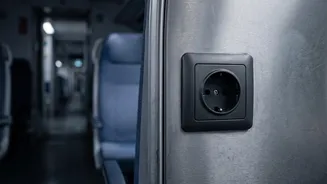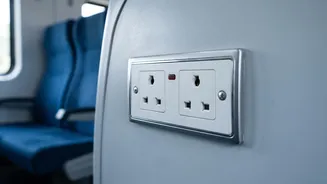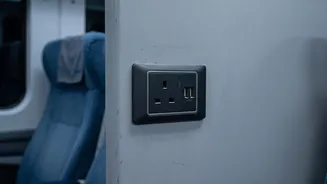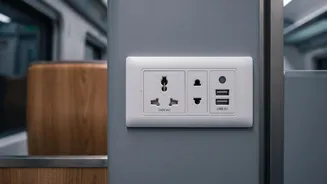




What is the Official Rule?
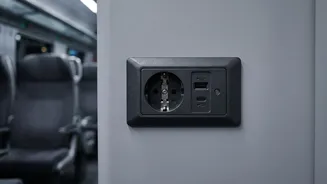
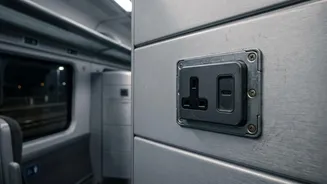
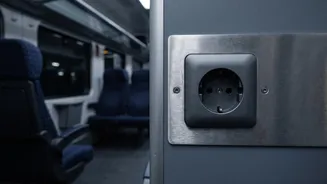
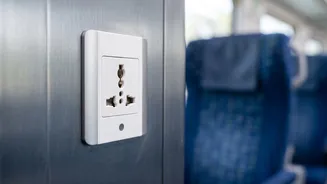
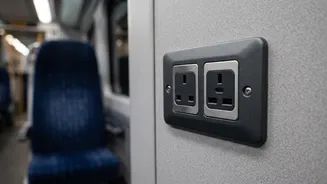
Indian Railways has mandated that all charging sockets for mobile phones and laptops in train coaches must be switched off between 11 PM and 5 AM. This six-hour blackout period is a strict directive from the Railway Board to all zonal railways, with instructions
for staff to ensure compliance without any exceptions. To enforce this, officials and supervisors have been ordered to conduct surprise inspections. The railway staff will also receive specific training to ensure the rule is followed consistently across the network, aiming to protect passengers during overnight journeys when most people are asleep.
Why Was This Decision Made?
The primary reason for this nationwide rule is fire safety. The decision was prompted by multiple incidents where electronic devices, left charging unattended overnight, led to dangerous situations. Concerns include overheating batteries, faulty chargers, and potential short circuits, all of which pose a significant fire risk in a moving train. A recent incident in the South Eastern Railway zone, where a passenger's power bank exploded and filled a coach with smoke, prompted the Railway Board to reiterate the directive with renewed urgency in late October 2026. The focus is squarely on preventing accidents before they can happen, especially when passengers are asleep and less likely to notice a problem immediately.
Not a New Rule, But a Renewed Focus
While many passengers are only now becoming aware of this restriction, it is not a new policy. The original directive was issued back in June 2014. The rule was first recommended by the Commissioner of Railway Safety following a serious fire incident in an AC coach of the Bangalore-Hazur Sahib Nanded Express in 2013. Initially, the recommendation was for a shutdown from 10 PM to 6 AM, but the Railway Board adjusted it to 11 PM to 5 AM to balance safety with passenger convenience. Over the years, enforcement was inconsistent. However, following more recent incidents, including a fire in a sleeper coach in November 2023, the Railways has pushed for stricter, uniform implementation across all coach types.
The Risk of Overheating and Faulty Devices
The logic behind the overnight ban is simple: unattended electronics are a liability. Many fire incidents on long-distance trains have been attributed to the overcharging of devices like mobile phones, laptops, and especially power banks. When left plugged in for hours, batteries can overheat, and faulty or low-quality chargers can cause short circuits. The simultaneous charging of numerous devices by passengers overnight can put a strain on the coach's electrical systems, increasing the risk factor. The South East Central Railway also noted that this practice not only creates a fire hazard but also increases the chances of theft, as sleeping passengers are easy targets. The rule aims to mitigate these dual risks by creating a mandatory 'no charge' window.
How to Plan Your Journey
For overnight travellers, this rule means a little extra planning is required. The most straightforward solution is to ensure all your essential devices are fully charged before the 11 PM cut off. It is highly recommended to carry a fully charged power bank as a backup, but remember not to charge the power bank itself on the train overnight. During the day, the charging points are expected to be functional, so you can top up your devices before the nighttime restriction begins. Passengers are advised to avoid using any damaged cables or chargers and to immediately alert train staff if they notice any device overheating, emitting smoke, or giving off a burning smell.