
A Digital Rosetta Stone for the Moon
NASA has spent decades collecting an almost unimaginable amount of information about the Moon. The Lunar Reconnaissance Orbiter (LRO) alone has gathered more data than all of NASA's other planetary missions combined. This has created a classic big data problem:
researchers have mountains of images and measurements, but analyzing it all manually is incredibly slow and laborious. To solve this, NASA has partnered with IBM to create the Lunar Foundation Model, an artificial intelligence designed specifically for lunar science. Unlike older AI that needed to be built from scratch for each specific task, this is a 'foundation model'. It has been pre-trained on a massive, diverse dataset, giving it a broad understanding of the Moon that researchers can quickly adapt for many different scientific questions. It is now openly available, allowing the global science community to build upon it.
Teaching an AI to See the Moon
The power of the Lunar Foundation Model comes from the data it was trained on. Scientists fed it information from multiple missions, including high-resolution imagery and terrain data from NASA’s LRO and GRAIL missions, as well as Japan’s SELENE explorer. By processing these different types of data together—from visual images to gravity field maps—the AI learns to spot connections and patterns that a human might miss or that would be hidden if looking at only one data source. For instance, it can correlate surface brightness with temperature data and topographical maps to make more educated guesses about what lies in shadowy craters. This multi-modal approach allows it to act as a powerful assistant, sifting through petabytes of data to flag areas of interest and accelerate the pace of discovery.
The Hunt for Resources and Safe Harbors
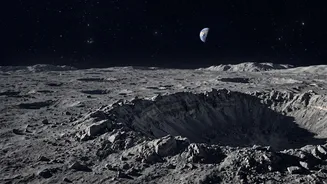
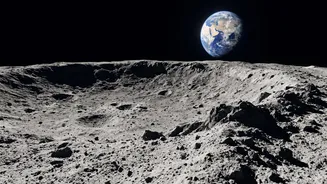
The practical applications for this AI are already transforming lunar research. One of its most critical tasks is the search for water ice. Scientists believe ice is trapped in permanently shadowed regions near the lunar poles. This water is a vital resource for a future Moon base, as it can be converted into drinking water, breathable oxygen, and even rocket fuel. The model is designed to help pinpoint the most promising locations for these ice deposits. Beyond prospecting, the AI is also an incredibly efficient tool for mapping the Moon's surface. It can identify and catalogue craters far faster than manual methods, which helps scientists date different regions of the surface and understand the Moon's long history of asteroid impacts. This detailed mapping is also essential for planning future Artemis missions, helping to identify safe and scientifically interesting landing sites for astronauts.
Unlocking an Ancient Geological History
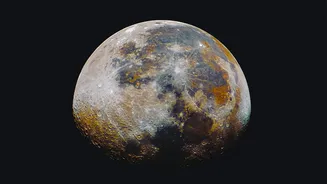
The Moon may seem like a static, unchanging world, but it has a dynamic geological past. The NASA-IBM model is helping to peel back the layers of this history. It can be used to spot unusual volcanic features known as 'irregular mare patches'. These formations appear relatively young, challenging established timelines for how and when the Moon cooled down. By mapping these features more effectively, scientists can build a more accurate picture of the Moon's thermal evolution. The AI doesn't just look for things scientists already know about; its ability to spot anomalies in vast datasets means it could uncover entirely new or unexpected geological features. By automating the laborious parts of data analysis, it frees up human researchers to focus on interpretation and asking bigger questions about how the Moon was formed and evolved.