




Why Your Desk Needs a Green Touch
Staring at a screen for hours can be draining. The solution? Biophilic design. It’s a simple concept: incorporating natural elements into our indoor spaces to improve our well-being. Studies have shown that even a single plant on your desk can reduce
stress, increase focus, and boost creativity. It provides a living, breathing focal point that breaks up the monotony of monitors and keyboards. A splash of green connects us to the natural world, offering a micro-dose of calm during a busy workday. It's not just about aesthetics; it's about creating an environment where you can do your best work while feeling your best.
The Perfect Candidate: The Money Plant
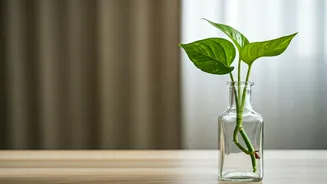
When it comes to desk plants, not all are created equal. The ideal candidate is low-maintenance, thrives in indoor light, and looks great. Enter the Money Plant (Epipremnum aureum), also known as Pothos or Devil's Ivy. This trailing vine is incredibly resilient and famously easy to care for, making it perfect for both seasoned plant parents and beginners. It’s known for its air-purifying qualities and, according to Feng Shui and Vastu Shastra, is believed to bring prosperity and good luck. Its heart-shaped leaves and forgiving nature make it the ultimate desk-side companion, asking for little more than a bit of water and indirect light.
A Simple Guide to Rooting Your Plant
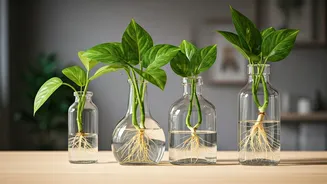
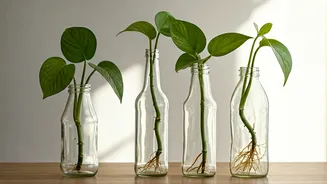
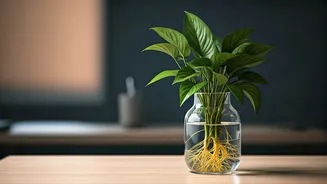
The magic of the Money Plant is how easily it propagates in water. This means you don't even need to buy a full, potted plant to start. You can get a cutting from a friend or snip a piece from an existing plant. Here’s how to do it: 1. Find a healthy vine and select a stem that is at least 4-6 inches long with 4-5 leaves. 2. Using clean scissors or shears, make a cut just below a node (the small bump on the stem where a leaf grows). This node is where the new roots will emerge. 3. Remove the leaf or two closest to the cut end. You want a clean stem to submerge in water, as submerged leaves will rot. 4. Place the cutting in your jar of water, ensuring at least one node is fully underwater. And that's it! You've officially started the rooting process.
The Vessel: The Allure of Amber Jars
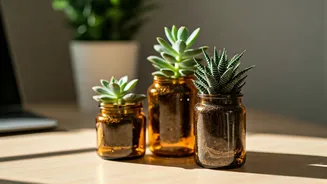
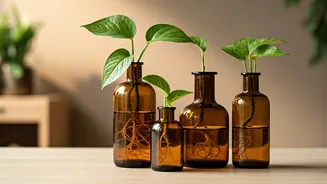
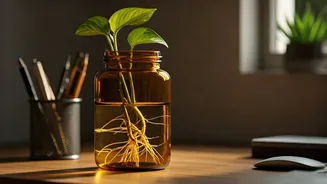
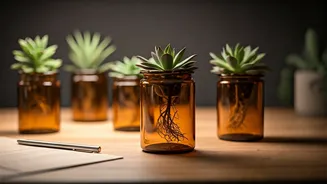
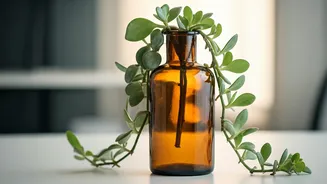
While any glass jar will work, an amber jar elevates the entire look from a simple science experiment to a piece of curated decor. The warm, brown-tinted glass has a vintage, apothecary-like charm that adds instant warmth and sophistication to your desk. There's a practical reason for this choice, too. The dark glass helps to partially block light, mimicking the conditions of soil and encouraging stronger root growth. It also helps prevent algae from forming in the water, which keeps your setup looking cleaner for longer. The way the amber glass catches the light and contrasts with the vibrant green of the Money Plant leaf creates a beautiful, calming visual.
Assembling Your Desk Oasis
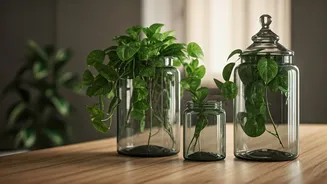
Now, let’s put it all together. Fill your clean amber jar with room-temperature water—filtered or tap water that has been left out for 24 hours is best, as it allows chlorine to dissipate. Gently place your Money Plant cutting inside. Find the perfect spot on your desk. It could be in a corner to soften the edges, next to your monitor as a focal point, or on a small stack of books for a bit of height. Consider placing it on a cork or wooden coaster to protect your desk surface and add another layer of natural texture. This simple combination of plant and jar is a statement in itself, adding life and personality without creating clutter.
Long-Term Care and Maintenance
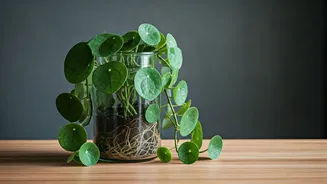
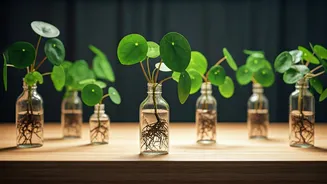
Your water-rooted Money Plant is incredibly self-sufficient, but a little care will keep it thriving. Change the water every 7-10 days to keep it fresh and provide oxygen to the developing roots. You should see tiny white roots begin to sprout from the node within a few weeks. You can keep the plant growing in water indefinitely, or you can transplant it to a pot with soil once the roots are a few inches long. If you keep it in water, the plant will grow slowly, making it a perfect, contained desk accessory. There's no need to fertilise it while it's in water; it gets all it needs from the water and light.