


The Challenge of Liftoff
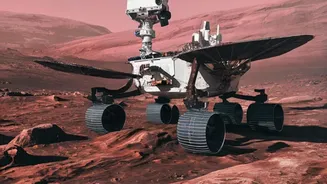
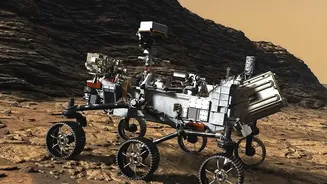
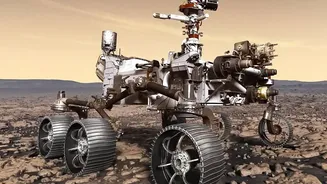
The first major hurdle is launching off the Martian surface, a feat never before attempted. For a robotic mission like the proposed Mars Sample Return (MSR), this involves a relatively small Mars Ascent Vehicle (MAV). Current concepts for this robotic MAV aim
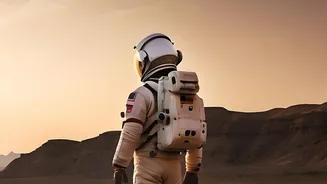
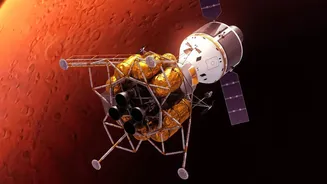
for a total mass under 400 kilograms, designed to carry a payload of just a few kilograms of carefully selected rock and soil samples into Mars orbit. The engineering is complex, requiring a vehicle that can survive months in the harsh Martian environment before launching autonomously.In stark contrast, a human-rated MAV is a behemoth. It must be large enough to transport a crew of four astronauts, their life support systems, and the crew cabin itself. Early NASA designs estimate a human MAV would weigh around 39 metric tons—more than one hundred times the mass of its robotic counterpart. Escaping Mars' gravity well, which is significantly stronger than the Moon's, requires immense energy. This massive vehicle would either need to be fueled on Mars using local resources (a technology called in-situ resource utilization, or ISRU) or have its fuel pre-landed, adding immense complexity and cost to the mission architecture.
The Long Journey Home
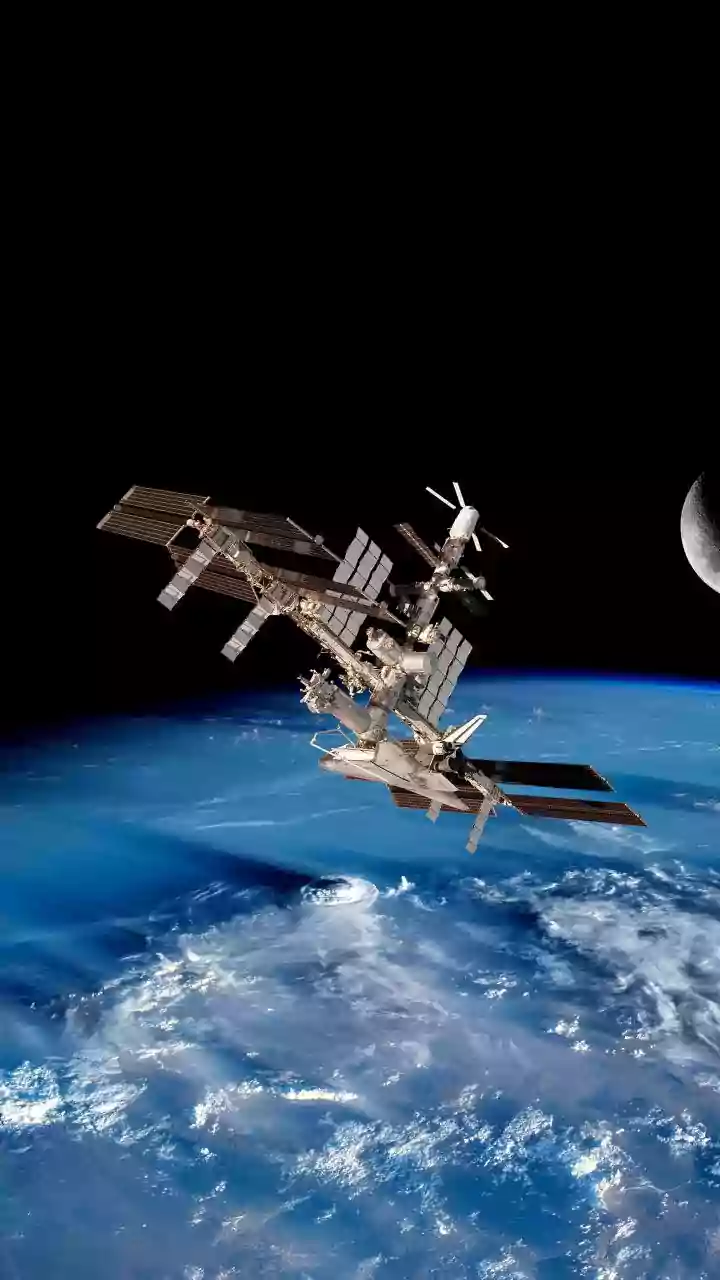
Once in orbit, the payload—whether a sample container or a crew vehicle—must begin its six-to-nine-month journey back to Earth. For a robotic sample, the primary concern is containment. The basketball-sized container must be captured by an Earth Return Orbiter, bio-sealed to prevent any potential contamination of Earth, and placed into an Earth Entry Vehicle (EEV).For humans, the transit is fraught with peril. The crew must be shielded from constant bombardment by galactic cosmic rays and solar particle events, which pose significant long-term health risks, including cancer. Shielding adds mass, and while materials like water or hydrogen-rich plastics can help, no perfect solution exists. Furthermore, the spacecraft becomes a self-contained ecosystem. It needs a closed-loop life support system capable of recycling nearly 100% of its air and water for many months without resupply, a level of reliability far beyond what is required for the International Space Station. The sheer mass of the food, water, and life support systems required for a human crew dwarfs the needs of a simple, inert sample canister.
Sticking the Landing
The final phase is a fiery plunge through Earth's atmosphere. Robotic sample return capsules are designed for a 'ballistic' re-entry. They can withstand extreme deceleration forces, up to 100 times Earth's gravity, and are primarily focused on protecting the integrity of the sample container within. The capsule, protected by an advanced heat shield, simply has to survive the descent and landing.Humans, however, are fragile. Astronauts cannot survive the immense g-forces of a ballistic re-entry. A human-rated capsule must therefore use aerodynamic lift to fly a much gentler trajectory, extending the re-entry process to keep deceleration at survivable levels. This requires a more complex vehicle shape, active guidance systems, and a heat shield that can handle a longer, though less intense, period of heating. The entire system must be flawlessly reliable, as the margin for error when dealing with human lives is effectively zero.
The Planetary Protection Problem
A unique challenge for any Mars return mission is planetary protection, governed by strict international protocols. The primary goal is to ensure that no potential Martian biology, if it exists, is accidentally introduced to Earth's biosphere. For robotic missions, this involves a 'break the chain of contact' strategy. The sample container is sealed and then placed inside another sterile containment vessel in Mars orbit before heading to Earth, ensuring nothing that touched Mars directly returns without being contained. Upon arrival, the samples will be handled in a specialized Biosafety Level 4 (BSL-4) facility that is yet to be built.For a human mission, this becomes exponentially more complicated. Astronauts themselves could be potential vectors for contamination. Protocols would require quarantine capabilities for the crew during and after the mission. Furthermore, the scientific imperative to protect Martian samples from Earth-based contamination also applies. While a robotic sampler can be sterilized, humans are surrounded by microbes, complicating the search for pristine evidence of life on Mars.