


An Introduction to Friselle
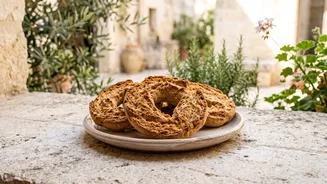
At first glance, a frisella might be mistaken for a stale, oversized bagel. Hailing from the sun-drenched southern regions of Italy like Puglia, Campania, and Calabria, it is a hard, dry, ring-shaped bread made from simple ingredients like durum wheat
or barley flour, water, yeast, and salt. Unlike soft, fresh bread meant for immediate consumption, friselle are intentionally tough. This isn't a flaw; it's their defining feature, a baked-in resilience that tells a story of travel, preservation, and the resourcefulness of 'cucina povera', or peasant cooking. Their history is intertwined with that of sailors and farmers who needed a reliable, non-perishable food source for long journeys and seasons of work away from home.
The Secret Is in the Second Bake
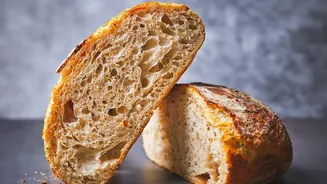
The key to the frisella's remarkable shelf life lies in a process the Italians call 'biscotto', which literally means 'twice-cooked'. The process is straightforward but genius. First, the dough is shaped into rings and baked until cooked through. But the journey doesn't end there. While still warm, the rings are split horizontally and returned to the oven for a second, longer bake at a lower temperature. This crucial second step thoroughly dries the bread, removing almost all moisture. Without moisture, mould and bacteria have no foothold, effectively halting the staling process and rendering the bread shelf-stable for weeks, and even months, when stored properly in an airtight container.
A Traveler's Best Friend
This tradition of double-baking bread for preservation is ancient, with roots tracing back centuries. It's believed that friselle, or similar breads, were staples for Phoenician navigators and Roman sailors who needed sustenance for long sea voyages. In Puglia, they are sometimes called 'the bread of the Crusaders', a nod to their role as essential provisions for troops on long campaigns. The ring shape itself was practical; sailors could thread the friselle onto a rope for easy storage and transport aboard cramped ships. For farmers and shepherds working in remote fields, a few friselle packed for the day provided a guaranteed meal.
From Survival Food to Summer Delicacy
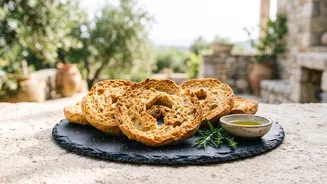
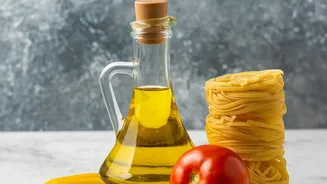
While born of necessity, friselle have evolved into a beloved delicacy. You cannot simply bite into a dry frisella—you would risk a tooth. The bread must be revived in a ritual known as 'sponzatura'. This involves a quick dip—just a few seconds—in cold water to soften the porous interior while leaving some of the exterior crisp. In ancient times, sailors would simply dip them in seawater. Once softened, the rough, craggy surface is perfect for grabbing onto toppings. The classic preparation involves rubbing the surface with a garlic clove, then piling on fresh, chopped tomatoes, a generous glug of extra-virgin olive oil, and a sprinkle of salt and oregano. The result is a dish that perfectly balances soft and crunchy textures, a fresh and satisfying meal that tastes like an Italian summer.