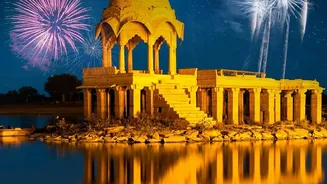





As festive seasons approach, the debate over firecracker pollution returns. 'Green crackers' are touted as the solution, but what do India's environmental boards actually say? Are they truly a cleaner, safer alternative to traditional fireworks?
Defining the 'Green' in Green Crackers
First,
it's important to understand what makes a cracker 'green'. These are not zero-pollution products. Instead, they are scientifically reformulated fireworks designed to be less harmful. Developed by the Council of Scientific and Industrial Research-National Environmental Engineering Research Institute (CSIR-NEERI), the primary goal was to create an alternative that reduces the massive pollution load from conventional crackers. The key difference lies in their chemical composition. Traditional firecrackers rely on a cocktail of hazardous substances, most notably barium nitrate, which acts as an oxidiser and is a major source of toxic particulate matter. Green crackers, on the other hand, completely eliminate the use of barium nitrate and other banned chemicals like arsenic and mercury. They use alternative formulations and additives that suppress dust, resulting in significantly lower emissions.
The Official Verdict on Air Pollution
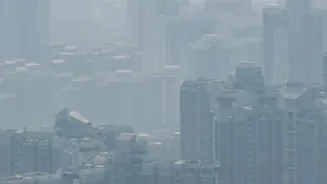
Environmental bodies are clear: green crackers are a marked improvement. According to reports from CSIR-NEERI and the Central Pollution Control Board (CPCB), certified green crackers reduce particulate matter (PM) emissions by at least 30% compared to their traditional counterparts. Some newer formulations have shown even greater reductions of 45-60% in controlled laboratory settings. This reduction is achieved through several innovations. Formulations like SWAS (Safe Water Releaser) release water vapour that helps settle dust particles, while others use additives like zeolite that act as absorbents. By removing barium and reducing other harmful metals, the smoke produced is less toxic. These crackers are specifically designed to curb emissions of both PM2.5 and PM10, along with gases like sulphur dioxide (SO₂) and nitrogen dioxide (NO₂), which are major contributors to post-festival smog and respiratory ailments.
What About Noise and Other Impacts?
Beyond air quality, noise pollution is a major concern. Here too, environmental regulations have set clear standards. Green crackers are mandated to keep noise levels within a prescribed limit, typically between 110 and 125 decibels. This is a noticeable reduction from traditional crackers, which can easily exceed 160 decibels. Additionally, the design of green crackers often involves smaller shells and reduced quantities of chemical agents. This not only lowers emissions and noise but also reduces the amount of solid waste generated after bursting by up to 32%. The entire framework, endorsed by the Supreme Court, is a balance between allowing festive traditions and upholding the public's right to clean air and a safe environment.
Challenges and the 'Less Polluting, Not Pollution-Free' Caveat
Despite the scientific backing, experts and environmental boards caution that green crackers are 'less polluting', not 'pollution_free'. An environmentalist noted that while they are a better choice, they still release ultrafine particles and should not be considered harmless. The overall impact depends heavily on the scale of use. If millions of green crackers are burst in a concentrated area and a short time frame, air quality can still plummet to hazardous levels, as high pollution burdens can overwhelm the 30% reduction. Enforcement is another significant hurdle. The market has seen a flood of counterfeit products that are falsely labelled as 'green'. The Commission for Air Quality Management (CAQM) has noted instances where official QR codes were sold to unregistered manufacturers, making it difficult for consumers and authorities to distinguish genuine items from fake ones.
How to Identify Authentic Green Crackers
Given the prevalence of fakes, environmental and regulatory bodies have established a clear verification system. To ensure you are buying a genuine product, look for two key features on the box. First is the official CSIR - NEERI green logo. Second, and most crucial, is a scannable QR code. This QR code is not just a sticker; when scanned with a smartphone (using the 'CSIR - NEERI Green QR Code' app), it should lead to a verification page confirming the manufacturer's details, license, and the product's certification status. A code that is broken, leads to a generic website, or is just a pasted image is a major red flag. Consumers are advised to purchase only from licensed sellers and to avoid loose crackers sold without their original, verifiable packaging.