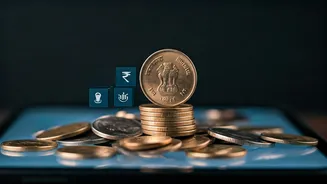









What is 'Spare Change' Investing?
At its core, 'spare change' investing, also known as round-up investing, is a simple concept. Imagine you buy a coffee for ₹185 using UPI. An app linked to your account will 'round up' this transaction to the nearest convenient number, like ₹190 or ₹200.
That spare ₹5 or ₹15 is then automatically set aside. Instead of just sitting in a wallet, these tiny amounts are collected and funnelled into an investment product. The goal is to make saving and investing frictionless. By automating the process with amounts so small they are barely noticeable, these apps help users build a savings habit without the psychological burden of setting aside a large lump sum. It’s a modern, digital take on the old adage: 'look after the pennies, and the pounds will look after themselves'.
How the Technology Works
The magic behind these apps lies in their clever integration with the UPI ecosystem. Most of them don't have direct access to the UPI pipeline itself. Instead, after you grant them permission, they typically read your transaction confirmation SMS messages. When the app detects a debit from your bank account for a UPI payment, it logs the amount and calculates the round-up. For example, a ₹42 payment could be rounded up to ₹50, setting aside ₹8. Once the accumulated spare change reaches a certain threshold (say, ₹100), the app uses a pre-approved mandate, like UPI AutoPay, to pull that amount from your bank account and invest it. This SMS-scraping method is common, but it requires you to grant significant permissions, which is a key consideration for privacy and security-conscious users.
The Key Players and Where Money Goes
Several fintech startups in India have jumped into this space. Apps like Jar, Deciml, and Spenny are popular choices, each offering a slightly different flavour of the same core service. So, where does your digital change end up? The most common destination is digital gold. It's a popular choice because it's easily divisible, its value is well understood, and it can be bought and sold in minuscule quantities, making it perfect for micro-investments. Some apps are also expanding their offerings to include other asset classes, such as peer-to-peer lending or a curated selection of low-risk mutual funds (like liquid or short-duration debt funds). The idea is to keep the investment options simple, liquid, and relatively safe to align with the goal of hassle-free wealth accumulation.
The Advantages of Effortless Saving
The primary benefit is behavioural. Many people struggle with the discipline of saving. These apps remove discipline from the equation. The process is automated and the amounts are small, so you build a corpus without feeling the pinch. This makes it an excellent tool for students, young professionals, and anyone new to investing who might be intimidated by traditional platforms. It gamifies the process, providing a sense of accomplishment as you watch your small contributions add up. It effectively lowers the barrier to entry, proving that you don't need a large starting capital to begin your investment journey. For many, it’s the first, crucial step towards financial literacy and discipline.
The Risks and What to Watch For
While innovative, this model isn't without its risks. The reliance on SMS scraping for transaction data raises valid privacy concerns. You are giving an app access to a lot of your financial information. It's crucial to use reputable apps with strong security policies. Furthermore, while the investments are generally low-risk, they are not risk-free. The price of digital gold can fluctuate, and mutual funds are subject to market risks. Finally, while it's a great starting point, spare change investing should not be your only investment strategy. The returns from such small amounts will likely be modest and won't be enough to achieve major financial goals like retirement. It’s a tool for building a habit, not a comprehensive financial plan.