






Earth's Slow-Motion Conveyor Belt
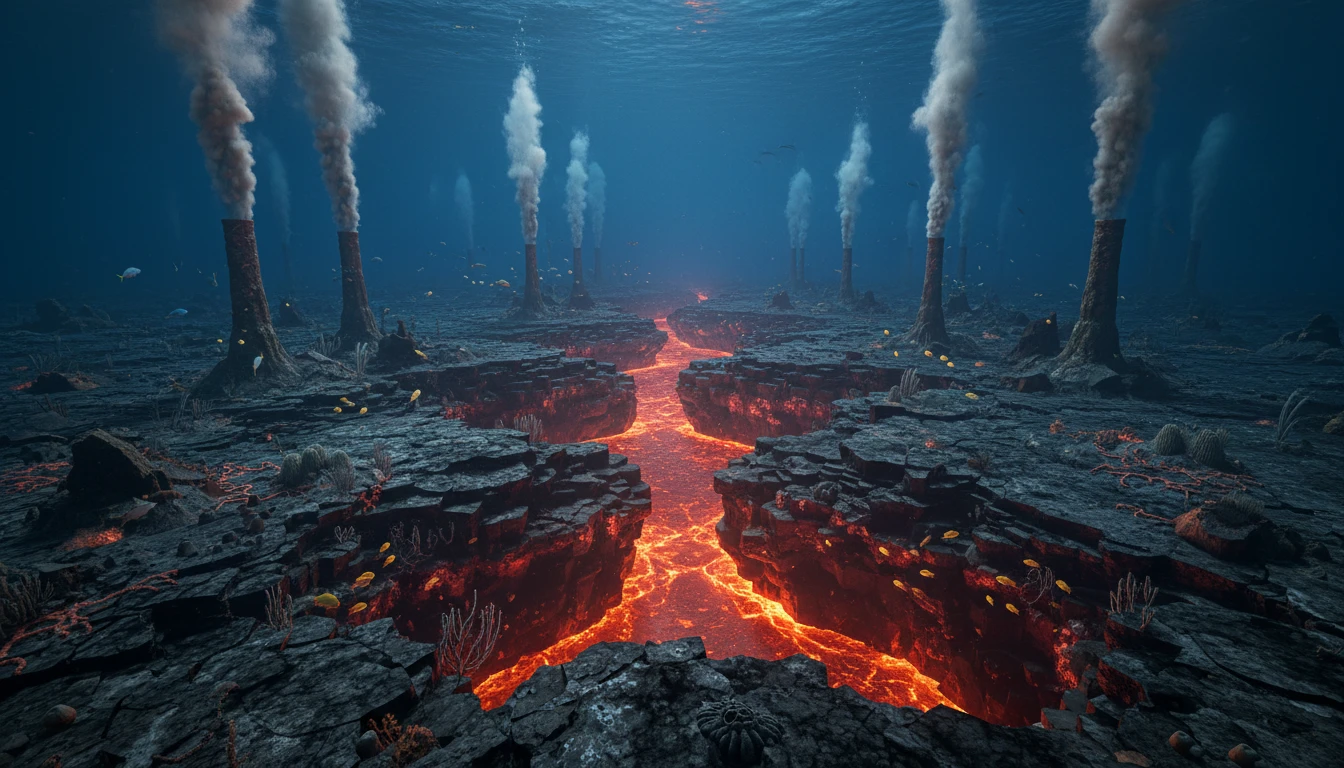
At its heart, seafloor spreading is a fundamental part of plate tectonics. Imagine two massive conveyor belts moving away from each other. In the ocean, these 'belts' are tectonic plates, and the gap between them is a mid-ocean ridge. Deep within the Earth,
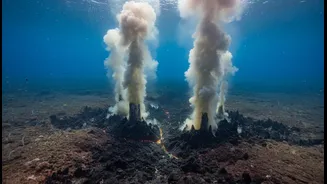
intense heat causes mantle rock to melt into buoyant magma. This magma rises, fills the fracture between the separating plates, and cools to form new oceanic crust. As this process repeats, the newly formed crust is continuously pushed outwards, making the ocean basin wider over millions of years. Evidence for this is found in the age of the seafloor rock, which gets progressively older the farther you move from the ridge, a key finding that confirmed the theory first proposed by Harry H. Hess in the 1960s.
The Indian Ocean's Unique Tectonic Stage
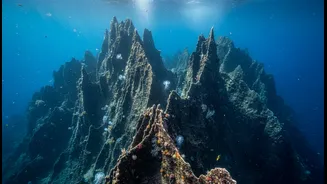
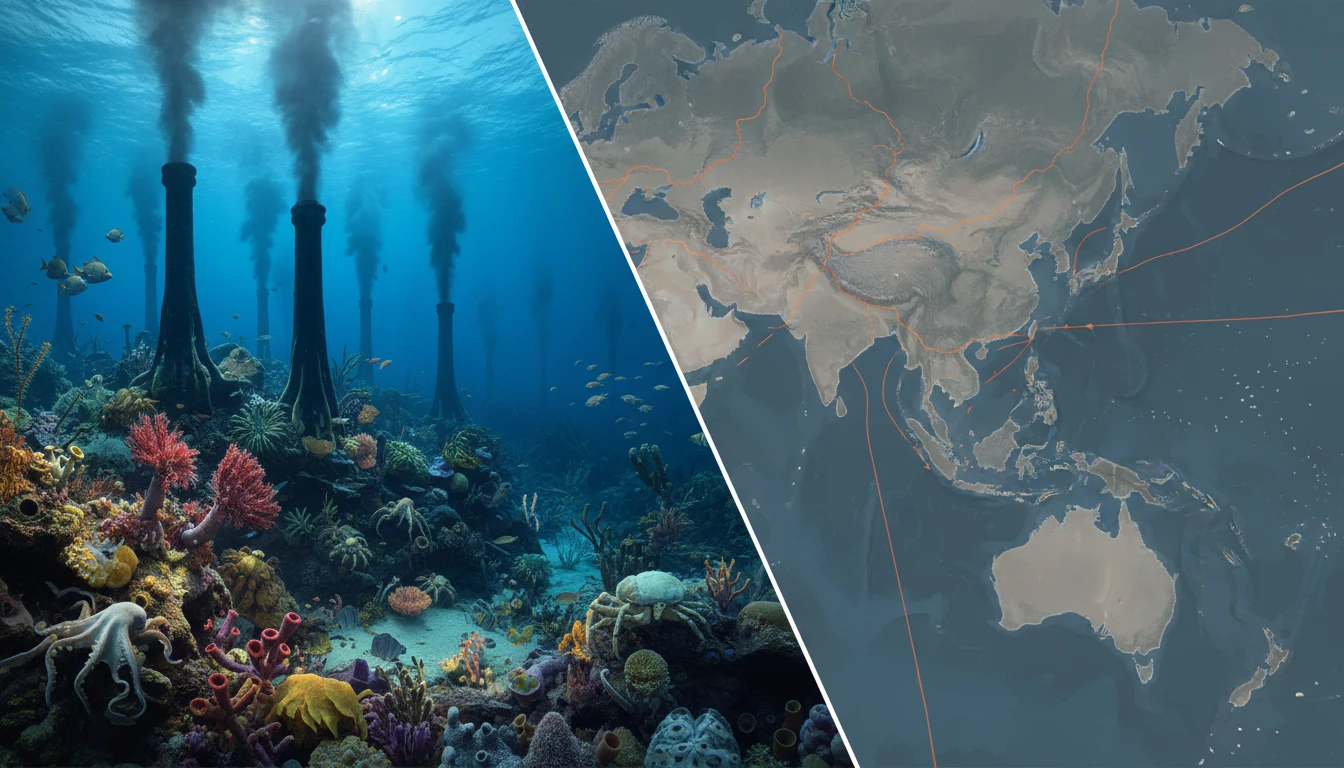
While seafloor spreading happens in all oceans, the Indian Ocean is a place of unique geological complexity. Unlike the relatively straightforward Mid-Atlantic Ridge, the Indian Ocean is home to a more complicated system of three main ridges: the Central Indian Ridge, the Southeast Indian Ridge, and the Southwest Indian Ridge. These ridges spread at different speeds. The Central Indian Ridge is considered a slow-spreading ridge, with full rates averaging between 26 to 38 mm per year. This slower, more fractured process results in rugged underwater terrain with steep valleys, distinct from the smoother topography of faster-spreading ridges found elsewhere. This intricate network of boundaries makes the Indian Ocean basin one of the most geologically diverse on the planet.
Caught in the Act: A Spreading Event Witnessed
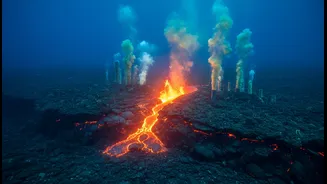
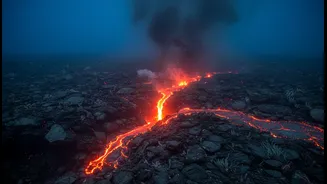
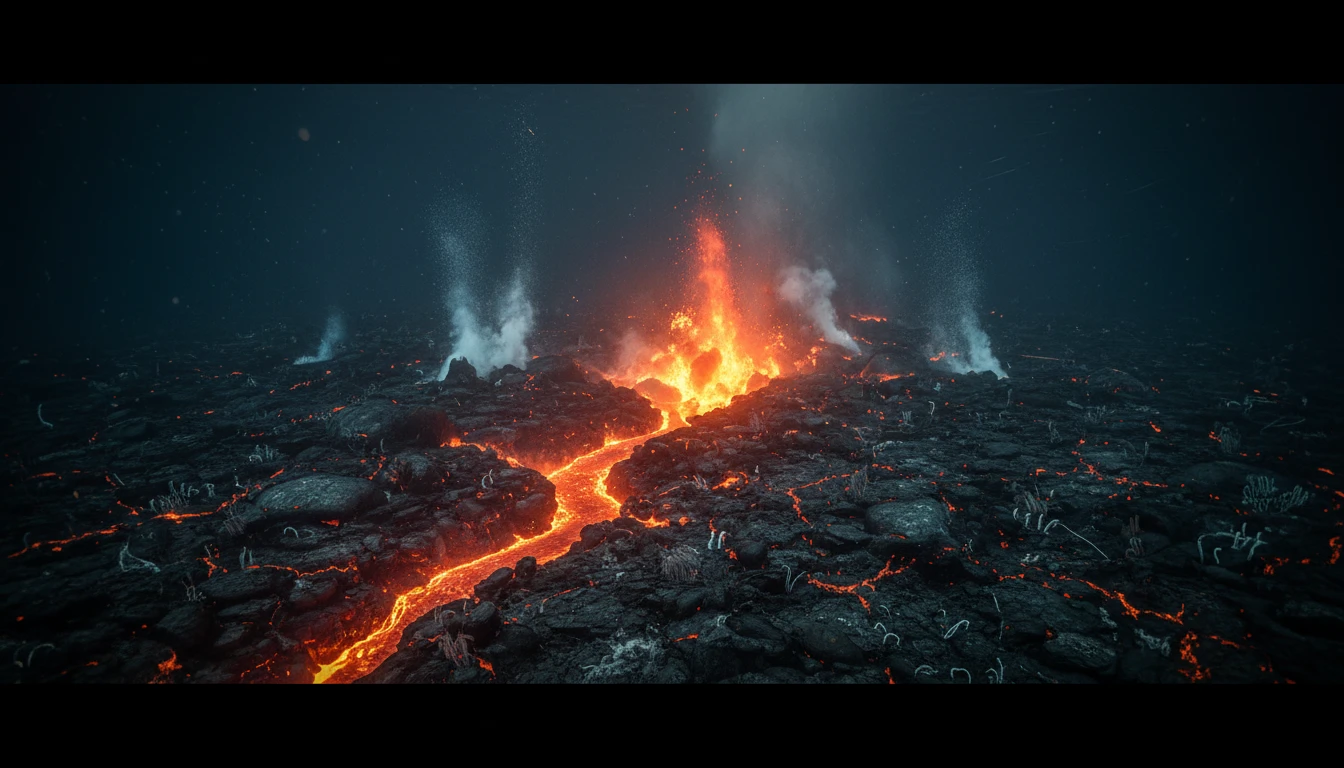
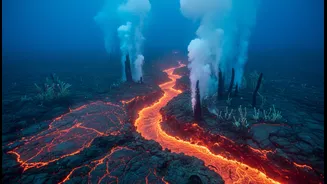
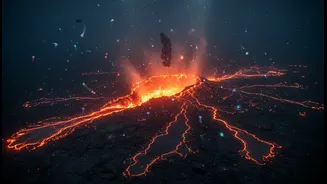
For decades, this creative process was inferred from ancient rock and seismic data. But in April 2024, scientists witnessed a seafloor spreading event in real-time for the first time ever. Instruments deployed just two months earlier on the Southeast Indian Ridge captured a dramatic sequence. A swarm of earthquakes moved rapidly along the ridge as the valley floor sank by approximately four metres in just a few days. This was caused by a massive magma reservoir emptying as it forced its way upward through the crust. In a matter of weeks, an estimated 160 million cubic metres of lava poured onto the seafloor, creating a brand new layer of Earth. This unprecedented observation provided a direct look at a process that normally takes decades, all compressed into a short, powerful episode.
The Ripple Effects on Our World
This deep-sea drama has profound consequences. Seafloor spreading is a primary engine of tectonic movement. The constant jostling and fracturing of the crust along these ridges generate significant seismic activity, including underwater earthquakes that can potentially trigger tsunamis. Furthermore, the journey of the Indian Plate itself is a powerful story. Having broken away from the supercontinent Gondwana millions of years ago, its rapid northward movement and eventual collision with the Eurasian Plate is what gave rise to the Himalayan mountains. This same tectonic energy continues to shape the region today, reminding us that the creation of new seafloor in the Indian Ocean is directly linked to the existence of the highest peaks on Earth.