






The Urban Farmer’s Silent Struggle
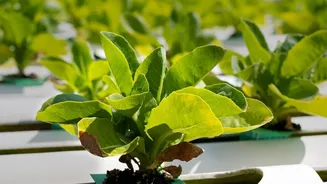
Urban farms, from rooftop gardens to high-tech vertical farms, represent a greener, more local future for food. But these controlled environments face a persistent challenge: pests. In a closed-loop system, a small infestation can quickly become a catastrophe.
Traditional chemical pesticides are often a non-starter; they’re a tough sell for consumers seeking clean, local produce and can pose health risks in enclosed spaces. While biological controls—like introducing beneficial insects—are an option, they can be complex and costly to manage. This dilemma has left many urban farmers searching for a better way to protect their crops without compromising their chemical-free promise.
A New Wave of Defense
Enter bio-acoustic pest management. It sounds like something from a science fiction novel, but the principle is grounded in nature. Bio-acoustics is the science of how living things produce and perceive sound. It turns out that many insects communicate, navigate, and mate using specific sound frequencies. This technology weaponizes that biology, using targeted sound waves to create an environment that is deeply unpleasant for specific pests, encouraging them to leave or disrupting their life cycles without harming the plants or people. It's a digital scarecrow, using precisely calibrated noise instead of straw.
How Sound Becomes a Shield
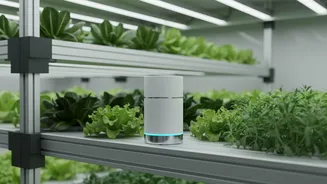
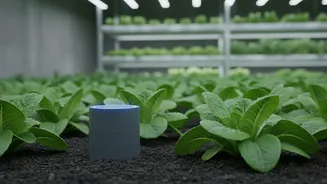
The technology works by deploying ultrasonic transducers, devices that convert electrical signals into high-frequency sound waves, typically above 20 kHz, which is beyond the range of human hearing. These aren't just random noises. Research helps identify the specific frequencies that interfere with the behavior of target pests. For some insects, the sound might mimic a predator, triggering an instinct to flee. For others, it can jam their communication channels, preventing them from finding mates or coordinating. The goal isn't necessarily to kill the pests, but to make the protected area so disruptive and confusing that they cannot thrive and will move on. This approach offers a significant advantage over chemicals by being non-contact and leaving zero residue on the crops.
From Lab to Lettuce
While the concept is powerful, its real-world application is still emerging. The consumer market is filled with ultrasonic devices that make bold claims, but scientific reviews on their effectiveness are often mixed, with many pests adapting over time. However, the technology being developed for agriculture is more sophisticated. Studies in controlled environments like greenhouses have shown that specific ultrasonic ranges can be highly effective against certain pests. The success of bio-acoustic systems depends on several factors: the target species, the power of the device, and the specific environmental conditions, as background noise or even humidity can affect performance. For urban farms, which are highly controlled environments, this technology holds unique promise. It can be integrated with AI and sensor networks to detect the specific wing-beat frequency of an invading pest and deploy a targeted sonic countermeasure in real time.
The Future Sounds Different
Sound-based crop protection is more than just a clever gadget; it's part of a larger movement toward precision agriculture. As technology becomes more affordable and effective, it could fundamentally change how we protect our food supply. By reducing or eliminating the need for chemical pesticides, this innovation supports more sustainable and environmentally friendly farming practices. For urban farms, it represents a key enabling technology, helping them deliver on the promise of clean, safe, and locally grown food. The investment may be higher upfront than a bottle of pesticide, but the long-term return—in crop yield, consumer trust, and environmental safety—could be invaluable. The farm of the future may be quieter in some ways, but the unheard sounds protecting it will be working harder than ever.