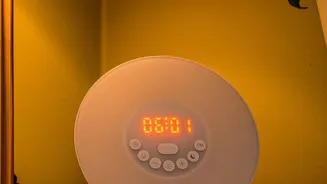







The Body’s Master Clock
Deep inside your brain is a master clock called the suprachiasmatic nucleus, which governs your body's 24-hour cycles, known as circadian rhythms. This internal clock regulates everything from your sleep-wake cycle to hormone release and metabolism. For
this clock to stay accurate, it needs a strong signal to let it know when the day has officially begun. The most powerful signal is bright, natural light. Without it, your internal clock can drift, leaving you feeling out of sync, tired during the day, and awake at night.
Flipping the 'Wake Up' Switch
When the day's first light enters your eyes, it sends a direct message to your brain to start the day's operations. This light exposure, particularly within the first 30 to 60 minutes of waking, triggers a cascade of neurochemical events. One of the first things it does is signal your body to stop producing melatonin, the hormone that makes you feel sleepy. By actively suppressing melatonin, morning light helps shake off that lingering grogginess, a feeling known as sleep inertia.
The Healthy Cortisol Spike
Cortisol often gets a bad rap as the "stress hormone," but in the morning, it's your best friend for alertness. Your body has a natural rhythm called the cortisol awakening response, where this hormone peaks shortly after you wake up to provide energy and focus for the day. Morning sunlight reinforces and sharpens this essential cortisol spike. This healthy, functional rise in cortisol helps you feel awake, motivated, and ready to tackle your day. When this rhythm is weak, you may feel foggy and more reliant on stimulants like caffeine to get going.
Setting Yourself Up for Better Sleep
Paradoxically, your morning light routine is one of the most important things you can do for a good night's sleep. By giving your brain a clear "start time" in the morning, you are also setting a timer for it to begin winding down about 12 to 16 hours later. This consistent signaling helps your body produce melatonin at the right time in the evening, making it easier to fall asleep and improving overall sleep quality. Studies have shown that people who get regular morning light exposure tend to fall asleep faster and experience deeper, more restorative sleep.
How to Build the Habit
Incorporating this into your routine is simpler than it sounds. Aim for 10 to 30 minutes of outdoor light within an hour of waking. On bright, sunny days, even 5 to 10 minutes can be effective. If it's cloudy, you'll want to stay out a bit longer, perhaps 20 to 30 minutes, as outdoor light on an overcast day is still significantly brighter and more effective than indoor lighting. For the best effect, leave your sunglasses off, but never look directly at the sun. If getting outside isn't possible, sit as close as you can to a window or consider using a bright light therapy box.
Light vs. Caffeine
Caffeine works by blocking adenosine receptors in your brain, temporarily masking the chemical signals that make you feel tired. Morning light, on the other hand, works by fundamentally resetting your entire biological rhythm. While coffee provides a temporary boost, sunlight provides a foundational shift, helping your body regulate its own energy naturally. By starting your day with light instead of immediately reaching for coffee, you allow your body to clear out residual sleepiness and let your natural cortisol response do its job, which can make your later cup of coffee more effective and reduce your overall dependence.