



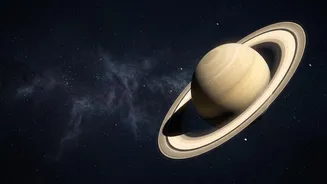
The Spectacle of Opposition
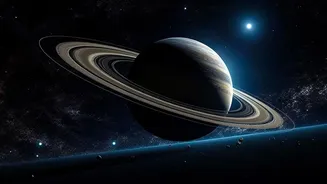
The prime time for viewing Saturn is during an event called opposition, which for 2026, occurs on October 4. Opposition is a simple celestial alignment: Earth passes directly between the Sun and Saturn. Imagine the Sun behind you, Earth in the middle,
and Saturn directly in front. This arrangement means a few things for observers. First, Saturn is at its closest point to Earth for the year, making it appear larger and brighter than at any other time. Second, since it's opposite the Sun in our sky, Saturn rises in the east around sunset and remains visible all night long, setting in the west around sunrise. This provides a generous, night-long window for observation across India.
Key Dates and Times for India
Mark your calendars for the night of Sunday, October 4, 2026. While the technical moment of opposition is around 5:30 PM IST, the best viewing begins just after sunset. For observers in India, Saturn will rise in the eastern sky around 6:11 PM. It will then travel across the night sky, reaching its highest point—and an ideal viewing position—around 12:17 AM on October 5. It will finally set in the west at approximately 6:23 AM. This schedule gives stargazers in places like New Delhi and Hyderabad a nearly 12-hour window, weather permitting. The days surrounding October 4 are also excellent for viewing.
How to Find Saturn
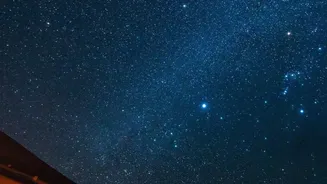
You won't need a map filled with complex star charts to find Saturn. During its opposition, it will be one of the brightest objects in the night sky, appearing as a steady, non-twinkling, pale-yellow point of light. This year, Saturn will be located in the constellation Cetus, the Whale, near its border with Pisces. This area of the sky doesn't have many other bright stars, making Saturn stand out. A simple way to locate it is to look towards the eastern horizon after sunset; that bright 'star' that shouldn't be there is likely the planet you're looking for. Stargazing apps on your smartphone can also point you in the exact direction from your specific location.
Naked Eye, Binoculars, or Telescope?
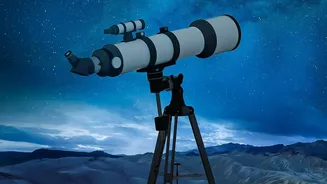
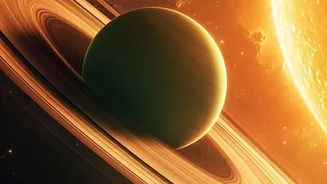
The great thing about Saturn's opposition is its accessibility. You can easily spot it with the naked eye as a bright, golden dot. However, to see its most famous feature—the rings—you will need some optical aid. Binoculars might show Saturn as a slightly elongated oval, but they typically aren't powerful enough to clearly separate the rings from the planet itself. A small telescope is where the magic truly happens. Even a basic model with 50x magnification can reveal the rings as a distinct structure. With a more powerful amateur telescope (around 6-inches or more), you might even be able to spot the Cassini Division—the dark gap between its main rings—and its largest moon, Titan, which looks like a tiny nearby star.
Tips for the Best Viewing Experience
To make the most of this celestial event, a little preparation goes a long way. First, find a location away from bright city lights. Light pollution can wash out the sky, making it harder to see celestial objects clearly. A spot with an unobstructed view of the eastern horizon is ideal. Give your eyes about 15-20 minutes to adjust to the darkness; this will dramatically improve what you can see. While the planet is visible all night, waiting until it climbs higher in the sky (ideally around midnight) will provide a sharper view, as you'll be looking through less of Earth's turbulent atmosphere. Finally, check the weather forecast. A clear, cloudless night is essential for any successful stargazing session.